
Introduction: Why Back Pain Needs More Than Rest
Back pain is one of the most common reasons people visit a physiotherapy clinic in Kochi — and one of the most mismanaged. The instinct to rest and avoid movement is understandable, but for most forms of back pain, prolonged rest makes things worse. The spine is designed to move, and carefully guided movement is the most effective medicine.
Whether your back pain is a recent strain or a long-standing problem, the right combination of targeted exercises and professional physiotherapy treatment can deliver lasting relief. This guide gives you both — practical exercises you can start today, and an honest overview of when professional help makes all the difference.
Understanding Why Your Back Hurts
Back pain rarely has a single cause. Most cases involve a combination of muscle imbalances, joint stiffness, poor posture, and sometimes disc-related changes. The good news is that the vast majority of back pain — even when it is severe — is not caused by serious structural damage, and responds very well to physiotherapy.
Common contributors include weak core muscles that fail to support the spine, tight hip flexors from prolonged sitting, stiff thoracic (mid-back) segments that force the lower back to overcompensate, and habitual postures at work or during sleep that load the spine unevenly.
5 Evidence-Based Exercises for Back Pain Relief
- Knee-to-Chest Stretch
Lie on your back with knees bent. Gently draw both knees toward your chest and hold for 20–30 seconds. This decompresses the lumbar spine and relieves muscle tension. Perform 3 repetitions, twice daily.
- Cat-Cow Mobilisation
On all fours, alternate between arching your back toward the ceiling (cat) and letting it drop toward the floor (cow). Move slowly and deliberately. This exercise restores movement to stiff lumbar and thoracic segments. 10 repetitions, twice daily.
- Bridge Exercise
Lie on your back, feet flat on the floor, hip-width apart. Press through your heels to lift your hips until your body forms a straight line from knees to shoulders. Hold for 5 seconds, lower slowly. This activates the glutes and deep spinal stabilisers — muscles that are chronically underactive in most back pain sufferers. 3 sets of 10.
- Bird Dog
From all fours, extend your right arm forward and left leg back simultaneously, keeping your spine neutral. Hold 5 seconds, then switch. This challenges core stability without loading the spine. 3 sets of 8 per side.
- Thoracic Rotation Stretch
Sit upright on a chair, cross your arms over your chest, and rotate your upper body left and right as far as is comfortable. Poor thoracic rotation is a major driver of lower back pain, and this simple exercise can provide rapid relief. 10 rotations in each direction.
When Exercises Are Not Enough: The Role of Professional Physiotherapy
Self-directed exercises are valuable, but they work best when guided by a physiotherapist who has assessed the specific cause of your back pain. If your pain persists beyond two to three weeks, radiates into your leg, or is accompanied by numbness or weakness, you need professional assessment — not just more of the same exercises.
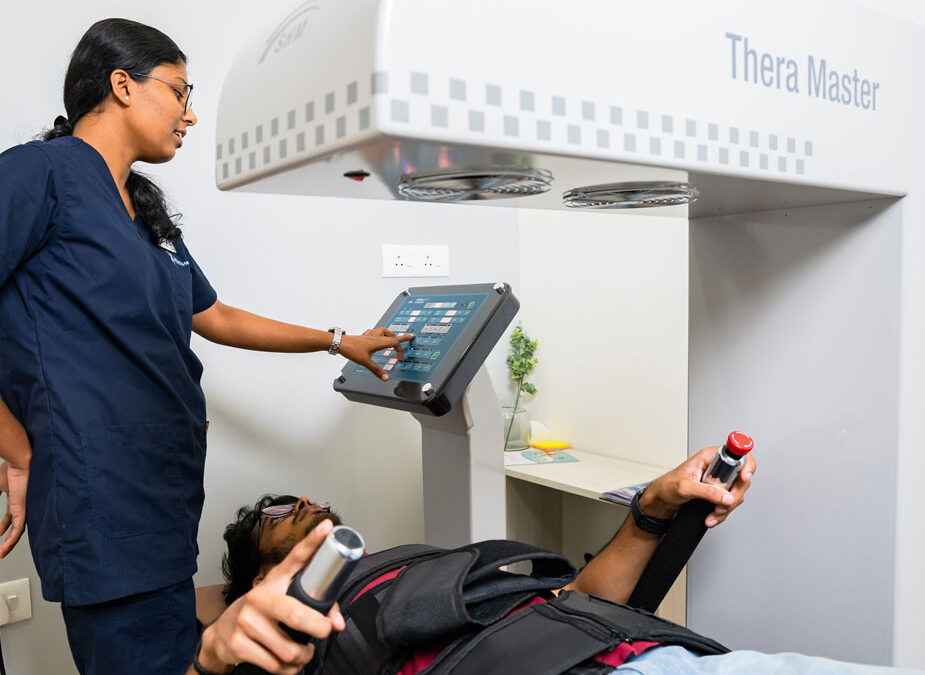
Physiotherapy clinics in Kakkanad and the broader Kochi-Ernakulam region offer evidence-based treatment that goes well beyond exercise. Spinal Decompression Therapy is particularly effective for disc-related back pain, gently creating negative pressure within the disc to retract herniated material and restore normal disc hydration. ESWT (Shockwave Therapy) targets chronic soft tissue pain that has not responded to exercise alone. Manual therapy and joint mobilisation restore movement to stiff spinal segments that exercises cannot reach.
At a physiotherapy clinic in Kochi, your physiotherapist will conduct a thorough assessment — movement analysis, muscle testing, and, where appropriate, a review of any imaging — to build a treatment plan specific to your back pain pattern.
Posture and Lifestyle Modifications That Make a Lasting Difference
No exercise programme fully succeeds without addressing the habits that caused the pain in the first place. If you work at a desk, ensure your monitor is at eye level, your chair supports the natural curve of your lower back, and you stand and move for at least five minutes every hour. Sleep on a medium-firm mattress and avoid sleeping on your stomach, which can place significant rotational stress on your lumbar spine.
Take the First Step Toward a Pain-Free Back
Back pain is not something you have to live with simply.
Maana Health‘s physiotherapy clinics across Kerala — including our Kochi clinic serving patients from Kaloor, Kakkanad, Palarivattom, and across Ernakulam — offer comprehensive back pain assessment and treatment using advanced, evidence-based modalities.
Book your consultation today at www.maanahealth.com and let our specialist physiotherapists design a personalised recovery plan for you.
Frequently Asked Questions
Is rest the best treatment for back pain? No — for most forms of back pain, prolonged rest makes things worse. The spine is designed to move, and carefully guided movement is generally the most effective approach.
What commonly causes back pain? A combination of weak core muscles, tight hip flexors from prolonged sitting, stiff mid-back (thoracic) segments forcing the lower back to overcompensate, and habitual postures that load the spine unevenly.
What is the knee-to-chest stretch for back pain? Lying on your back with knees bent, gently drawing both knees to your chest and holding for 20-30 seconds to decompress the lumbar spine and relieve muscle tension — 3 repetitions, twice daily.
What does the bridge exercise do for back pain? Lying on your back with feet flat, pressing through your heels to lift your hips into a straight line from knees to shoulders activates the glutes and deep spinal stabilizing muscles that are often chronically underused.