
Hip Osteoarthritis (Hip Pain)
Symptoms
Symptoms of hip pain may include:
Pain aggravated on movement and on cold weather
Groin pain
Morning stiffness
Locking of hip
Reduced range of motion
Crepitus on movement
Gait abnormalities
Leg length discrepancy (On center)
Causes
The causes of hip pain include:
Diagnosis
Treatments
The main goal of physical therapy is to improve muscle strength, joint mobility and range of motion. It includes pain management using modalities like IFT, US, TENS and joint repair and regeneration using PCRT.
Our Arthritis Wellness & Rehabilitation Program incorporates an advanced modality called Pulsed Cell Repair Therapy (PCRT). PCRT directs a series of electromagnetic impulses through injured tissue. Each pulse induces a tiny electrical signal that stimulates cellular repair and harnesses the body’s own ability to heal itself. This natural signal promotes the body to repair damaged or worn tissues/cartilages and to maintain healthy and proper functioning of the joint.
Sometimes, because of aging, injury or disease, signals that are naturally produced by the body is disturbed. When this occurs, the body is unable to repair the damage itself. This results in pain, inflammation, and loss of proper function in the joint. PCRT is unique in that it mimics the body’s natural signal, activating the normal healing process and stimulates the growth and repair of the damaged tissue.
The treatment session is typically 9 to 12 days, first 9 days should be continuous without interval. Because of the regenerative process, patient is advised for rest without any vigorous movements in the joint. If the patient is in pain, we will manage with other electrical modalities and then start with PCRT. After the PCRT sessions, we begin with our muscle strengthening exercises and lifestyle modifications, approximately 3 to 4 weeks after completing the PCRT sessions, which helps the patient become functionally independent.
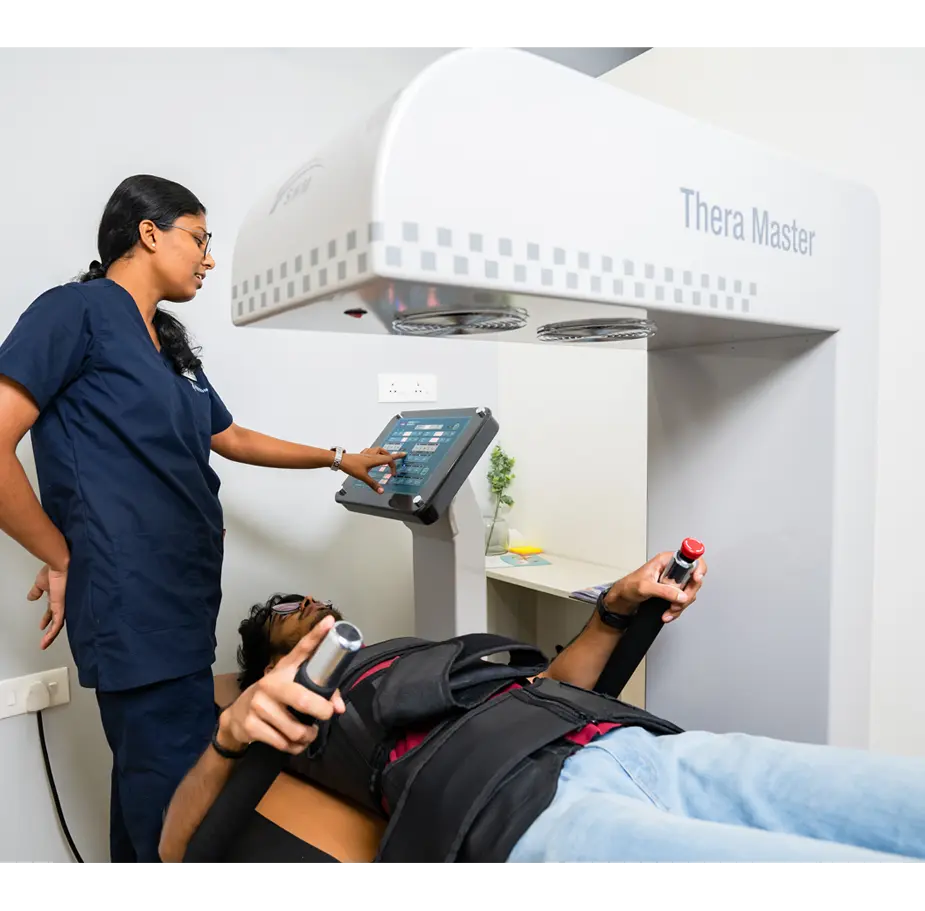
Elements of Arthritis Wellness Program
Pulsed Cell Repair
Hyperbaric Oxygen Therapy
Cryo Therapy
Exercises
Nutrition & Diet Management
Lifestyle Management
Ergonomics Guidance
Get a Quick Reply Here
Office
Monday to Saturday: 8:30am – 6pm
Make A Call Now
Frequently Asked Questions
My X-ray shows severe arthritis but I am not in much pain. Do I need surgery? X-ray grade does not determine surgical need. Many patients have significant radiographic OA with surprisingly minimal symptoms. Surgery is indicated by functional limitation and quality of life impact, not by X-ray appearance alone. If you are functioning adequately, surgery is not indicated regardless of the X-ray.
Will exercise damage my arthritic hip? No. This is one of the most harmful myths about osteoarthritis. Exercise does not accelerate cartilage breakdown in OA. Sedentary behaviour does, by weakening the muscles that protect the joint and reducing the synovial fluid circulation that nourishes cartilage. Appropriate exercise is beneficial at all stages of hip OA.
Can I avoid hip replacement completely? Some patients do, particularly those who intervene early, commit to exercise therapy consistently, manage their weight, and modify their activities appropriately. Others will eventually need surgery as OA progresses. The goal of conservative management is not necessarily to avoid surgery permanently but to delay it as long as possible, maximise function in the meantime, and ensure that surgery only happens when it is genuinely necessary.
How long does physiotherapy take for hip OA? A structured initial program runs 8 to 12 weeks. Ongoing maintenance exercise, typically two to three sessions per week, is needed long-term to maintain the benefits. Hip OA is a chronic condition and requires ongoing management, not a finite course of treatment.
Is walking enough exercise for hip OA? Walking is beneficial but not sufficient as the only exercise for hip OA. It provides aerobic conditioning and maintains some hip movement but does not address the specific muscle weakness, particularly hip abductors and extensors, that drives joint loading and functional decline. Walking combined with a targeted strengthening program produces significantly better outcomes than walking alone.