
Did you know that nearly 90% of stroke survivors experience some degree of paralysis or loss of motor function immediately following the event? It is a staggering number that often leaves families feeling overwhelmed and uncertain about the future. When a stroke happens, it feels like your body has suddenly stopped following your brain’s instructions. But here is the truth that many people miss: your brain is incredibly resilient.
The journey back to independence doesn’t have to be a slow, frustrating climb using only outdated methods. At Maana Health, we believe you deserve more than just “getting by.” You deserve a recovery path that uses the latest science to help you reclaim your life. If you are looking for a physiotherapy clinic in Ernakulam that looks at the root cause of your mobility challenges rather than just managing the symptoms, you are in the right place.
What actually happens to your brain and body after a stroke?
A stroke is essentially a “brain attack.” It occurs when the blood supply to part of your brain is interrupted or reduced, preventing brain tissue from getting oxygen and nutrients. Within minutes, brain cells begin to die. This loss of cellular function is what leads to the physical symptoms you might be experiencing: weakness on one side of the body, difficulty speaking, or a loss of balance.
However, the human brain possesses a remarkable quality called neuroplasticity. This is the brain’s ability to reorganize itself by forming new neural connections throughout life. Think of it like a traffic jam on a main highway; while the primary road is blocked, your brain can learn to find “backroads” to deliver the same signals to your muscles.
Recovery isn’t just about moving your limbs; it’s about teaching your brain how to talk to those limbs again. This is why a standard, one-size-fits-all exercise routine often fails. You need a targeted approach that stimulates these new neural pathways. Clinical evidence suggests that the right intensity and type of stimulation can significantly improve outcomes, even months or years after the initial event.
Why is the first “Golden Period” so critical for your recovery?
In the medical community, we often talk about the “Golden Period”: the first three to six months following a stroke. During this window, your brain is in a heightened state of plasticity, making it much more receptive to rehabilitation and new learning. If you are in Ernakulam and have recently experienced a stroke, this is the most vital time to engage with advanced, technology-led physiotherapy.
Many patients spend this critical time doing passive stretches or waiting for “nature to take its course.” While rest is important, waiting too long can lead to muscle atrophy (wasting away of muscle tissue) and joint stiffness. By introducing evidence-based modalities early on, we can help maintain muscle tone and prepare your body for more intensive movement training.
Does this mean recovery is impossible after six months? Absolutely not. We have seen many patients achieve significant milestones long after their stroke. However, starting early gives you the best head start on adding more healthy years of life to your future.
Can technology really help you walk or move again?
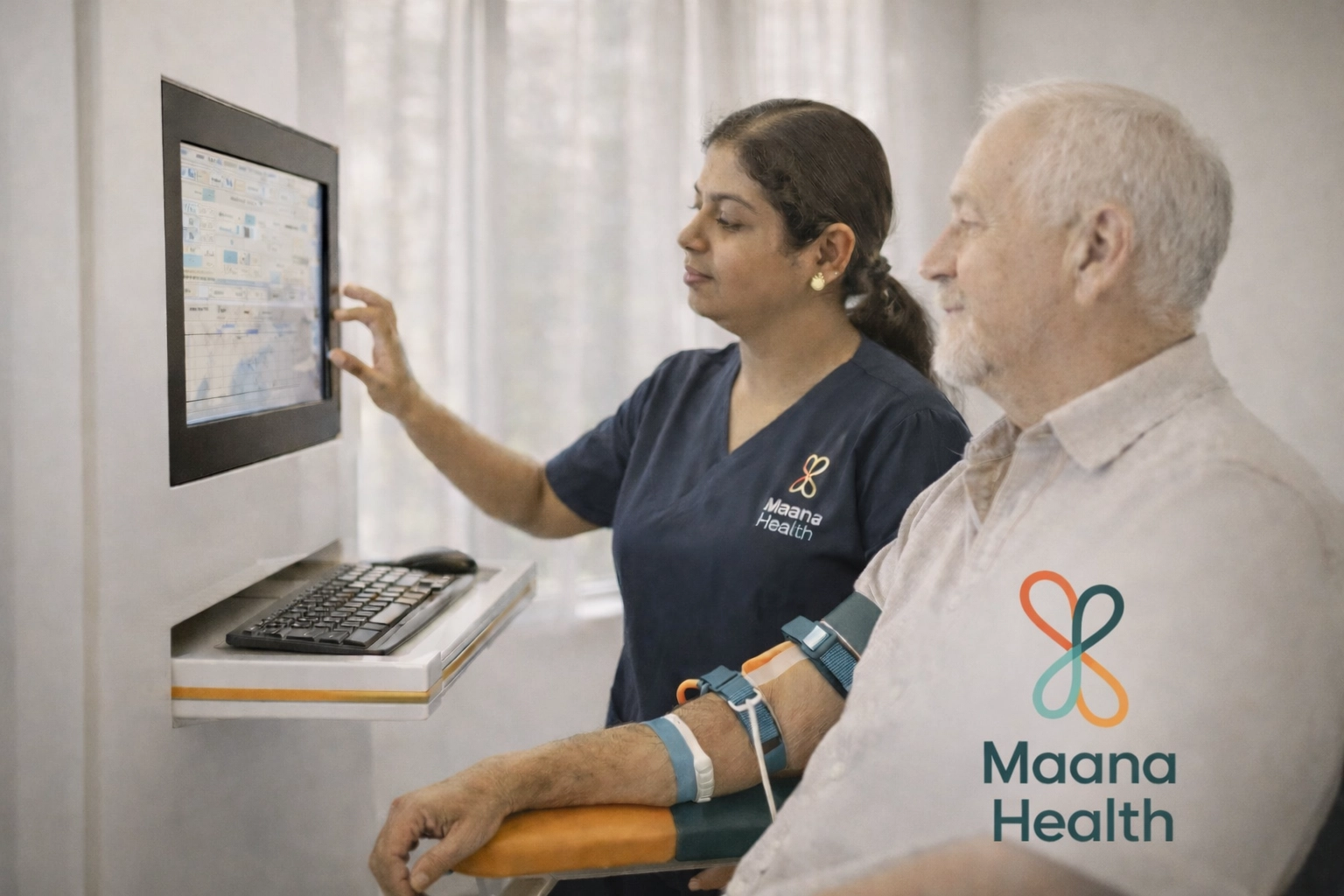
The traditional view of physiotherapy often involves a therapist manually moving your legs or hands. While manual techniques have their place, they are limited by human endurance and precision. This is where Maana Health’s focus on advanced non-invasive technology changes the game for residents in Ernakulam.
We use South Korean precision and FDA-cleared technology to bridge the gap between where you are and where you want to be. For example, advanced diagnostic devices allow us to see exactly how your muscles are firing: or failing to fire. This data-driven approach means we don’t have to guess which exercises will work for you; we can see the clinical reality on a screen.
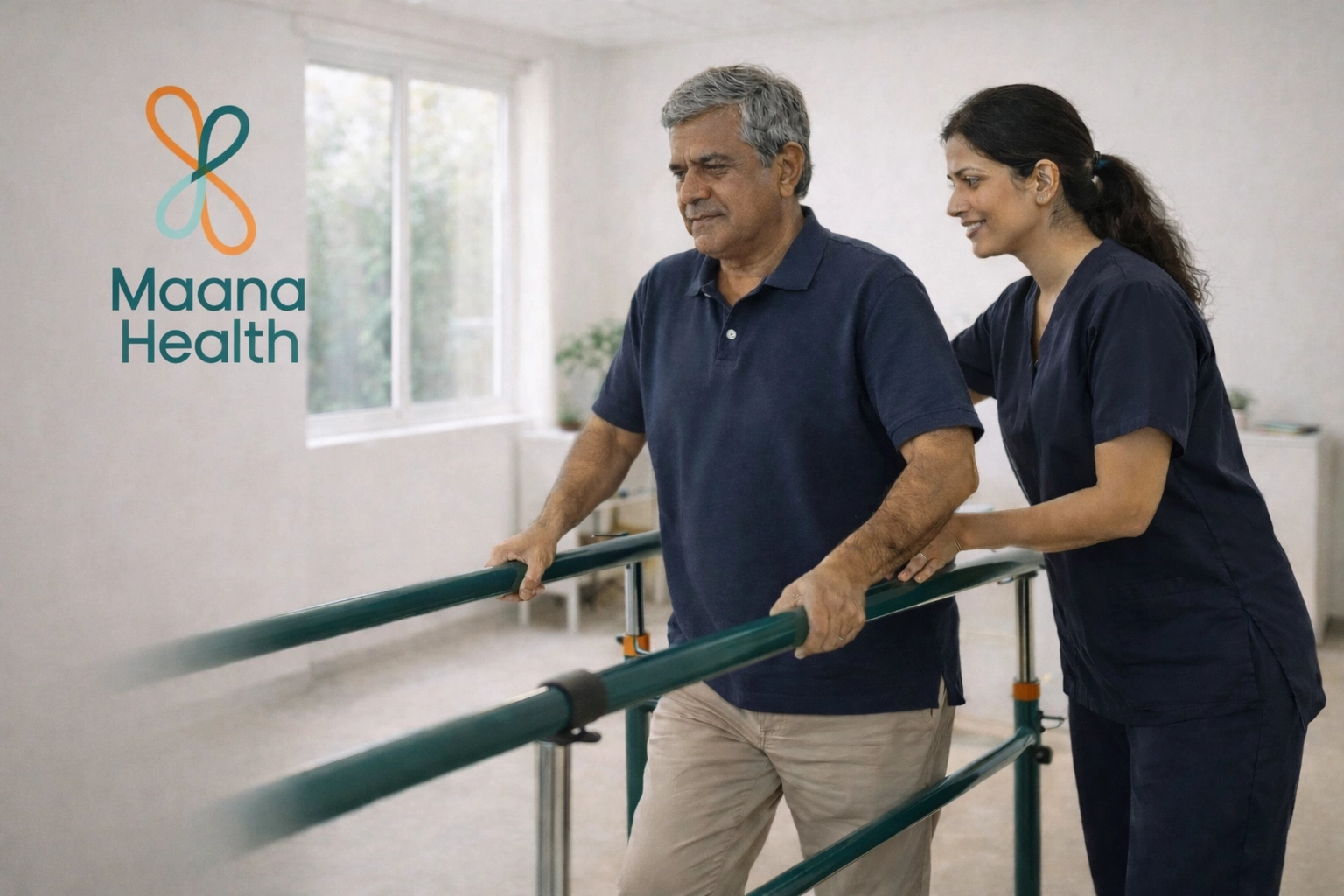
When we talk about restoring mobility, we aren’t just talking about walking; we are talking about gait quality. Many stroke survivors develop a “compensatory gait”: a way of walking that uses the wrong muscles and eventually leads to chronic back pain or hip issues. By using technology-led rehabilitation, we can focus on the root cause of the gait imbalance, ensuring you move efficiently and safely.
What makes a physiotherapy clinic in Ernakulam different for stroke care?
Ernakulam is a hub for medical care, but not all rehabilitation is created equal. Many centers focus on volume, seeing as many patients as possible. At Maana Health, our philosophy is different. We believe in a personalized treatment protocol that is as unique as your own fingerprint.
When you visit our physiotherapy clinic in Ernakulam, we begin with a deep dive into your specific neurological and physical state. We look at:
- Motor Control: How well can you voluntarily move specific muscles?
- Proprioception: Does your brain know where your limbs are in space without you looking at them?
- Spasticity: Are your muscles over-contracting, causing stiffness and pain?
- Core Stability: Is your trunk strong enough to support your balance while standing?
By answering these questions, we build a roadmap. This isn’t just a list of exercises; it’s a strategic plan involving advanced modalities that target the neurological system. Our goal is a non-surgical and no side effects recovery that prioritizes your long-term wellness.
How do we rebuild your confidence alongside your mobility?
Physical recovery is only half the battle. A stroke often robs people of their confidence. The fear of falling or the frustration of not being able to perform simple tasks like buttoning a shirt can lead to social withdrawal and depression.
We address this by setting “micro-goals.” Instead of just saying “I want to walk,” we work on “I want to stand unassisted for 30 seconds” or “I want to reach for a cup.” Each small victory builds the mental momentum needed for the larger ones.
Our therapists at Maana Health act as your partners. We are the knowledgeable, empathetic experts who walk beside you. We understand that some days will be harder than others, but we also know that with a consistent, evidence-based approach, progress is a clinical reality for most patients.
Is it time to move beyond the quick fix?
Too often, healthcare today is about the quick fix: a pill for the pain or a temporary brace. But stroke recovery doesn’t work that way. It requires a commitment to a root-cause approach. You deserve more than just a survival story; you deserve a revival story.
Whether you are struggling with a “dropped foot,” weakness in your arm, or general balance issues, there are advanced ways to help. We have treated over 10,000+ patients across our various programs, and our experience as a pioneer in Kerala has shown us that the right combination of human expertise and machine precision is the key to unlocking potential.
If you have questions about your specific condition, or if you’ve been told you’ve reached a “plateau” in your recovery, we invite you to look closer. A plateau is often just a sign that the current method has reached its limit: not that your body has.
Take the first step toward your new normal
You don’t have to navigate this journey alone. Your recovery is a marathon, and every marathon begins with a single, purposeful step. We are here to provide the environment, the technology, and the expertise to help you make that step count.
If you are ready to see how a personalized, technology-led protocol can change your recovery trajectory, we are ready to help. You can explore our frequently asked questions to learn more about our approach, or simply reach out to us directly.
Speak to one of our physiotherapists today and book a free assessment at Maana Health Ernakulam. Let’s start rebuilding your mobility and your confidence together.