
Did you know that nearly 85% of people living with chronic back or joint pain are eventually told that surgery is their only “real” option? It is a frustrating crossroad to reach, especially when you feel like you have already tried every massage, heat pack, and generic exercise routine available. But here is a direct challenge to that common misconception: clinical evidence suggests that for the vast majority of spinal and musculoskeletal conditions, surgery should be the last resort, not an inevitability.
For too long, the gap between “standard physiotherapy” and “major surgery” has been a wide, empty space where patients often get lost. You might find temporary relief, only for the pain to return the moment you stop your sessions. This happens because most conventional treatments focus on managing your symptoms, the fire, rather than putting out the spark that started it.
At Maana Health, we decided that the people of Kochi deserve better than just “getting by.” We believe you deserve access to the same high-level, non-invasive technology found in the leading rehabilitation centers of Seoul, London, or Milan. That is why we are bridging that gap by bringing US FDA and European CE-approved technology directly to our community.
Why does chronic pain keep coming back despite treatment?
If you have been struggling with a nagging ache in your lower back or a sharp pain radiating down your leg, often referred to as sciatica (pain caused by irritation of the sciatic nerve), you know the cycle of hope and disappointment. You feel better for a few days, and then a simple move like picking up a grocery bag sets you back to square one.
The reason for this cycle is often a failure to address the root cause, not just the symptoms. Many chronic issues are structural. For example, if you have a disc herniation, where the soft center of a spinal disc pushes through a crack in the tougher exterior, simply rubbing the muscles around it won’t fix the pressure on the nerve.
To truly heal, you need a way to reach the deeper tissues and the skeletal structure without the trauma of an incision. This is where evidence-based technology steps in. We aren’t just talking about gadgets; we are talking about precision tools designed to facilitate the body’s natural healing processes at a cellular level.
What actually happens during spinal decompression?
One of the cornerstones of our approach to back pain treatment is Spinal Decompression. Unlike traditional traction, which can sometimes cause muscles to tense up and resist the stretch, we use the Kinetrac KNX-7000 and TheraMaster (both engineered by experts in South Korea).
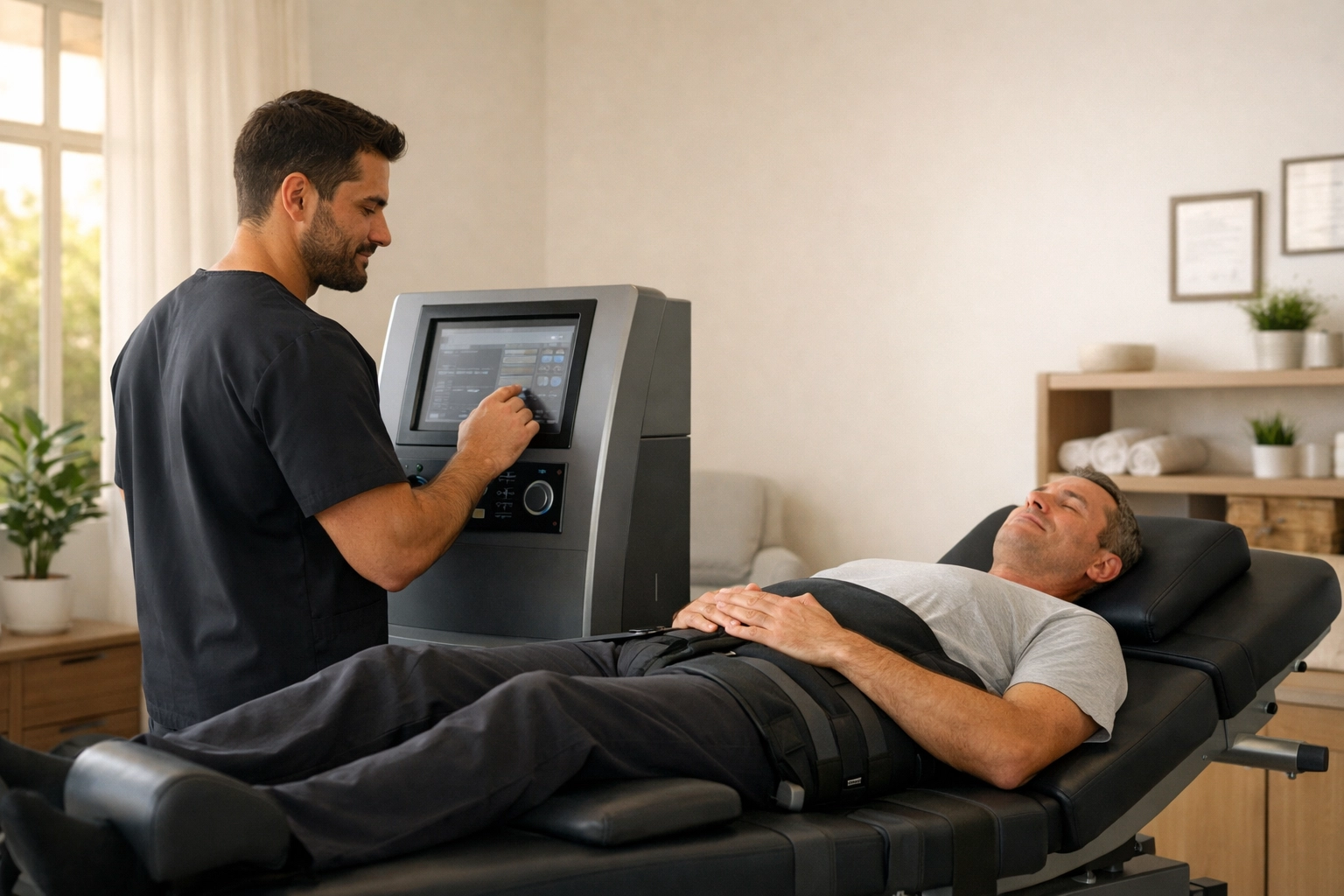
When you lie on the Kinetrac KNX-7000, a computer-controlled system gently stretches your spine in a very specific, oscillating pattern. This creates “negative pressure” within the spinal discs. Think of it like a vacuum effect: it helps pull the bulging or herniated disc material back into place and allows oxygen, water, and nutrient-rich fluids to flow into the disc to kickstart healing.
Because this technology is US FDA-cleared, it operates with a level of precision that manual therapy simply cannot replicate. It targets the exact vertebral level that is causing your pain, whether it is in your neck or your lower back. By focusing on the structural root cause, we have seen many patients avoid the operating table entirely.
Is US FDA and European CE approval actually important for your recovery?
You might wonder if these certifications are just “fancy stickers” on a machine. In reality, they are your guarantee of safety and clinical validity. When a device carries US FDA (Food and Drug Administration) or European CE (Conformité Européenne) approval, it means the technology has undergone rigorous testing to prove it does what it claims to do without harming the patient.
In the world of physical rehabilitation, these approvals differentiate “wellness gadgets” from “medical-grade treatment.” For instance, at Maana Health, we utilize:
- Pulsed Signal Therapy (PST): A technology from Germany and Argentina that uses pulsed electromagnetic fields to stimulate chondrocytes (the cells responsible for cartilage repair). This is a game-changer for those dealing with osteoarthritis or tendinitis.
- Hyperbaric Oxygen Therapy (HBOT): Using a specialized chamber from Poland to deliver pure oxygen at increased atmospheric pressure. This hyper-oxygenates your blood, which accelerates the repair of damaged tissues and reduces inflammation much faster than normal breathing allows.
- Whole Body Cryotherapy: A technology from Italy that uses extremely cold temperatures to trigger a systemic anti-inflammatory response. It is a powerful tool for recovery and chronic pain management.
By combining these global standards, we provide a personalized treatment protocol that is backed by international science, right here in Kochi. You can read more about how this tech is changing the game in our full guide to powered physiotherapy.
Can technology really replace the need for surgery?
In many cases, yes. Clinical evidence suggests that advanced non-surgical spine treatment has an effectiveness rate of 85-90% for conditions like disc bulges, sciatica, and degenerative disc disease. While surgery is sometimes necessary for emergency situations, most chronic cases respond remarkably well to a combination of high-tech decompression and regenerative therapies.
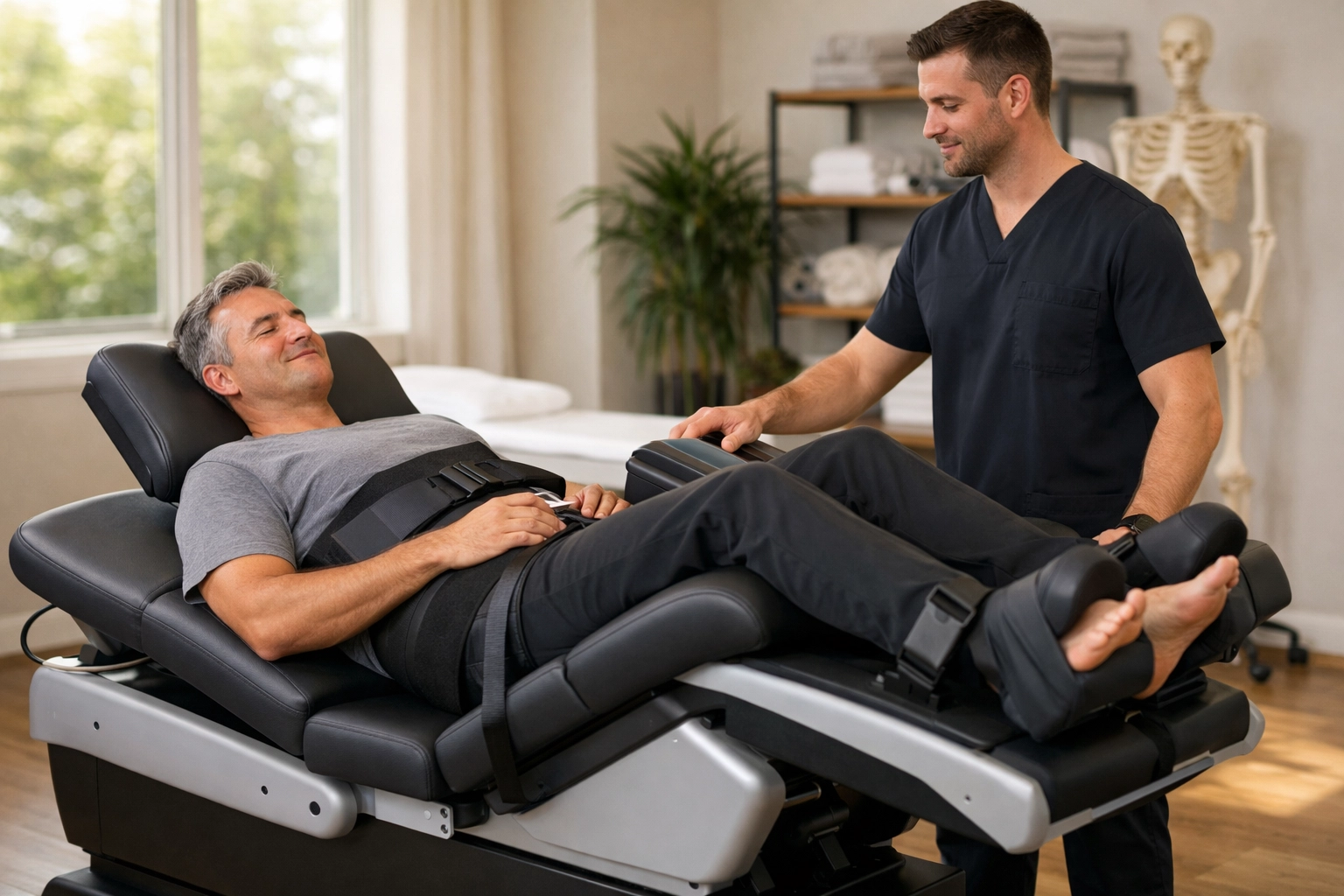
Consider the symptoms of neck pain. Often, the pain isn’t just in the neck; it manifests as headaches, numbness in the fingers, or weakness in the arms. This is usually due to nerve compression. By using precision technology to decompress the cervical spine, we can relieve that pressure and restore function without the risks associated with spinal surgery, such as long recovery times or potential scarring.
How does Maana Health integrate lifestyle with technology?
We know that even the best technology in the world is only part of the puzzle. Your body is a complex system where everything is connected. For example, carrying extra weight can put significant strain on your weight-bearing joints, like your knees and hips.
There is a direct connection between weight loss and joint health. This is why our programs don’t stop at the treatment table. We look at your biomechanics, your posture, and even your metabolic health. If weight loss is a factor in your joint pain, we integrate that into your journey.

Our goal is not just to get you out of pain today, but to give you more healthy years of life. This means teaching you how to improve your posture at work and providing you with the targeted exercises needed to maintain the gains you made during your sessions on the Kinetrac or PST.
Why are we the pioneers of this approach in Kerala?
Maana Health was founded on the belief that “good enough” isn’t good enough when it comes to your health. We saw too many people in Kochi traveling long distances or resigned to a life of painkillers because they didn’t have access to non-surgical alternatives.
By investing in South Korean spinal tech, German regenerative signals, and Italian recovery systems, we have become a pioneer in Kerala for technology-led rehabilitation. We have treated over 10,000 patients, many of whom came to us as a last resort before surgery and left with their quality of life restored.
Our approach is built on three pillars:
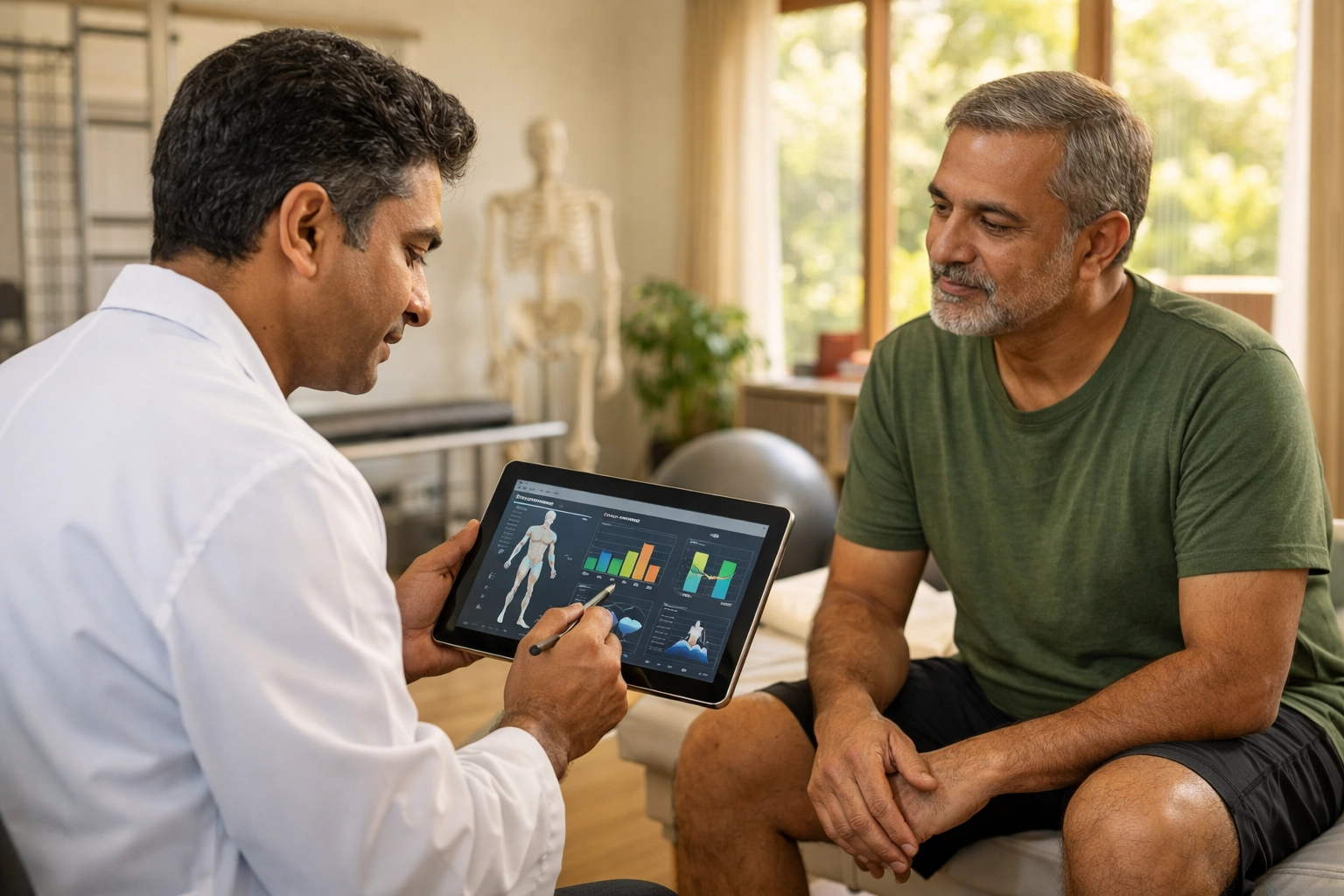
- Root cause identification: Using advanced diagnostics to see exactly what is happening under the surface.
- Non-surgical intervention: Utilizing FDA and CE-approved technology to treat the cause without side effects.
- Personalised care: Crafting a protocol that fits your specific body, lifestyle, and goals.
You deserve more than a quick fix
If you are tired of the “wait and see” approach or if you are worried about what a surgery might mean for your future, it is time to look at the evidence. The technology exists to help your body heal itself. You don’t have to live with the limitations that chronic pain imposes on your life.
Whether it is lower back pain that keeps you from playing with your grandkids or knee pain that has ended your morning walks, there is a path forward that doesn’t involve a hospital stay.
We invite you to experience a different kind of healthcare: one where global technology meets local, empathetic expertise. Your journey to a pain-free life doesn’t have to start in an operating room; it can start with a conversation.
Speak to one of our physiotherapists today and discover how global tech can transform your recovery.