
Most people picture physiotherapy as hot packs, basic exercises, and a massage. That was physiotherapy 20 years ago.
Modern physiotherapy — particularly at specialist centres — now includes FDA and CE-approved treatment technologies that produce results that traditional methods simply cannot match for certain conditions. Understanding the difference helps you make a better decision about where you get treated and what to expect.
What Traditional Physiotherapy Looks Like
Traditional physiotherapy methods have been in use for decades. They are not ineffective — for many straightforward conditions they work well. But they have clear limitations for complex, chronic, or structural problems.
Heat and cold therapy. Hot packs and ice packs manage surface-level pain and inflammation. They do not treat the underlying structural cause of a problem.
Basic TENS. Standard transcutaneous electrical nerve stimulation reduces pain signals temporarily. It provides relief but does not stimulate tissue repair or structural healing.
Manual therapy. Hands-on joint mobilisation and soft tissue work by the physiotherapist. Effective and still a core component of modern physiotherapy, but limited by the depth of tissue a therapist can access manually.
Basic exercise therapy. Generic strengthening and stretching programs. Useful but not always specific enough for complex structural conditions.
Ultrasound therapy. Therapeutic ultrasound has been used in physiotherapy for decades. It delivers sound energy into tissue to promote healing, though its effectiveness varies by condition and depth of target tissue.
These methods form a solid foundation. For acute injuries, postural problems, and mild to moderate musculoskeletal conditions they are often sufficient. For chronic conditions, disc problems, and tendon pathologies, they frequently are not.
What FDA and CE Approved Technology Adds
Extracorporeal Shockwave Therapy (ESWT)
Shockwave therapy delivers high-energy acoustic waves into damaged tissue. It stimulates the body’s natural repair process at a cellular level — increasing blood flow, breaking down calcification, and triggering collagen production in damaged tendons and ligaments.
What it treats effectively:
- Chronic plantar fasciitis (heel pain)
- Calcific tendinitis of the shoulder
- Achilles tendinopathy
- Tennis elbow and golfer’s elbow
- Patellar tendinopathy (jumper’s knee)
- Chronic muscle trigger points
How it differs from traditional methods:
Traditional physiotherapy for chronic tendon conditions manages symptoms. Shockwave therapy stimulates actual tissue repair. For conditions like calcific tendinitis where calcium deposits form in the tendon, shockwave therapy physically breaks down the deposits — something no other non-surgical treatment can do.
Clinical evidence is strong. Multiple randomised controlled trials show ESWT produces significant improvement in chronic tendon conditions where traditional physiotherapy has failed. It is FDA-approved, CE-certified, and covered by many insurance plans.
A typical course is 3 to 5 sessions. Many patients notice improvement within the first two sessions.
Spinal Decompression Therapy (KNX-7000)
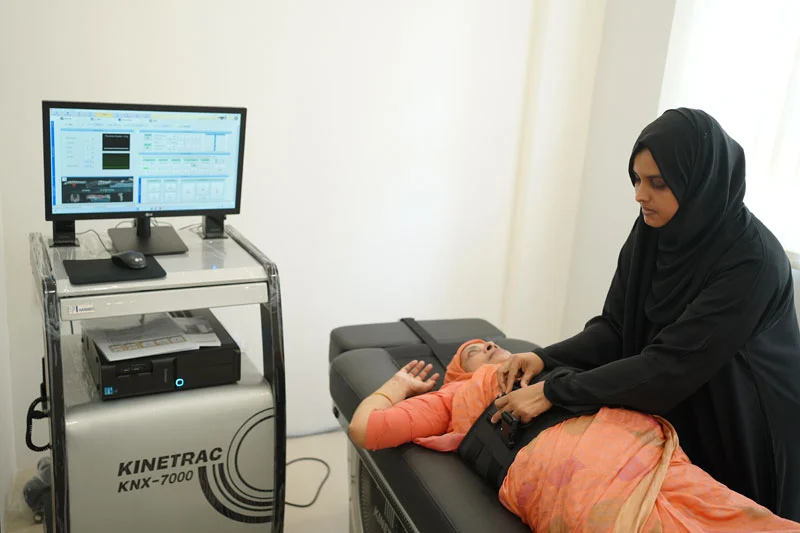
Spinal decompression therapy uses a motorised treatment table to apply precise, controlled traction to the spine. Unlike old-style manual traction, computerised spinal decompression controls the angle, force, and rhythm of distraction to create negative pressure within specific spinal discs.
This negative intradiscal pressure achieves two things traditional physiotherapy cannot:
- It pulls herniated or bulging disc material back toward the centre of the disc, reducing pressure on compressed nerves.
- It creates a pumping effect that draws water, oxygen, and nutrients into dehydrated discs, promoting disc healing.
What it treats effectively:
- Lumbar disc herniations
- Cervical disc herniations
- Sciatica from disc compression
- Degenerative disc disease
- Spinal stenosis without severe neurological deficit
- Facet joint syndrome
How it differs from traditional methods:
Manual traction applies a sustained pulling force. Computerised decompression applies a precise, rhythmic distraction at a specific angle calculated for your disc level. The difference in outcomes for disc conditions is significant.
Many patients who have had chronic sciatica for months — and who have tried traditional physiotherapy, pain medication, and injections — experience substantial relief within 10 to 15 decompression sessions.
High-Intensity Laser Therapy (HILT)
High-intensity laser therapy delivers concentrated light energy deep into tissue — significantly deeper than traditional therapeutic ultrasound. It stimulates cellular energy production, reduces inflammation, and accelerates tissue repair.
What it treats:
- Deep joint inflammation including knee and hip arthritis
- Chronic muscle injuries
- Nerve pain
- Post-surgical tissue healing
How it differs:
Traditional ultrasound reaches 3 to 5 cm of tissue depth. High-intensity laser reaches deeper structures with greater precision and stronger biological effect.
Hyperbaric Oxygen Therapy (HBOT)
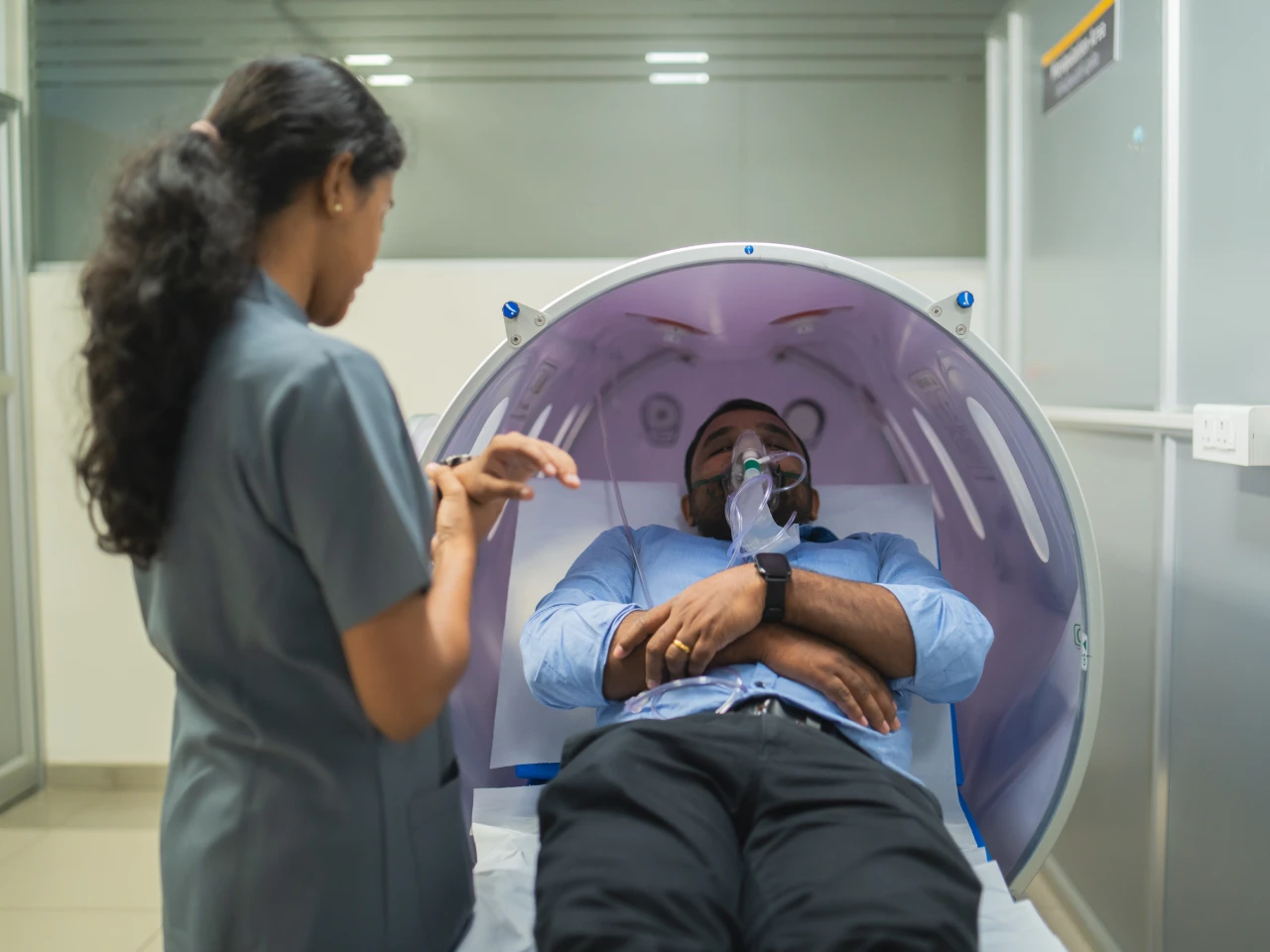
HBOT involves breathing pure oxygen in a pressurised chamber. Under increased atmospheric pressure, the body absorbs significantly more oxygen than at normal pressure — saturating blood plasma, tissue fluid, and cells with oxygen that would not reach them under normal conditions.
What it treats at Maana Health:
- Chronic non-healing wounds
- Diabetic foot wounds
- Post-surgical tissue healing
- Sports injuries requiring accelerated recovery
- Tissue damage from radiation therapy
How it differs:
Standard wound care and physiotherapy work at the surface and structural level. HBOT works at the cellular level — delivering oxygen to tissue that is hypoxic (oxygen-deprived) and therefore unable to heal through normal means. For diabetic wounds and chronic non-healing tissue, HBOT can achieve results that no other conservative treatment can.
Side by Side: Traditional vs Advanced
| Condition | Traditional Approach | Advanced Technology |
|---|---|---|
| Chronic heel pain | Stretching, orthotics, ice | Shockwave Therapy (ESWT) — stimulates repair |
| Disc herniation with sciatica | Manual traction, exercises | Spinal Decompression (KNX-7000) — targets specific disc |
| Calcific shoulder tendinitis | Manual therapy, ultrasound | ESWT — breaks down calcium deposits |
| Diabetic wound | Dressing, basic physio | HBOT — delivers oxygen to hypoxic tissue |
| Deep joint inflammation | Hot packs, TENS | High-Intensity Laser — reaches deep tissue |
| Chronic tendon pain | Eccentric exercise, ultrasound | ESWT — triggers collagen repair at cellular level |
Does This Mean Traditional Physiotherapy Is Outdated?
No. Traditional methods remain the foundation of physiotherapy practice. Manual therapy, exercise prescription, and patient education are irreplaceable components of any treatment plan.
What advanced technology does is extend what is possible — particularly for conditions that have not responded to traditional methods, conditions involving structural damage at a cellular or disc level, and chronic problems where the tissue repair process has stalled.
The best outcomes come from combining both. Advanced technology accelerates the healing process. Exercise therapy and manual therapy restore function, strength, and movement. One without the other produces incomplete results.
What This Means for Patients in Kerala
Until recently, treatments like shockwave therapy and computerised spinal decompression were only available in major metro cities. Patients in Kerala had to travel to Chennai, Bengaluru, or Mumbai for these procedures.
Maana Health has brought these FDA and CE-approved modalities to Kerala — available across clinics in Kochi, Calicut, Perinthalmanna, Aluva, and Trivandrum. This matters practically. A patient in Calicut with chronic sciatica no longer needs to travel out of state for spinal decompression therapy. A patient in Perinthalmanna with chronic heel pain that has not responded to basic physiotherapy now has access to shockwave therapy locally.
Frequently Asked Questions
Are these treatments safe?
All treatments at Maana Health carry FDA and CE certification. They have been through rigorous clinical trials and are used in specialist physiotherapy and rehabilitation centres worldwide. Your physiotherapist will assess your suitability for each treatment before it is recommended.
Are they painful?
Shockwave therapy causes a pulsing sensation that some patients describe as mildly uncomfortable during treatment. Most patients tolerate it well. Spinal decompression is typically comfortable — many patients find it relaxing. HBOT involves no discomfort beyond mild ear pressure adjustment similar to what you feel in an aeroplane.
How many sessions are needed for shockwave therapy?
Typically 3 to 5 sessions spaced one week apart. Some patients notice improvement after the first or second session. Full results are usually assessed four to six weeks after the final session.
Is spinal decompression suitable for everyone with back pain?
No. It is specifically indicated for disc-related back pain and sciatica. It is not suitable for patients with severe osteoporosis, spinal fractures, spinal implants, or certain other conditions. Your physiotherapist will assess your suitability before recommending it.
Does insurance cover these treatments in India?
Coverage varies by insurer and policy. Some plans cover ESWT and spinal decompression as part of physiotherapy benefits. Check with your insurer before treatment. Maana Health staff can assist with insurance queries.
Maana Health brings FDA and CE-approved physiotherapy technology to five locations across Kerala — Kochi, Calicut, Perinthalmanna, Aluva, and Trivandrum. If you have a condition that has not responded to basic physiotherapy, book a free assessment to find out whether advanced treatment is right for you.