
Authored by Ashitha Abdul Ashraf, Senior Consultant Physiotherapist – Incharge | Medically Reviewed by Dilshana Thasni T, Senior Consultant Physiotherapist | Last Reviewed: June 2026

Every year, thousands of people in Kerala face the same question after a scan or a specialist visit: do I need surgery, or can physiotherapy fix this?
It is one of the most important decisions you will make about your health. Get it wrong and you either delay necessary treatment or undergo a procedure you did not need. This guide gives you a clear, honest framework to think it through.
Why This Decision Is Harder Than It Looks
Surgery feels definitive. You go in, something gets fixed, you come out. Physiotherapy feels slower, less certain, more dependent on effort.
But that perception is often wrong.For many common conditions, structured physiotherapy produces outcomes equal to or better than surgery without the risks of anaesthesia, infection, prolonged recovery, or surgical complications. The research on this is consistent and growing.
The problem is that most patients never get this information clearly. They get a scan showing a disc bulge or a torn tendon, and the next conversation is about surgical options. The conservative treatment window gets skipped entirely.
When Physiotherapy Should Come First
These are conditions where physiotherapy is the evidence-based first-line treatment. Surgery should only follow if a genuine, structured course of physiotherapy has not produced adequate results.
Disc Herniation and Lower Back Pain
Most disc herniations resolve with conservative treatment. A 2011 study in the journal Spine found that over 90% of lumbar disc herniations improve significantly without surgery within 12 weeks of structured conservative care.
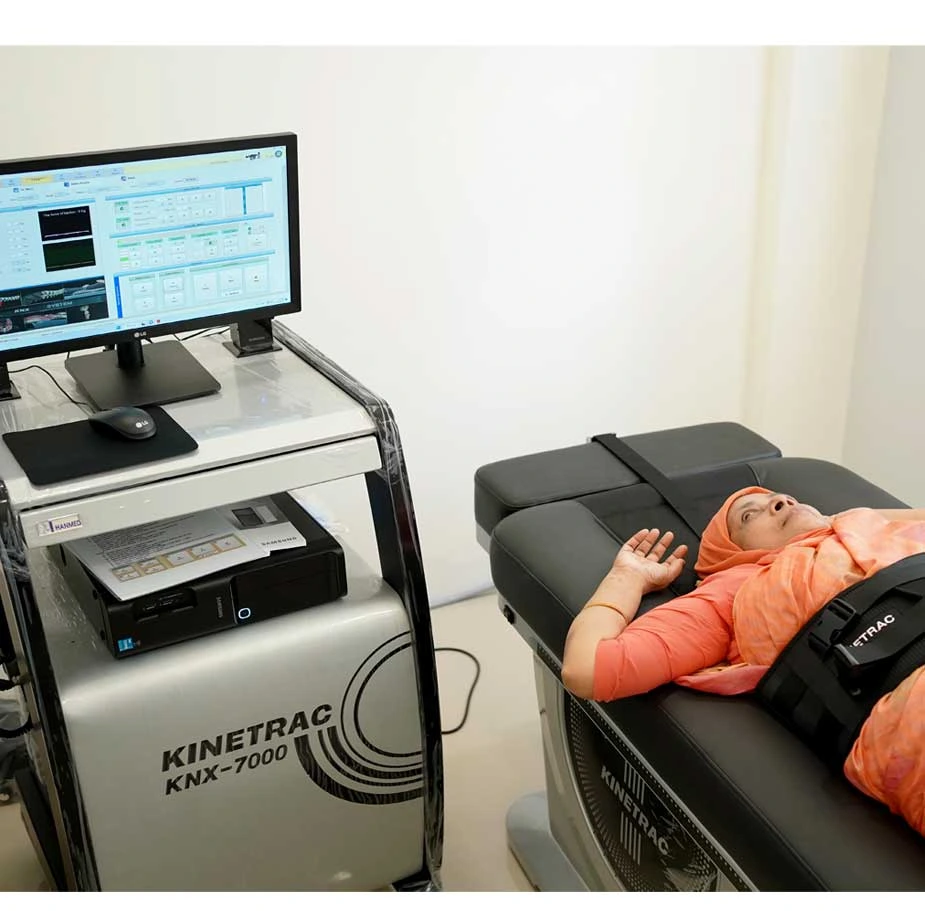
Physiotherapy for disc herniation focuses on reducing nerve compression through spinal decompression, restoring movement, and strengthening the muscles that support the spine. For the majority of patients this is enough.
Surgery becomes relevant when there is progressive neurological deficit — meaning increasing weakness, numbness, or loss of bladder and bowel control. That is a medical urgency. Pain alone, even severe pain, is rarely a surgical emergency for disc problems.
Knee Osteoarthritis
Knee replacement surgery has a strong track record for severe osteoarthritis. But early to moderate knee OA is a different story.
A landmark trial published in the New England Journal of Medicine found that exercise therapy and physiotherapy produced outcomes comparable to surgery for moderate knee osteoarthritis, with significantly fewer complications. Many patients who committed to a structured physiotherapy program avoided surgery entirely or delayed it by years.
Physiotherapy for knee OA focuses on strengthening the quadriceps and surrounding muscles to reduce joint load, improving flexibility, and managing inflammation through manual therapy and electrotherapy.
Rotator Cuff Tears
Not all rotator cuff tears need surgery. Partial thickness tears and many full thickness tears in patients over 60 respond well to physiotherapy. A study published in the Journal of Bone and Joint Surgery found no significant difference in outcomes between surgical and non-surgical management of full thickness rotator cuff tears at two-year follow-up.
The exception is acute traumatic tears in younger, active patients where surgical repair and early rehabilitation produces better long-term results.
Spinal Stenosis
Spinal stenosis without significant neurological involvement responds to physiotherapy focused on posture correction, core strengthening, and spinal mobility. Surgery is appropriate when conservative treatment has genuinely failed or when neurological symptoms are progressive.
Plantar Fasciitis and Chronic Tendon Conditions
Plantar fasciitis, Achilles tendinopathy, tennis elbow, and similar chronic tendon conditions have very strong evidence for conservative management including physiotherapy and shockwave therapy (ESWT). Surgery for these conditions is a last resort, not a first option.
Frozen Shoulder
Frozen shoulder almost always resolves without surgery, though it takes time. A structured physiotherapy program through all three stages of the condition produces good outcomes for the vast majority of patients. Surgical intervention is rarely needed.
When Surgery Is the Right Call
There are situations where surgery is clearly the better or only option. Physiotherapy cannot repair structural damage beyond a certain threshold, and delaying surgery in these cases causes harm.
Progressive neurological deficit. If you are experiencing increasing weakness, spreading numbness, or loss of bladder or bowel control, this is a surgical emergency. Do not wait for physiotherapy to work.
Complete structural rupture. A complete Achilles tendon rupture, a full ACL tear in a young active person, or a complete rotator cuff tear with significant functional loss often requires surgical repair for full recovery.
Severely destroyed joints. End-stage osteoarthritis where cartilage is entirely gone and bone is grinding on bone is beyond conservative management. Joint replacement is appropriate here.
Fractures requiring fixation. Complex fractures that cannot heal correctly without surgical stabilization need surgery first, then physiotherapy for rehabilitation.
Failed conservative treatment. If you have completed a genuine 8 to 12 week structured physiotherapy program with no adequate improvement, surgery becomes a reasonable next step. The key word is genuine — twice-weekly sessions done consistently with home exercises, not two sessions abandoned after no dramatic change.
The Most Common Mistake Kerala Patients Make
The most common mistake is going from scan to surgery without a trial of physiotherapy in between.
A scan shows a disc bulge or a meniscus tear. The patient is frightened. The surgeon’s calendar has an opening. Surgery happens.
What the scan often does not show is whether that finding is actually causing the symptoms. Disc bulges are found on MRI scans of people with no pain at all. Meniscus tears are common in asymptomatic people over 40. The structural finding and the clinical problem are not always the same thing.
A physiotherapist can assess whether the finding on the scan matches what your body is actually doing — whether the disc bulge is genuinely compressing a nerve, whether the meniscus tear is actually unstable. That assessment often changes the picture.
A Practical Framework for Your Decision
Ask these questions before agreeing to surgery:
Have I completed a proper trial of physiotherapy? Proper means 8 to 12 weeks, consistent sessions, and home exercises done daily. Two sessions does not count.
Is there a neurological emergency? Progressive weakness, spreading numbness, or loss of bladder or bowel control means go to surgery without delay.
Is the joint structurally beyond conservative repair? End-stage arthritis with no cartilage remaining is different from moderate arthritis with cartilage still present.
What does the evidence say for my specific condition? Ask your surgeon directly: what does the research say about physiotherapy versus surgery for this condition? A good surgeon will answer this honestly.
What are the surgical risks for me specifically? Age, diabetes, obesity, and cardiovascular conditions all increase surgical risk. A 65-year-old diabetic patient faces different surgical risk than a 30-year-old athlete.
What to Say to Your Doctor
If you feel you are being pushed toward surgery without a conservative treatment trial, it is completely appropriate to ask:
“Can we try a structured physiotherapy program first before deciding on surgery?”
“What is the evidence for physiotherapy versus surgery for my specific condition and stage?”
“What happens if I try physiotherapy for 12 weeks and it does not work — is surgery still an option then?”
The answer to that last question is almost always yes. A trial of physiotherapy does not close the surgical door. It simply establishes whether surgery is actually necessary.
Frequently Asked Questions
If I choose physiotherapy and it does not work, will surgery be harder? For most conditions, no. A trial of physiotherapy does not make surgery more difficult or less effective. The exception is very specific situations where prolonged delay allows a condition to worsen significantly — your surgeon can advise you on whether this applies to your case.
How do I know if my physiotherapy trial was genuine? A genuine trial means attending sessions two to three times per week for 8 to 12 weeks, completing home exercises daily, and following the full treatment plan. If you did this consistently and saw no meaningful improvement, that is a genuine trial.
Can I do physiotherapy after surgery? Yes, and in most cases you must. Post-surgical rehabilitation is a required part of recovery for joint replacements, ligament repairs, and spinal surgeries. Physiotherapy after surgery is not optional — it determines whether the surgical outcome is good or poor.
My surgeon says I need surgery urgently. Should I still try physiotherapy? If there is a neurological emergency — progressive weakness, numbness, or bladder and bowel involvement — follow your surgeon’s advice immediately. For non-emergency situations where urgency is based on pain alone, it is reasonable to ask about a brief conservative treatment trial first.
Is physiotherapy available for post-surgical recovery in Kerala? Yes. Post-surgical rehabilitation physiotherapy is available across all Maana Health clinics in Kerala. Starting rehabilitation early after surgery significantly improves outcomes.