
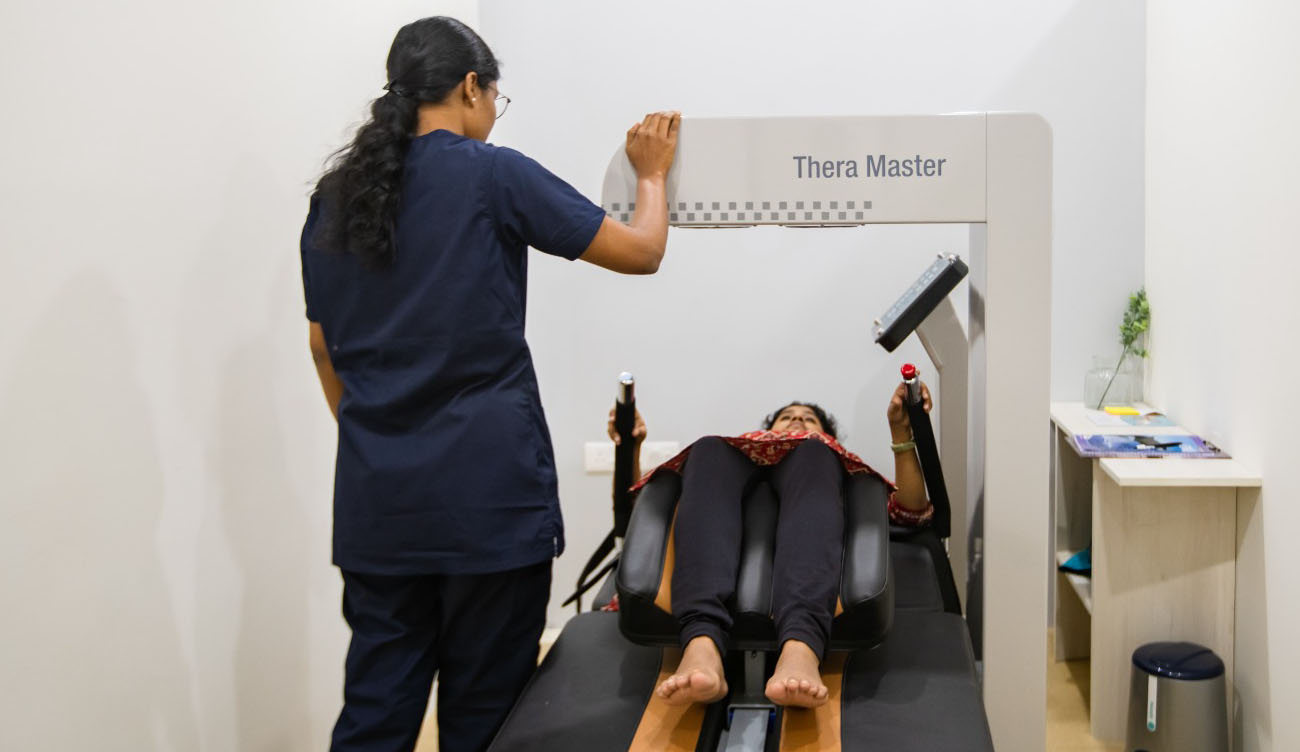
Surgery fixes the structural problem. Rehabilitation determines how well you actually recover.
This is the part most patients underestimate. A technically successful knee replacement or spinal surgery can still produce a poor outcome if rehabilitation is delayed, skipped, or done inconsistently. The surgery creates the conditions for recovery. Physiotherapy delivers it.
This guide gives you a realistic week-by-week picture of what post-surgical rehabilitation looks like for the most common procedures performed in Kerala.
Why Rehabilitation Starts Earlier Than You Think
Most patients expect to rest for weeks after surgery before starting physiotherapy. In most cases, the opposite is true.
For total knee replacement, physiotherapy begins within 24 to 48 hours of the operation. For spinal surgery, gentle movement and breathing exercises start on day one. For shoulder surgery, pendulum exercises begin within the first week.
Early movement prevents blood clots, reduces scar tissue formation, maintains muscle activation, and significantly improves long-term outcomes. The research on early rehabilitation after surgery is consistent: patients who start early do better than patients who rest.
This does not mean pushing through pain aggressively. It means structured, guided movement from the earliest appropriate point.
Total Knee Replacement: Week by Week
Total knee replacement is one of the most common major surgeries in Kerala. Recovery follows a predictable pattern when rehabilitation is done correctly.
Week 1 to 2: Hospital and Early Home Phase
The focus is basic mobility and pain management.
- Stand and walk short distances with a walker within 24 to 48 hours of surgery
- Ankle pumps and gentle quad sets begin on day one to prevent blood clots
- Knee bending exercises start in hospital — target 90 degrees of flexion within the first two weeks
- Ice and elevation to manage swelling
- Stair practice before hospital discharge
Pain is expected. Do not let it stop you from doing the prescribed exercises. Controlled movement through mild to moderate pain is part of the process.
Week 3 to 6: Early Rehabilitation
- Walking distance increases progressively
- Stationary cycling begins around week 4 for most patients
- Target range of motion: 100 to 110 degrees of knee flexion
- Strengthening exercises for quadriceps, hamstrings, and hip muscles
- Swelling continues to reduce but remains present — this is normal for several weeks
Week 6 to 12: Functional Recovery
- Walking without a walking aid for most patients
- Climbing stairs with a normal alternating pattern
- Light functional activities — driving, shopping, household tasks
- Target range of motion: 120 degrees or greater
- Strengthening program becomes more progressive
Week 12 to 6 Months: Full Rehabilitation
- Return to most daily activities
- Low-impact exercise including swimming and cycling
- Residual swelling and stiffness continue to improve for up to 12 months
- High-impact activities like running are generally not recommended after knee replacement
Red flags to report immediately: Increasing redness, warmth, or swelling around the wound. Calf pain or swelling suggesting a blood clot. Fever. Sudden sharp increase in pain.
Spinal Surgery Rehabilitation: Week by Week
Spinal surgery covers a range of procedures including discectomy, laminectomy, and spinal fusion. Timelines vary based on the procedure. The following applies to lumbar discectomy, the most common spinal procedure.
Week 1 to 2: Early Mobility
- Walking begins on day one post-surgery, short distances only
- Breathing exercises to maintain lung function
- Log rolling technique for getting in and out of bed — protects the surgical site
- Avoid sitting for more than 20 to 30 minutes at a time
- No bending, lifting, or twisting — spinal precautions are strict in this phase
Week 3 to 6: Progressive Movement
- Walking distance increases to 20 to 30 minutes per session
- Gentle core activation exercises begin — not crunches or sit-ups, but deep stabilisation work
- Hydrotherapy may begin in this phase for suitable patients
- Sitting tolerance increases gradually
- Return to light desk work for some patients by week 4 to 6
Week 6 to 12: Strengthening Phase
- Progressive core and lumbar strengthening program
- Movement retraining to correct compensatory patterns developed before surgery
- Return to driving for most patients around week 6 to 8
- Light manual work may be possible by end of this phase
Week 12 to 6 Months: Return to Full Function
- Gradual return to full activity
- Ongoing strengthening and movement program
- Spinal fusion patients have a longer timeline — full fusion takes 6 to 12 months and activity restrictions continue longer
ACL Reconstruction Rehabilitation: Week by Week
ACL reconstruction is the most demanding rehabilitation program in physiotherapy. It requires 9 to 12 months for full return to sport. Rushing it is the primary cause of re-rupture.
Week 1 to 2: Swelling and Range of Motion
- Crutches for the first one to two weeks
- Achieving full knee extension is the priority in week one — a flexion contracture at this stage causes long-term problems
- Ice, compression, and elevation for swelling
- Quad activation exercises begin immediately
- Target: walking without crutches by end of week two for most patients
Week 3 to 6: Strength Foundation
- Closed chain strengthening begins — squats, leg press, step exercises
- Cycling on a stationary bike
- Proprioception and balance training
- Swelling should be minimal by end of this phase
Week 6 to 12: Progressive Loading
- Single leg strengthening exercises
- Light jogging on a treadmill for suitable patients around week 10 to 12
- Sport-specific movement patterns begin
Month 3 to 6: Running and Agility
- Running program progresses
- Change of direction drills
- Sport-specific training begins in controlled settings
- Strength testing to assess readiness for next phase
Month 6 to 9: Return to Sport Preparation
- Full training with team
- Contact drills under supervision
- Formal return to sport testing including strength symmetry assessment and psychological readiness
Month 9 to 12: Return to Competitive Sport
Return to sport is cleared based on objective criteria, not time alone. Strength symmetry between the operated and non-operated leg should be 90% or greater. Psychological readiness is assessed formally. Athletes who return before meeting these criteria have significantly higher re-rupture rates.
Shoulder Surgery Rehabilitation: Week by Week
The following applies to rotator cuff repair, the most common shoulder surgical procedure.
Week 1 to 6: Protection Phase
- Arm in a sling for four to six weeks — the repaired tendon must be protected while it heals to bone
- Pendulum exercises begin in week one to prevent frozen shoulder
- Elbow, wrist, and hand exercises to prevent stiffness
- No active shoulder movement in this phase — the sling is not optional
Week 6 to 12: Early Active Movement
- Sling discontinued
- Assisted shoulder movement begins — physiotherapist moves the arm, patient does not use their own rotator cuff yet
- Range of motion exercises progress gradually
- Sleeping position modifications — shoulder surgery patients often find sleep difficult for several weeks
Week 12 to 6 Months: Strengthening
- Active rotator cuff strengthening begins
- Progressive resistance exercises
- Return to light overhead activities
Month 6 to 12: Full Rehabilitation
- Full strength and movement restoration
- Return to sport or heavy manual work
- Final outcome assessment
The Most Common Rehabilitation Mistakes
Stopping when pain stops. Pain reduces well before tissue healing is complete. Stopping rehabilitation at this point leaves you with a structurally weak recovery.
Missing sessions in the early phase. The first six weeks after most surgeries are the most critical window. Missed sessions in this phase have a disproportionate impact on final outcomes.
Not doing home exercises. Clinic sessions are one hour. The other 23 hours determine how fast you progress. Patients who skip home exercises consistently take two to three times longer to achieve milestones.
Returning to sport based on how you feel. Return to sport decisions should be based on objective strength and movement testing, not on feeling ready. Athletes who self-discharge from rehabilitation early have significantly higher re-injury rates.
Choosing a clinic without the right equipment. Post-surgical rehabilitation for complex procedures benefits from clinics that have hydrotherapy, shockwave therapy for scar tissue management, and advanced exercise equipment. Not all physiotherapy clinics are equally equipped for post-surgical care.
Frequently Asked Questions
How soon after surgery should I start physiotherapy?
For most procedures, within 24 to 72 hours. Your surgeon will specify when. If your surgeon has not mentioned physiotherapy by the time of discharge, ask directly.
Can I do rehabilitation at home instead of a clinic?
Home exercises are a required part of rehabilitation. They do not replace clinic sessions, particularly in the first three months after surgery where hands-on physiotherapy, equipment-based treatment, and supervised exercise are needed.
What if my surgeon and physiotherapist give different advice?
This happens occasionally. In most cases it reflects different perspectives on the same goal. If there is a genuine conflict, ask both to communicate directly. Your physiotherapist should have your surgical notes and be in contact with your surgical team.
Will I ever be 100% again?
For most procedures, yes — provided rehabilitation is completed fully. ACL reconstruction patients who complete the full 9 to 12 month program return to competitive sport at high rates. Knee replacement patients typically achieve full daily function. The patients who do not reach full recovery are usually those who stopped rehabilitation too early.
Post-surgical rehabilitation at Maana Health is available across five clinics in Kerala — Kochi, Calicut, Perinthalmanna, Aluva, and Trivandrum. If you have a surgery coming up or have recently had a procedure, book a rehabilitation assessment so we can plan your recovery from day one.