
Authored by Ashitha Abdul Ashraf, Senior Consultant Physiotherapist – Incharge | Medically Reviewed by Dilshana Thasni T, Senior Consultant Physiotherapist | Last Reviewed: June 2026
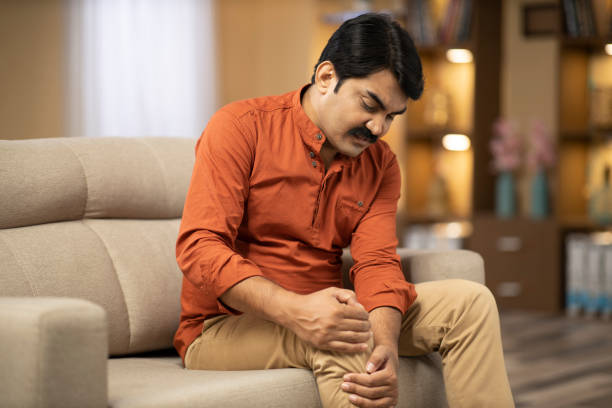
Knee osteoarthritis is the most common joint condition in Kerala. It affects millions of people across the state — particularly adults over 50, women post-menopause, and anyone who has had a previous knee injury.
Most people who come to us with knee OA have been told one of two things: take painkillers and manage it, or get a knee replacement. Neither of these is the full picture. There is a significant middle ground — structured, evidence-based non-surgical treatment — that most patients never get properly offered.
This guide covers what knee osteoarthritis actually is, how it progresses, what symptoms to watch for at each stage, and what non-surgical treatment options are available in Kerala today.
What Is Knee Osteoarthritis?
Osteoarthritis is a degenerative joint condition where the cartilage covering the ends of the bones gradually breaks down. Cartilage is the smooth, slippery tissue that allows bones to move against each other without friction. When it wears away, bone rubs on bone. This causes pain, swelling, stiffness, and progressive loss of function.
In the knee, osteoarthritis most commonly affects the medial compartment — the inner side of the knee — though it can affect the outer compartment and the joint behind the kneecap as well.
OA is not simply a result of ageing. Risk factors include:
- Previous knee injury — ACL tear, meniscus damage, fracture
- Obesity — every kilogram of body weight adds approximately four kilograms of force through the knee joint
- Repetitive occupational loading — jobs involving prolonged kneeling, squatting, or heavy lifting
- Genetics — family history of OA increases risk significantly
- Muscle weakness — particularly quadriceps weakness, which increases joint loading
- Sedentary lifestyle — reduces the joint lubrication that comes from movement
The Four Stages of Knee Osteoarthritis
Stage 1: Minor
X-ray shows minimal joint space narrowing and possible small bone spurs. Cartilage is still largely intact.
Symptoms: Mild aching after activity. Slight stiffness after sitting for long periods that eases within a few minutes of moving. Many people at this stage have no symptoms at all.
Treatment priority: This is the most important stage to intervene. Strengthening the muscles around the knee, maintaining a healthy weight, and staying active at this stage can significantly slow or halt progression. Most people do nothing at this stage because the pain is manageable. That is the mistake.
Stage 2: Mild
X-ray shows more visible joint space narrowing. Cartilage is thinning but still providing some cushioning. Bone spurs are more apparent.
Symptoms: More noticeable pain after activity — walking, climbing stairs, standing for extended periods. Morning stiffness that takes 15 to 30 minutes to ease. Occasional mild swelling after activity. Crepitus — a grinding or crunching sensation in the knee during movement.
Treatment priority: Physiotherapy, exercise therapy, weight management, and activity modification. This stage responds very well to conservative treatment. Patients who commit to a structured program at stage 2 frequently avoid surgery for years or indefinitely.
Stage 3: Moderate
Significant cartilage loss. Joint space is visibly narrowed on X-ray. Bone spurs are larger. Synovial inflammation is common, causing episodic swelling.
Symptoms: Pain during most activities — walking, climbing stairs, getting up from a chair. Pain that occurs at rest and sometimes at night. Persistent stiffness. Moderate to significant swelling after activity. The knee may feel unstable or give way occasionally.
Treatment priority: Conservative treatment is still effective at this stage and should be the first-line approach. Physiotherapy combined with pain management, activity modification, and if appropriate, injection therapy. Surgery becomes a consideration if conservative treatment fails to provide adequate quality of life.
Stage 4: Severe
Cartilage is largely or completely destroyed. Bone is rubbing directly on bone. Significant joint deformity is common — the classic bow-legged or knock-kneed appearance of advanced knee OA.
Symptoms: Constant pain. Significant functional limitation — difficulty walking more than short distances, climbing stairs, or performing basic daily activities. Persistent swelling. Significant joint deformity and instability.
Treatment priority: At true stage 4, knee replacement becomes appropriate. Conservative treatment manages symptoms but cannot restore function adequately when cartilage is completely absent. The decision for surgery should be based on functional limitation and quality of life, not X-ray findings alone.
Non-Surgical Treatment Options for Knee Osteoarthritis
Physiotherapy and Exercise Therapy
Exercise is the single most evidence-based treatment for knee osteoarthritis at every stage. A landmark trial in the New England Journal of Medicine found exercise therapy produced outcomes comparable to surgery for moderate knee OA.
The key is that exercise must be specific and progressive, not generic. Walking alone is not sufficient physiotherapy for knee OA, though it is beneficial.
A structured program includes:
Quadriceps strengthening. The quadriceps are the primary shock absorbers for the knee joint. Weakness in the quads increases compressive load on the joint surface. Straight leg raises, wall squats, and leg press exercises build quad strength without excessive joint loading in the early stages.
Hip strengthening. Weak hip abductors and external rotators cause the knee to collapse inward during walking and stair climbing, dramatically increasing medial compartment loading. Strengthening the glutes and hip muscles reduces this.
Balance and proprioception training. OA disrupts the proprioceptive feedback from the joint. Balance exercises restore this feedback, reducing the instability and giving way that characterises moderate OA.
Range of motion exercises. Maintaining full knee range of motion prevents the joint from stiffening further and maintains the joint lubrication that comes from movement through the full arc.
Shockwave Therapy (ESWT)
For knee OA with associated tendon pain — patellar tendinopathy, iliotibial band syndrome, or quadriceps tendinopathy — shockwave therapy stimulates tendon repair and reduces chronic pain signals. It is particularly useful when tendon involvement is a significant component of the pain picture.
Manual Therapy
Joint mobilisation of the knee and surrounding structures reduces stiffness, improves range of motion, and provides pain relief. Most effective when combined with exercise therapy rather than used alone.
Hydrotherapy
Exercise in warm water significantly reduces the compressive load on the knee joint while still building muscle strength. For patients with severe pain who cannot tolerate land-based exercise, hydrotherapy is a valuable starting point before progressing to land-based strengthening.
The buoyancy of water reduces effective body weight by approximately 60% when submerged to waist depth — making exercise possible at pain levels that would prevent land-based activity.
Activity Modification and Weight Management
Every kilogram of body weight lost reduces knee joint loading by approximately four kilograms. For overweight patients with knee OA, weight management is one of the highest-impact interventions available — more so than most treatments.
Activity modification means identifying and reducing activities that load the knee excessively — prolonged kneeling, stair climbing under heavy load, high-impact running — while maintaining overall activity levels through lower-impact alternatives.
Assistive Devices
Knee bracing, particularly unloader braces for medial compartment OA, shifts load from the damaged compartment to the less affected side. Appropriate footwear and orthotics reduce abnormal loading patterns. Walking aids reduce overall joint loading during flare-ups.
The Surgery Question
Knee replacement surgery is one of the most successful procedures in orthopaedic surgery. For true stage 4 OA with complete cartilage loss and significant functional limitation, it is the appropriate treatment.
It is not appropriate for stages 1 to 3 as a first-line treatment.
A common pattern we see at Maana Health is patients at stage 2 or 3 who have been told they need a knee replacement without ever completing a proper trial of physiotherapy and exercise therapy. Many of these patients, when they complete a structured 12-week program, achieve enough improvement in pain and function to defer surgery for years.
The questions to ask before agreeing to knee replacement surgery at stage 2 or 3:
Have I completed a genuine 12-week structured physiotherapy program with an
experienced physiotherapist?
Have I achieved and maintained a healthy weight?
Have I given exercise therapy enough time — not two weeks, but three months of consistent effort?
If the answer to any of these is no, conservative treatment deserves a proper trial first.
Frequently Asked Questions
Is walking good or bad for knee osteoarthritis?
Good, in most cases. Walking at a comfortable pace maintains joint lubrication, keeps surrounding muscles active, and does not significantly increase joint damage in stages 1 to 3. High-impact activities like running and jumping are more problematic. If walking causes significant pain, get assessed — the exercise program needs to start at a lower load and build up.
Will exercise make my arthritis worse?
No. This is one of the most persistent and harmful myths about osteoarthritis. Exercise does not accelerate cartilage breakdown. Sedentary behaviour does — by weakening the muscles that protect the joint and reducing the joint lubrication that comes from movement.
How do I know what stage my arthritis is at?
A weight-bearing knee X-ray is the standard investigation for staging knee OA. Your orthopaedic surgeon or physiotherapist can assess the stage based on the X-ray and your clinical symptoms. MRI provides more detail on cartilage quality but is not routinely needed for staging.
Can physiotherapy reverse osteoarthritis?
Physiotherapy cannot regenerate lost cartilage. What it does is strengthen the muscles that protect the joint, reduce pain, restore movement, and slow progression. At stages 1 and 2, proper management can significantly slow progression and maintain function for years. At stage 3, it manages symptoms and quality of life effectively for most patients.
Is knee replacement the only option for stage 4 OA?
Total knee replacement is the most effective treatment for stage 4 OA. Partial knee replacement is an option for isolated single-compartment disease. Conservative management can still provide symptom relief at stage 4 but cannot restore adequate function when cartilage is absent.
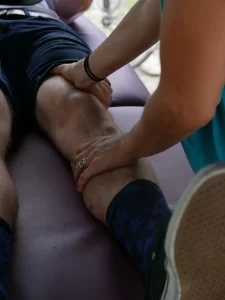
Maana Health treats knee osteoarthritis at all stages across five clinics in Kerala — Kochi, Calicut, Perinthalmanna, Aluva, and Trivandrum. If you have been told you need a knee replacement and want to know whether conservative treatment is worth trying first, book a free assessment with our senior physiotherapists.