
Authored by Ashitha Abdul Ashraf, Senior Consultant Physiotherapist – Incharge | Medically Reviewed by Dilshana Thasni T, Senior Consultant Physiotherapist | Last Reviewed: June 2026
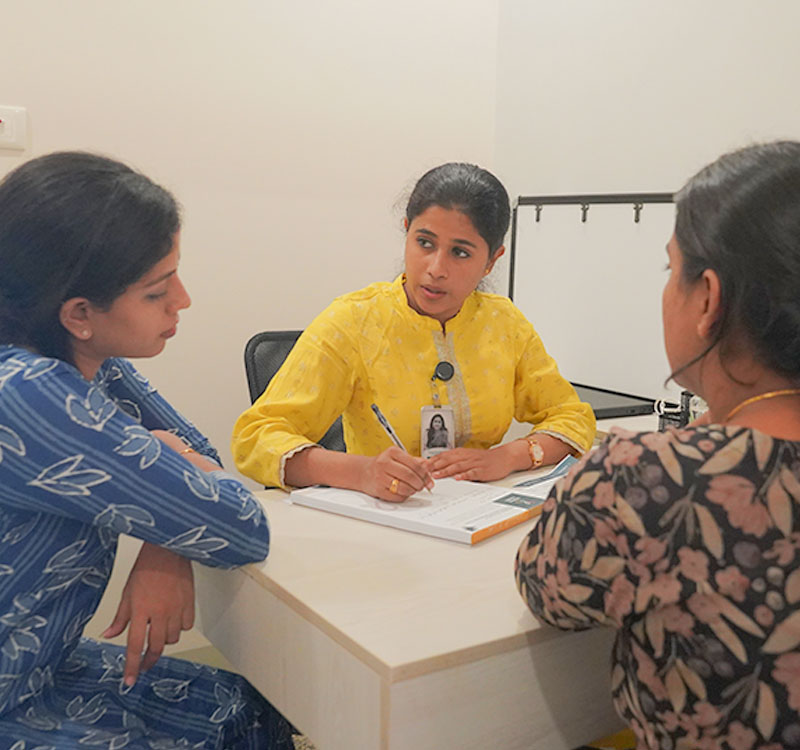
The first six months after a stroke are the most important period of recovery you will ever go through. What happens during this window — how early rehabilitation starts, how intensive it is, how consistent it is — determines a significant portion of your long-term outcome.
This is not a guide full of reassuring generalities. It is a practical, honest account of what stroke recovery looks like month by month, what physiotherapy does during each phase, and what families and caregivers need to know to support the process effectively.
Understanding What a Stroke Does to the Brain
A stroke occurs when blood supply to part of the brain is interrupted — either by a blockage (ischaemic stroke, accounting for about 85% of strokes) or a bleed (haemorrhagic stroke). Brain cells begin dying within minutes of losing blood supply.
The effects depend entirely on which part of the brain is affected and how much tissue is damaged. A stroke affecting the motor cortex causes weakness or paralysis on the opposite side of the body. A stroke affecting the cerebellum causes coordination and balance problems. A stroke affecting language areas causes aphasia — difficulty speaking, understanding, reading, or writing.
What makes stroke recovery possible — and what makes early, intensive physiotherapy so important — is neuroplasticity.
Neuroplasticity is the brain’s ability to reorganise itself by forming new neural connections. When brain cells die from a stroke, the functions they performed do not necessarily die with them. Other areas of the brain can learn to take over those functions — but only if they are stimulated repeatedly and intensively through rehabilitation.
The neuroplasticity window is most open in the first three to six months after a stroke. This is why this period is so critical. What is achieved in these six months is largely — though not entirely — what is retained long-term.
Month by Month: What to Expect
The First Two Weeks: Acute Phase
The acute phase happens in hospital. Medical stabilisation comes first — preventing a second stroke, managing blood pressure, treating the underlying cause.
Physiotherapy in the acute phase begins as soon as the patient is medically stable. For most ischaemic stroke patients, this means within 24 to 48 hours of the stroke.
What physiotherapy focuses on in the acute phase:
Positioning. How a stroke patient is positioned in bed matters significantly. Poor positioning leads to shoulder subluxation, contractures, and pressure sores. The physiotherapist will advise nursing staff and family on correct positioning at all times, not just during therapy sessions.
Early mobilisation. Sitting up, transferring from bed to chair, and standing with assistance begin in the first few days for most patients. Early mobilisation reduces the risk of pneumonia, blood clots, and contractures.
Respiratory physiotherapy. If swallowing or breathing is affected, respiratory physiotherapy reduces the risk of aspiration pneumonia — one of the most dangerous early post-stroke complications.
Splinting. If the hand or foot is showing early signs of spasticity, splinting maintains the joint in a functional position and prevents contracture formation.
What families should do in the acute phase:
Be present during therapy sessions when possible. The physiotherapist will teach you how to assist with exercises and positioning between sessions. The hour of formal physiotherapy is valuable. The other 23 hours, the family’s input matters.
Do not try to hurry the patient. Pushing for movement before the brain and body are ready does not accelerate recovery and can cause injury. Follow the physiotherapist’s guidance on what is safe.
Month 1 to 3: Early Rehabilitation Phase
This is the most intensive phase of stroke rehabilitation and the phase where the most rapid gains are made.
If the patient has been transferred to a stroke rehabilitation unit, formal physiotherapy will typically be 1 to 3 hours per day. If rehabilitation is happening through an outpatient clinic, sessions should be as frequent as possible — ideally 5 days per week in this early phase.
What physiotherapy focuses on:
Relearning movement. The physiotherapist uses specific neurological rehabilitation techniques — including Bobath, proprioceptive neuromuscular facilitation, and task-specific training — to stimulate the brain to reroute movement signals through undamaged neural pathways.
Sitting balance. Before walking can be addressed, the patient needs to achieve stable sitting balance. This is more complex than it sounds after a stroke — the affected side of the body may have little or no active muscle control, and the brain’s sense of midline is often disrupted.
Standing and weight bearing. Progressive weight bearing through the affected leg — even when there is minimal voluntary movement — stimulates the neural pathways for walking. The physiotherapist supports this process carefully.
Arm and hand rehabilitation. Upper limb recovery is typically slower than lower limb. Early hand and arm rehabilitation — repetitive task practice, mirror therapy, electrical stimulation — is critical in this phase. Recovery of fine hand function is one of the most challenging aspects of stroke rehabilitation.
Walking rehabilitation. Many patients begin assisted walking within the first two to four weeks of rehabilitation. Initially this requires significant assistance and walking aids. The goal is progressively reducing assistance as motor control returns.
What families should do:
Carry out the home exercise program consistently between sessions. The physiotherapist will prescribe specific repetitive exercises. Neuroplasticity is driven by repetition. A patient who does 200 repetitions of an arm exercise per day recovers faster than one who does 20.
Encourage independence in daily tasks — eating, dressing, washing — at the level the patient is capable of. Doing everything for the patient reduces the meaningful task practice that drives neural recovery.
Month 3 to 6: Consolidation Phase
By month three, the rate of spontaneous neurological recovery begins to slow. This does not mean recovery stops — it means the remaining gains require more effort and more intensive rehabilitation to achieve.
Progress in this phase is slower and less dramatic than in months one to three. This can be discouraging for patients and families. It is important to understand that slower progress in this phase is normal and does not mean a plateau has been reached.
What physiotherapy focuses on:
Refining movement quality. Early walking after a stroke often involves significant compensation — using the unaffected side to carry the affected side. Physiotherapy in this phase works on improving the quality of movement on the affected side — reducing the limp, improving arm swing, normalising the gait pattern.
Balance and fall prevention. Balance deficits persist after stroke and significantly increase fall risk. Specific balance training, including dual-task training — performing a cognitive task while walking — is a key focus in this phase.
Upper limb function. Continued intensive arm and hand rehabilitation. For patients with significant upper limb deficit, constraint-induced movement therapy — restricting the unaffected arm to force use of the affected arm — has strong evidence in this phase.
Community reintegration. Returning to meaningful activities — cooking, shopping, driving, work, hobbies — is addressed progressively. This is not just quality of life. It is rehabilitation. Meaningful activity drives the neural engagement needed for recovery.
Fatigue management. Post-stroke fatigue is one of the most common and most disabling symptoms. It is neurological in origin, not simply a result of physical deconditioning. Physiotherapy addresses fatigue through graded activity programs and energy conservation strategies.
Spasticity: What It Is and How It Is Managed
Spasticity — increased muscle tone and involuntary muscle stiffness — develops in a significant proportion of stroke patients, typically appearing in the weeks to months after the stroke.
Common patterns: flexed elbow and wrist, clenched fist, extended knee, plantarflexed foot. Left untreated, spasticity leads to contracture — permanent shortening of muscles and joints that severely limits function.
Physiotherapy management of spasticity:
Stretching and range of motion exercises performed daily — ideally twice daily.
Splinting and orthotics to maintain joint position.
Positioning to avoid postures that reinforce spastic patterns.
Functional electrical stimulation to activate weakened muscles and reduce spastic tone in their antagonists.
For severe spasticity, Botulinum toxin (Botox) injections reduce tone in specific muscles and allow physiotherapy to achieve better outcomes. The physiotherapist and neurologist coordinate this management.
What Families and Caregivers Need to Know
Stroke rehabilitation is not something that happens only during physiotherapy sessions. It is a 24-hour process that requires the active involvement of everyone around the patient.
The most important things caregivers can do:
Ensure the home exercise program is done every day. Not most days. Every day. This is the single biggest factor within the family’s control.
Do not do things for the patient that they can do for themselves, however slowly. Every time the patient attempts a task — eating, buttoning a shirt, picking up a cup — that is neural rehabilitation happening. Doing it for them removes that opportunity.
Watch for depression. Post-stroke depression affects 30 to 40% of stroke survivors and significantly impairs rehabilitation outcomes. It is not a sign of weakness. It is a direct neurological consequence of the stroke in many cases. If the patient seems persistently low in mood, withdrawn, or unmotivated, discuss this with the medical team.
Maintain social engagement. Isolation slows recovery. Social interaction stimulates multiple brain areas simultaneously. Visits, conversations, and community activities are part of rehabilitation.
Look after yourself. Caregiver burnout is real and common. A caregiver who is exhausted cannot provide consistent, quality support. Respite care, support groups, and asking for help are not failures — they are part of sustainable long-term care.
Recovery Beyond Six Months
The most significant recovery happens in the first six months. But recovery does not stop there.
Meaningful improvement continues for years after a stroke in many patients — particularly with ongoing physiotherapy and continued engagement in meaningful activity. There is no clinical basis for the idea that recovery stops at six months or at one year.
Patients who plateau in formal rehabilitation often benefit from periodic intensive physiotherapy programs — a focused block of daily sessions over several weeks — to stimulate further gains.
The brain’s neuroplasticity, while most active in the early post-stroke period, does not completely close. Motivation, consistency, and access to quality rehabilitation are the primary drivers of long-term recovery.
Frequently Asked Questions
When should stroke rehabilitation start?
As early as the patient is medically stable — typically within 24 to 48 hours for ischaemic stroke. Earlier rehabilitation consistently produces better outcomes. If a hospital has not offered physiotherapy within the first week, ask directly.
How many physiotherapy sessions per week does a stroke patient need?
In the first three months, as many as possible — ideally daily. Five sessions per week is the minimum recommended in most stroke rehabilitation guidelines for patients with significant deficit. Reducing this to one or two sessions per week in the early phase significantly reduces outcomes.
My family member had a stroke six months ago and has stopped improving. Is it too late?
No. Recovery continues beyond six months with appropriate rehabilitation. If progress has stalled, an intensive block of physiotherapy — daily sessions over 4 to 6 weeks — often produces renewed gains. The brain retains neuroplasticity well beyond the acute post-stroke period.
Can a stroke patient recover completely?
Some do — particularly those with milder strokes affecting smaller brain areas who receive early, intensive rehabilitation. For patients with more severe strokes, complete recovery of all functions may not be achievable, but significant functional improvement almost always is. The goal of rehabilitation is maximum function and quality of life, which looks different for every patient.
What is the role of speech therapy alongside physiotherapy?
If aphasia (language difficulty) or dysphagia (swallowing difficulty) are present, speech and language therapy is as important as physiotherapy. The two disciplines work in parallel, not sequentially. Both should begin as early as physiotherapy.
Maana Health provides stroke rehabilitation physiotherapy across five clinics in Kerala — Kochi, Calicut, Perinthalmanna, Aluva, and Trivandrum. If you or a family member has had a stroke and needs a rehabilitation assessment, contact us today to discuss how we can support your recovery.