Authored by Ashitha Abdul Ashraf, Senior Consultant Physiotherapist – Incharge | Medically Reviewed by Dilshana Thasni T, Senior Consultant Physiotherapist | Last Reviewed: June 2026
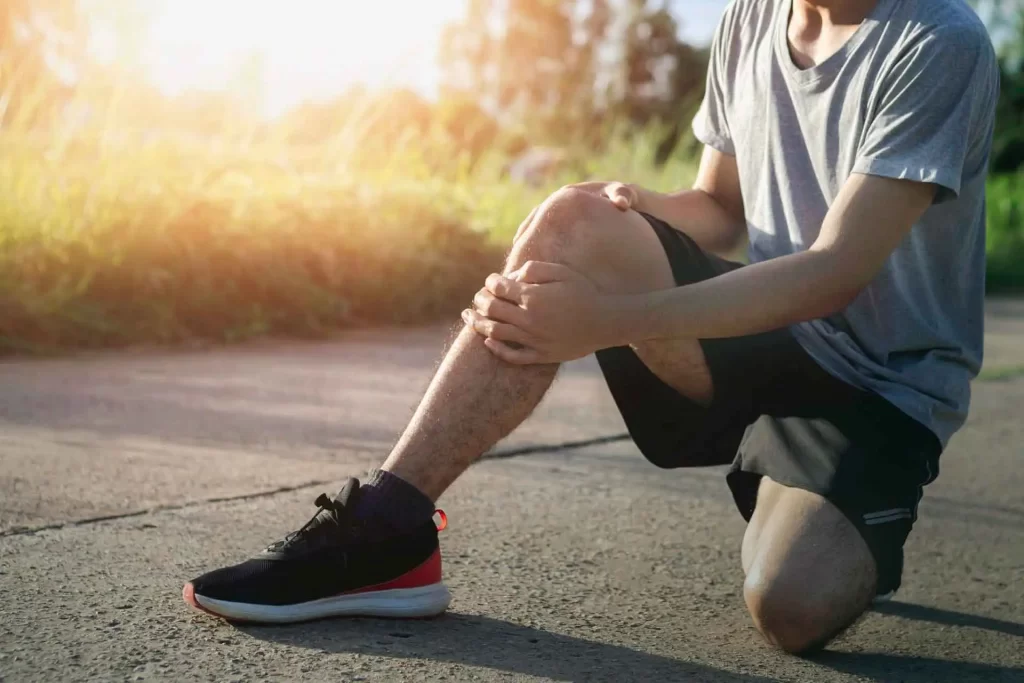
The most common question after a sports injury is not “what happened?” It is “when can I play again?”
It is also the question that gets the most misleading answers. Coaches say two weeks. Friends say they were back in a month. The internet gives you a range so wide it is useless. Meanwhile you are making decisions about training, competition, and surgery based on guesswork.
This guide gives you realistic, evidence-based recovery timelines for the most common sports injuries seen in Kerala — along with the factors that determine where in that range you will land.
Why Recovery Timelines Are Not Simple
Tissue heals at its own pace. That pace is determined by biology, not willpower or pain levels.
The problem is that pain is a poor indicator of tissue healing. Pain often resolves well before the tissue is structurally ready for full loading. This is why athletes who return to sport when the pain goes — rather than when the tissue is healed — re-injure at significantly higher rates.
Several factors determine your actual timeline:
Severity of the injury. A grade 1 ligament sprain involves microscopic fibre tearing. A grade 3 involves complete rupture. The biology of repair is different for each.
Which tissue is involved. Muscle heals faster than ligament. Ligament heals faster than tendon. Cartilage has almost no blood supply and heals very poorly without intervention.
Your age and health status. Tissue repair slows with age. Diabetes, poor nutrition, and smoking all impair healing significantly.
How quickly treatment started. Early physiotherapy consistently reduces recovery time compared to delayed treatment.
Whether you do your rehabilitation properly. This is the biggest variable. Patients who complete their home exercises, attend sessions consistently, and follow the return to sport program recover in the shorter end of the range. Those who do not take two to three times longer.
Recovery Timelines by Injury
Muscle Strains
Muscle strains are graded 1 to 3 based on severity.
Grade 1 — Minor strain (less than 10% of fibres torn)
Recovery: 1 to 3 weeks
Return to sport: 2 to 3 weeks with proper rehabilitation
Grade 2 — Moderate strain (10 to 50% of fibres torn)
Recovery: 3 to 6 weeks
Return to sport: 4 to 8 weeks depending on location and sport demands
Grade 3 — Complete muscle tear
Recovery: 3 to 6 months
Return to sport: 3 to 6 months — surgical repair may be required for some complete tears
The most common muscle strains in Kerala sport are hamstring strains in football and cricket players, calf strains in runners, and quadriceps strains in football and badminton players.
The most important thing to know about muscle strains: returning to full training before a grade 2 strain is fully healed is the primary cause of recurrence. Hamstring re-injury rates in athletes who return to sport too early are very high. A second hamstring tear in the same location takes significantly longer to heal than the first.
Ligament Sprains
Ligament sprains are also graded 1 to 3.
Ankle Ligament Sprain
Grade 1: 1 to 2 weeks
Grade 2: 3 to 6 weeks
Grade 3 (complete tear): 6 to 12 weeks conservative, or 3 to 6 months post-surgical repair for specific cases
Ankle sprains are the most common sports injury across all sports in Kerala. They are also the most under-rehabilitated. Most people rest until the swelling goes and then return to sport. This leaves the proprioceptive deficit — the loss of ankle joint position sense — unaddressed. This is why ankle re-sprain rates are so high.
A proper ankle rehabilitation program includes proprioception and balance training, not just strengthening. Without this component, re-injury risk remains elevated regardless of pain levels.
Knee Ligament Sprains (excluding ACL)
MCL Grade 1 to 2: 3 to 8 weeks
MCL Grade 3: 8 to 12 weeks conservative
PCL sprains: 6 to 12 weeks depending on grade
ACL Tear
Conservative management (non-surgical): 3 to 6 months
Post-surgical reconstruction: 9 to 12 months for return to pivoting sport
ACL reconstruction is one of the most well-researched injuries in sports medicine. The graft used to replace the torn ACL goes through a process called ligamentisation — transforming from the donor tissue into a functioning ligament — that takes 12 to 18 months to complete fully.
Return to sport at 6 months post-ACL reconstruction, which used to be the standard, has been consistently shown to have higher re-rupture rates than return at 9 to 12 months. The criteria for return to sport should be objective — strength symmetry between legs at 90% or greater, successful completion of sport-specific movement tests — not time alone.
Athletes who return to sport before meeting objective criteria have re-rupture rates two to three times higher than those who complete the full program. This is one situation where rushing has genuinely serious long-term consequences.
Meniscus Tear
Conservative management: 6 to 12 weeks
Post-surgical repair: 3 to 6 months
Post-surgical partial meniscectomy: 6 to 12 weeks
Recovery after meniscus surgery depends significantly on what was done. A meniscus repair — stitching the torn meniscus back together — requires a longer, more careful rehabilitation because the repaired tissue needs time to heal. Weight-bearing restrictions apply for several weeks.
A partial meniscectomy — removing the torn portion — has a shorter recovery but removes tissue permanently. There is growing evidence that partial meniscectomy for degenerative meniscus tears in older patients produces no better outcomes than physiotherapy alone. For traumatic tears in young athletes, surgical decisions should be made carefully based on tear pattern and location.
Rotator Cuff Tear (Shoulder)
Partial tear, conservative management: 3 to 6 months
Full thickness tear, conservative management: 6 to 12 months
Post-surgical rotator cuff repair: 6 to 12 months
Rotator cuff tears are common in throwing athletes, overhead sports like badminton and volleyball, and in anyone who falls on an outstretched arm.
The surgical versus conservative decision for rotator cuff tears is nuanced. Partial tears and full thickness tears in patients over 60 frequently respond well to physiotherapy. Full thickness tears in younger athletes with high overhead demands often do better with surgical repair.
What is consistent across the research: outcomes after rotator cuff surgery are strongly correlated with the quality of post-surgical rehabilitation. A technically successful repair followed by poor rehabilitation produces poor outcomes.
Achilles Tendon
Achilles tendinopathy (no tear): 3 to 6 months
Partial Achilles tear: 3 to 6 months conservative
Complete Achilles rupture, surgical repair: 6 to 12 months
Complete Achilles rupture, conservative management: 9 to 12 months
Achilles tendinopathy is one of the most frustrating conditions in sports physiotherapy because it responds slowly and responds poorly to rest. The Achilles tendon needs load to heal. A graduated loading program — eccentric and heavy slow resistance exercise — combined with shockwave therapy for chronic cases produces the best outcomes.
Complete Achilles rupture is a significant injury. Both surgical and conservative management can produce good outcomes, but rehabilitation must be done correctly and completely. Re-rupture of a previously ruptured Achilles is a serious complication with worse outcomes than the initial rupture.
Stress Fractures
Lower limb stress fractures (tibia, metatarsals): 6 to 12 weeks non-weight-bearing or reduced loading, followed by 4 to 8 weeks progressive return to running
High-risk stress fractures (femoral neck, anterior tibia, navicular): 3 to 6 months — these require more conservative management due to high non-union and complete fracture risk
Stress fractures are overuse injuries from repetitive bone loading exceeding the bone’s repair capacity. Common in runners, military recruits, and athletes who increase training load too quickly.
The primary treatment is load modification. Running must stop. Cross-training in non-weight-bearing activities — swimming, cycling — maintains fitness during recovery. Return to running follows a strictly progressive protocol.
The Most Common Reasons Recovery Takes Longer Than Expected
Returning to sport too early. The most consistent finding across sports injury research. Pain resolution is not tissue healing. Tissue healing takes the time it takes regardless of how you feel.
Incomplete rehabilitation. Stopping physiotherapy when pain resolves leaves strength, proprioception, and movement quality deficits that make re-injury likely. Completing the full program — including the return to sport phase — is not optional.
Ignoring the injury initially. Two weeks of rest followed by return to training when the pain has eased is not treatment for a grade 2 ligament sprain or muscle tear. Starting proper rehabilitation early produces better outcomes and shorter total recovery time.
Training through pain. Some discomfort during rehabilitation is expected and appropriate. Training through sharp pain or pain that worsens progressively causes further tissue damage and extends recovery.
Poor nutrition and sleep. Tissue repair requires adequate protein intake and sleep. Athletes who are under-eating or sleeping poorly heal more slowly regardless of how well their physiotherapy is going.
Return to Sport: The Right Criteria
Return to sport decisions should be based on objective criteria, not just pain and time.
Before returning to full training and competition after a significant sports injury:
- Pain-free at rest and during normal daily activities
- Full range of motion compared to the uninjured side
- Strength symmetry — injured side within 10% of uninjured side on testing
- Successful completion of sport-specific movement tests
- Psychological readiness — confidence in the injured structure under sport-specific loading
The last point is often overlooked. Athletes who lack confidence in the injured structure compensate with movement patterns that load other structures abnormally. Psychological readiness is a clinical assessment, not just self-reported confidence.
Frequently Asked Questions
My pain is gone. Can I return to training?
Pain resolution does not equal tissue healing. Check against the return to sport criteria above. If you have not been assessed against objective strength and movement criteria, get a physiotherapy assessment before returning to full training.
Is it better to have surgery or do physiotherapy for a sports injury?
Depends entirely on the injury. For most soft tissue injuries, physiotherapy first. For complete ACL tears in young active athletes, structural repairs requiring fixation, and locked meniscus tears, surgery is appropriate. The decision should be made with a sports medicine doctor or orthopaedic surgeon based on your specific injury, activity level, and goals.
How do I prevent re-injury after returning to sport?
Complete the full rehabilitation program including the return to sport phase. Maintain the strengthening program after returning to sport — do not stop the gym work when training resumes. Address the training load factors that caused the original injury.
Can shockwave therapy speed up recovery?
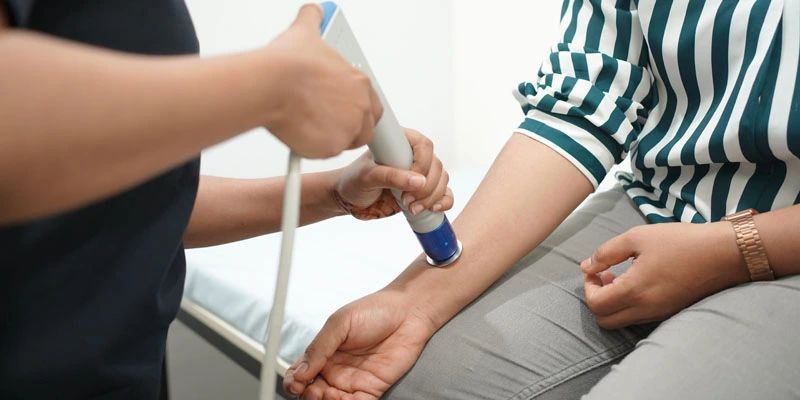
For chronic tendon conditions — Achilles tendinopathy, patellar tendinopathy, plantar fasciitis — shockwave therapy significantly accelerates recovery in cases that have not responded to exercise alone. For acute muscle and ligament injuries, it is not the primary treatment.
When should I see a physiotherapist after a sports injury?
As soon as possible. Early physiotherapy assessment determines the extent of the injury, rules out fracture if needed, and starts the rehabilitation process at the correct stage. Waiting until the acute pain settles delays the start of the recovery process unnecessarily.