Authored by Ashitha Abdul Ashraf, Senior Consultant Physiotherapist – Incharge | Medically Reviewed by Dilshana Thasni T, Senior Consultant Physiotherapist | Last Reviewed: June 2026
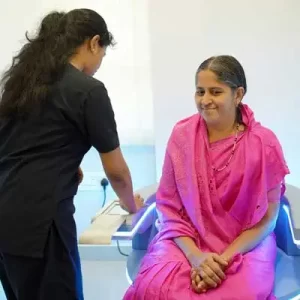
Physiotherapy sessions are one hour. The other 23 hours of the day happen at home.
That ratio matters more than most families realise. The neuroplasticity that drives stroke recovery is built through repetition — hundreds of repetitions of specific movements, performed consistently, day after day. A physiotherapist can design the program and monitor progress. The family and caregiver deliver the volume that makes recovery possible.
This guide gives caregivers a practical, safe home exercise program for stroke survivors — with clear instructions, precautions, and guidance on how to support the exercises without causing injury.
Before You Start: Important Rules for Caregivers
Always follow the physiotherapist’s program first. The exercises in this guide are general and appropriate for most stroke survivors in the subacute and chronic phases. They do not replace the specific program your physiotherapist has prescribed. If there is a conflict, follow the physiotherapist.
Never force movement. If the stroke survivor resists a movement, feels pain, or becomes distressed, stop. Forced movement does not accelerate recovery and can cause injury.
Watch for fatigue. Post-stroke fatigue is neurological, not just physical. A stroke survivor may tire significantly faster than expected. Short, frequent sessions — two to three 20-minute sessions spread through the day — are more effective and safer than one long exhausting session.
Do exercises at the same time each day. Routine helps with motivation and compliance. Morning sessions when energy is higher often work best.
Count repetitions out loud. This adds a cognitive component to the exercise, engages language areas of the brain, and helps the stroke survivor stay focused.
Positioning Before You Begin
Correct positioning before exercise protects the affected shoulder and sets the stroke survivor up for safe movement.
If exercising in a chair, ensure:
- Both feet are flat on the floor
- Hips are at 90 degrees — not sliding forward in the chair
- The affected arm is supported on a pillow or armrest — never allowed to hang unsupported, which risks shoulder subluxation
- The chair is stable and will not slide
If exercising in bed, ensure:
- The head of the bed is elevated to approximately 45 degrees for upper limb exercises
- A rolled towel or pillow supports the affected arm in a comfortable position
Upper Limb Exercises
Upper limb recovery after stroke is typically slower than lower limb and requires the most consistent home practice to achieve gains.
1. Shoulder Supported Range of Motion
Purpose: Maintains shoulder range of motion and stimulates neural pathways for arm movement.
How to do it: The stroke survivor lies on their back or sits supported. The caregiver holds the affected arm gently — one hand supporting the elbow, one supporting the wrist. Slowly move the arm forward and upward (shoulder flexion) to a comfortable range. Hold 2 seconds at the end of range. Lower slowly. Repeat 10 times.
Then move the arm out to the side (shoulder abduction) to a comfortable range. Hold 2 seconds. Return slowly. Repeat 10 times.
Caregiver note: Move slowly and smoothly. Watch the stroke survivor’s face for signs of pain or discomfort. Never push into pain. The shoulder after stroke is vulnerable to subluxation and injury if handled roughly.
Frequency: Twice daily.
2. Elbow Flexion and Extension
Purpose: Maintains elbow range of motion and activates biceps and triceps if any voluntary movement is present.
How to do it: Caregiver supports the affected arm at the elbow. Slowly bend the elbow bringing the hand toward the shoulder. Hold 2 seconds. Slowly straighten. Repeat 15 times.
If the stroke survivor has any voluntary elbow movement, encourage them to try to assist the movement. Even minimal voluntary effort engages the neural pathways that rehabilitation is trying to strengthen.
Frequency: Twice daily.
3. Wrist and Finger Range of Motion
Purpose: Prevents contracture of the wrist and fingers — one of the most common and disabling complications of stroke.
How to do it: Caregiver holds the affected forearm with one hand. With the other hand, gently move the wrist upward (extension) and downward (flexion) through a comfortable range. Repeat 10 times in each direction.
Then gently open the fingers — straightening them if they are curled — and close them into a loose fist. Repeat 10 times. Do not force fingers open if there is significant resistance.
Caregiver note: Spastic wrist and finger flexion is common after stroke. If the wrist or fingers are very stiff or resist movement, do not force. Gentle, sustained holding at the end of comfortable range for 30 seconds is more effective and safer than forced movement.
Frequency: Three times daily. This is the one exercise that benefits from higher frequency because contracture prevention requires consistent input throughout the day.
4. Mirror Therapy (If Recommended by Physiotherapist)
Purpose: Uses the brain’s mirror neuron system to stimulate motor areas for the affected hand. Strong evidence for improving hand function after stroke.
How to do it: A mirror is placed vertically along the midline of the body, with the affected hand hidden behind it. The stroke survivor watches the reflection of the unaffected hand in the mirror — which appears to be the affected hand moving. The unaffected hand performs slow, deliberate movements — opening and closing, finger tapping, wrist rotation.
The stroke survivor focuses entirely on the mirror image as if it is their affected hand moving.
Sessions of 20 to 30 minutes daily. This can be done independently by the stroke survivor if they have adequate sitting balance and comprehension.
Frequency: Once daily.
Lower Limb Exercises
5. Ankle Pumps
Purpose: Prevents blood clots, reduces ankle swelling, and maintains ankle range of motion. One of the most important exercises in the acute and early subacute phase.
How to do it: Stroke survivor lies on their back or sits in a chair. Pump the affected foot up toward the shin (dorsiflexion) and down away from the shin (plantarflexion). If voluntary movement is limited, the caregiver assists. Repeat 20 times.
Frequency: Every hour during waking hours in the early phase. Three times daily in the later phase.
6. Knee Flexion and Extension in Bed
Purpose: Maintains knee range of motion and activates quadriceps and hamstrings.
How to do it: Stroke survivor lies on their back. Caregiver places one hand under the affected knee to support it, and one hand at the ankle. Slowly slide the heel toward the buttocks, bending the knee. Hold 2 seconds. Slowly straighten. Repeat 15 times.
If any voluntary movement is present in the knee, encourage the stroke survivor to assist.
Frequency: Twice daily.
7. Supported Standing
Purpose: Weight bearing through the affected leg is one of the most powerful stimuli for lower limb motor recovery. It also prevents bone density loss, improves circulation, and provides a significant psychological benefit.
How to do it: Only attempt this when cleared by the physiotherapist and when adequate assistance is available. Two people are ideal in the early phase.
The stroke survivor moves to the edge of the chair with feet flat on the floor. The caregiver stands on the affected side. On a count of three, the stroke survivor pushes up to standing — using both arms on the armrests if possible. The caregiver provides support at the affected hip or waist — not pulling on the affected arm.
Once standing, encourage the stroke survivor to shift weight gently to the affected leg and hold for 5 to 10 seconds. Sit back down slowly and in a controlled manner.
Repeat 5 to 10 times as tolerated.
Caregiver note: Never pull on the affected arm to assist standing. This risks shoulder subluxation. Support at the trunk or unaffected side.
Frequency: Three to five times daily as tolerated.
8. Seated Knee Lifts (Hip Flexion)
Purpose: Activates hip flexors — essential for the swing phase of walking.
How to do it: Stroke survivor sits in a chair with feet flat. Ask them to try to lift the affected knee toward the chest. If no voluntary movement is possible, the caregiver assists by placing a hand under the thigh and lifting gently. Hold 2 seconds at the top. Lower slowly. Repeat 10 times.
Encourage maximum voluntary effort from the stroke survivor even when assistance is needed. The attempt matters as much as the movement.
Frequency: Twice daily.
Cognitive and Dual-Task Exercises
Recovery from stroke involves cognitive as well as physical rehabilitation. Combining movement with a cognitive task — dual-task training — strengthens neural connections more effectively than movement alone.
9. Walking and Talking
Once the stroke survivor is walking safely with appropriate assistance or aids, introduce a conversational task simultaneously. Ask simple questions while walking — counting backward from 20, naming categories (fruits, colours, cities), or recalling a recent event.
This is not as simple as it sounds. Many stroke survivors find dual tasks significantly more difficult than single tasks. Start with very simple cognitive additions and progress gradually.
Frequency: During walking practice sessions.
10. Repetitive Task Practice
Choose a meaningful daily activity the stroke survivor wants to recover — pouring water into a cup, picking up coins, folding a cloth, turning pages of a book. Practice the task repetitively — 50 to 100 repetitions in a session — using the affected hand as much as possible.
Meaningful task practice drives neuroplasticity more effectively than abstract exercises because it engages motivation, attention, and multiple brain areas simultaneously.
Frequency: Once daily, 20 to 30 minutes.
How to Track Progress
Keep a simple daily log. Note which exercises were completed, how many repetitions, and any observations — whether the stroke survivor seemed to assist more than yesterday, whether a movement that was previously impossible showed a flicker of voluntary effort.
Small gains are significant in stroke rehabilitation. They indicate neural pathway formation. Document them. Report them to the physiotherapist at each session.
Warning Signs: When to Stop and Call the Physiotherapist or Doctor
Stop exercise and contact the medical team if the stroke survivor develops:
- Sudden severe headache
- New weakness or numbness — particularly on the unaffected side
- Sudden confusion or change in consciousness
- Chest pain or severe shortness of breath
- Severe shoulder pain during or after exercises
- Seizure activity
These may indicate a second stroke or a medical complication. Do not continue exercising. Seek medical attention immediately.
Frequently Asked Questions
How many times a day should we do home exercises after stroke?
In the early phase, two to three sessions of 20 to 30 minutes spread through the day is ideal. One long session is less effective than multiple shorter sessions for neuroplasticity. As the stroke survivor gains stamina, session length can increase.
What if the stroke survivor refuses to exercise?
Post-stroke depression and apathy are common and can significantly reduce motivation. Try linking exercises to enjoyable activities — doing hand exercises while watching a favourite programme, or walking to a preferred destination. If refusal is persistent, discuss with the physiotherapist and medical team. Depression after stroke requires treatment.
Can exercises make a stroke worse?
Appropriate exercises prescribed by a physiotherapist do not cause a second stroke. Physical activity after stroke is safe and beneficial when cleared by the medical team. The warning signs listed above are not caused by exercise — they indicate a medical event that would have occurred regardless.
Is it too late to start home exercises if it has been more than six months since the stroke?
No. Home exercise programs produce gains beyond six months post-stroke. The rate of improvement is slower than in the early phase but meaningful recovery continues with consistent rehabilitation effort.
How do we know if the exercises are working?
Look for small changes over weeks — the affected arm moving slightly further, the affected leg bearing weight more confidently, improved sitting balance, less assistance needed for standing. Report these observations to the physiotherapist. They are evidence of neural recovery in progress.