
Did you know that nearly 90% of spine-related issues: including those agonizing herniated discs and cases of sciatica: can be successfully managed without ever stepping into an operating room? If you’ve been told that surgery is your only option for long-term relief, you might be following an outdated roadmap. The clinical evidence suggests that for the vast majority of people, advanced non-surgical protocols offer outcomes that are just as effective as surgery, but without the high risks or the long, painful recovery periods.
When you are living with chronic back pain, it’s easy to feel desperate. You want a “fix,” and surgery sounds like the most definitive one. But the reality is often more complex. In many cases, surgery treats the symptom: the visible bulge on an MRI: rather than the functional root cause that led to the injury in the first place. This is why a growing number of people in Kerala are seeking out a more modern, technology-led approach to spine treatment without surgery.
Is a herniated disc always a “surgical emergency”?
One of the biggest misconceptions in modern orthopedics is that a visible disc bulge on an MRI automatically means you need a surgeon. It’s a scary thought: something “slipping” or “bursting” in your spine. However, clinical studies have shown that many people with no back pain at all actually have herniated discs appearing on their scans. The image doesn’t always tell the whole story.
Unless you are experiencing “red flag” symptoms: like a sudden loss of bowel or bladder control or progressive leg weakness: you likely have a window of opportunity to heal naturally. Your body has an incredible capacity for resorption, a process where the herniated material is naturally broken down and absorbed by the body. The goal of an advanced physiotherapy clinic in Trivandrum isn’t just to “exercise” the pain away, but to use targeted technology to create the right environment for this natural healing to happen faster.
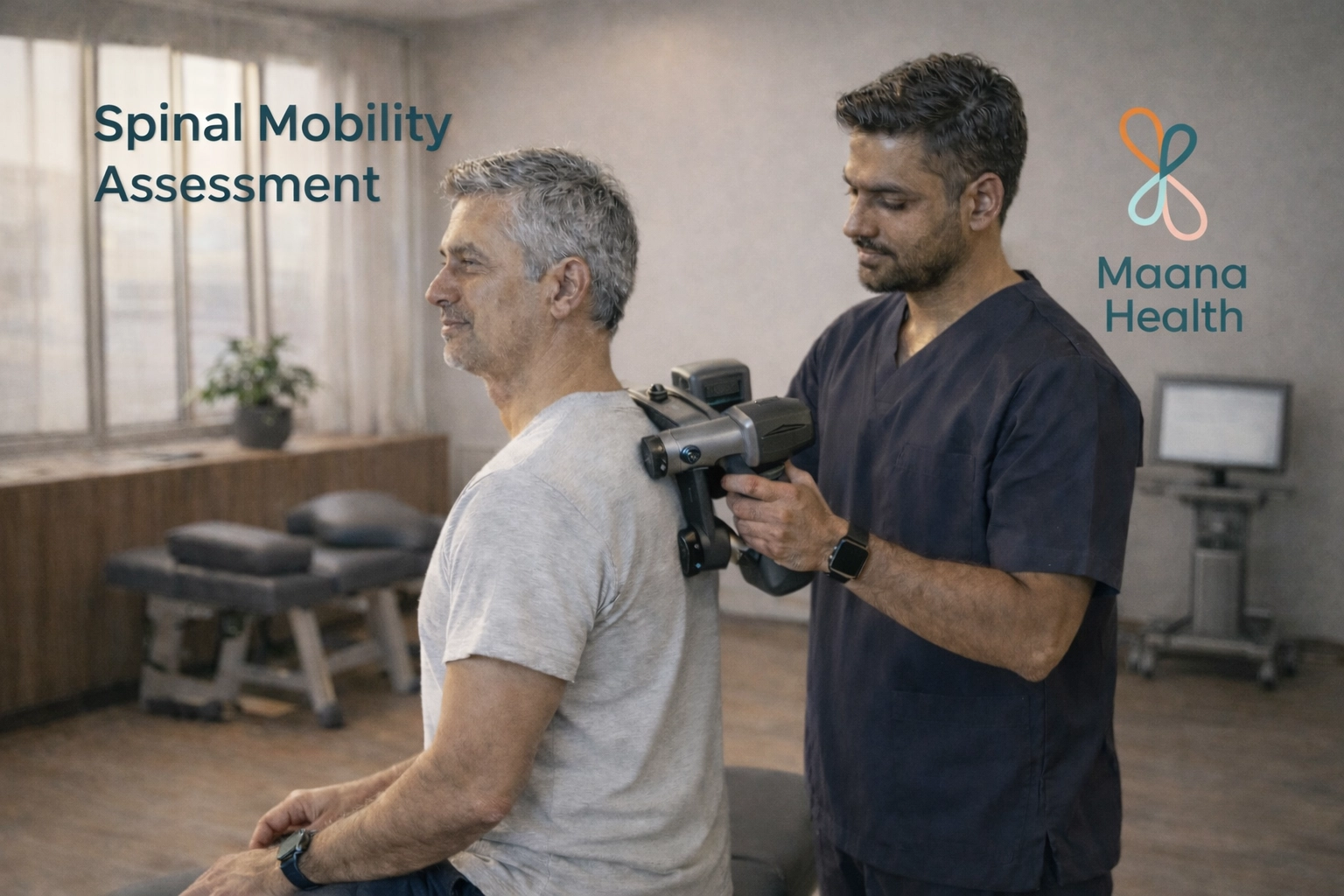
A clinical setting showing advanced mechanical diagnostic tools used to assess spinal mobility without invasive procedures.
What actually happens during spinal decompression?
If we aren’t using a scalpel, how do we actually “fix” a compressed nerve? This is where the heavy hitters of medical technology come in. At Maana Health, we move beyond the basic heat packs and general stretches that many associate with traditional therapy. Instead, we focus on clinical modalities like Spinal Decompression Therapy.
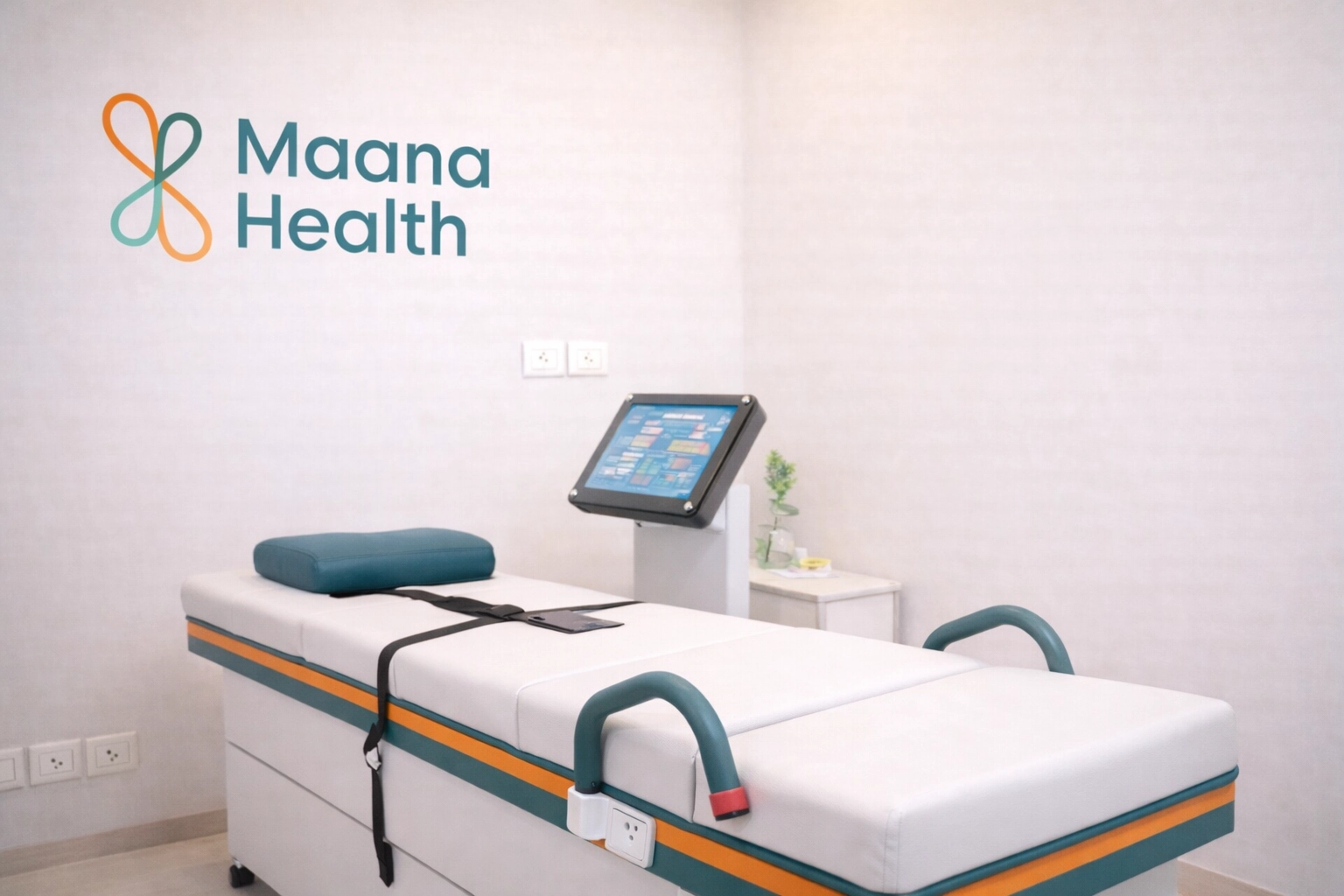
Imagine your spinal discs as small, fluid-filled sponges between your vertebrae. When you have a condition like a herniated disc or spinal stenosis: a narrowing of the spinal canal that compresses the nerves: those sponges are being squeezed tight. Spinal decompression uses a specialized, FDA and CE-approved table to gently and precisely distract the spine.
By applying a specific, computer-controlled amount of tension, we create “negative intradiscal pressure.” This acts like a vacuum, gently coaxing the protruding disc material back toward the center of the disc and away from the sensitive nerves. In our clinics, this is delivered using advanced decompression systems like TheraMaster by Shinhwa Medical (South Korea) and KNX-7000 by Hanmed (South Korea) — their South Korean origin is widely recognised as a strong marker of high-end clinical quality and engineering consistency. This isn’t just about feeling better in the moment; it’s about physically reducing the pressure so the nerve can stop sending those white-hot signals of pain down your leg.
Is technology really more effective than manual therapy?
While a skilled pair of hands can provide temporary relief, manual techniques have their limits when it comes to deep-seated spinal issues. You can’t manually “pull” a disc back into place with the same precision and consistency that a specialized decompression bed can.
Our approach as a pioneer in Kerala is to put technology at the forefront of your recovery. When you use advanced modalities, you remove the guesswork. The TheraMaster by Shinhwa Medical (South Korea), for example, allows you to target specific vertebral levels with pinpoint accuracy — a South Korean build standard that’s widely seen as a mark of high-end clinical quality. Whether your issue is in the cervical spine (neck) or the lumbar spine (lower back), the technology helps ensure the force is applied exactly where you need it most.
This technology-led rehabilitation ensures that the treatment is evidence-based and clinically validated. It’s not about a “one size fits all” massage; it’s about a personalized treatment protocol that uses mechanical precision to achieve what manual force simply cannot.
Why are long-term outcomes for non-surgical care so high?
A common fear is that non-surgical treatment is just “delaying the inevitable.” You might worry that if you don’t get the surgery now, you’ll just end up back in the same position a year later. However, large-scale clinical trials tell a different story.
Research comparing patients who chose surgery versus those who chose intensive non-surgical care found that while the surgical group often felt relief faster (within the first few weeks), at the one-year and two-year marks, both groups reported nearly identical levels of pain and function.
The difference? The non-surgical group reached that point without the risk of “failed back surgery syndrome,” scar tissue complications, or the side effects of heavy anesthesia. By focusing on the root cause not just symptoms, we help you build a spine that is resilient enough to handle your daily life, whether that’s playing with your grandkids or returning to a high-impact sport.
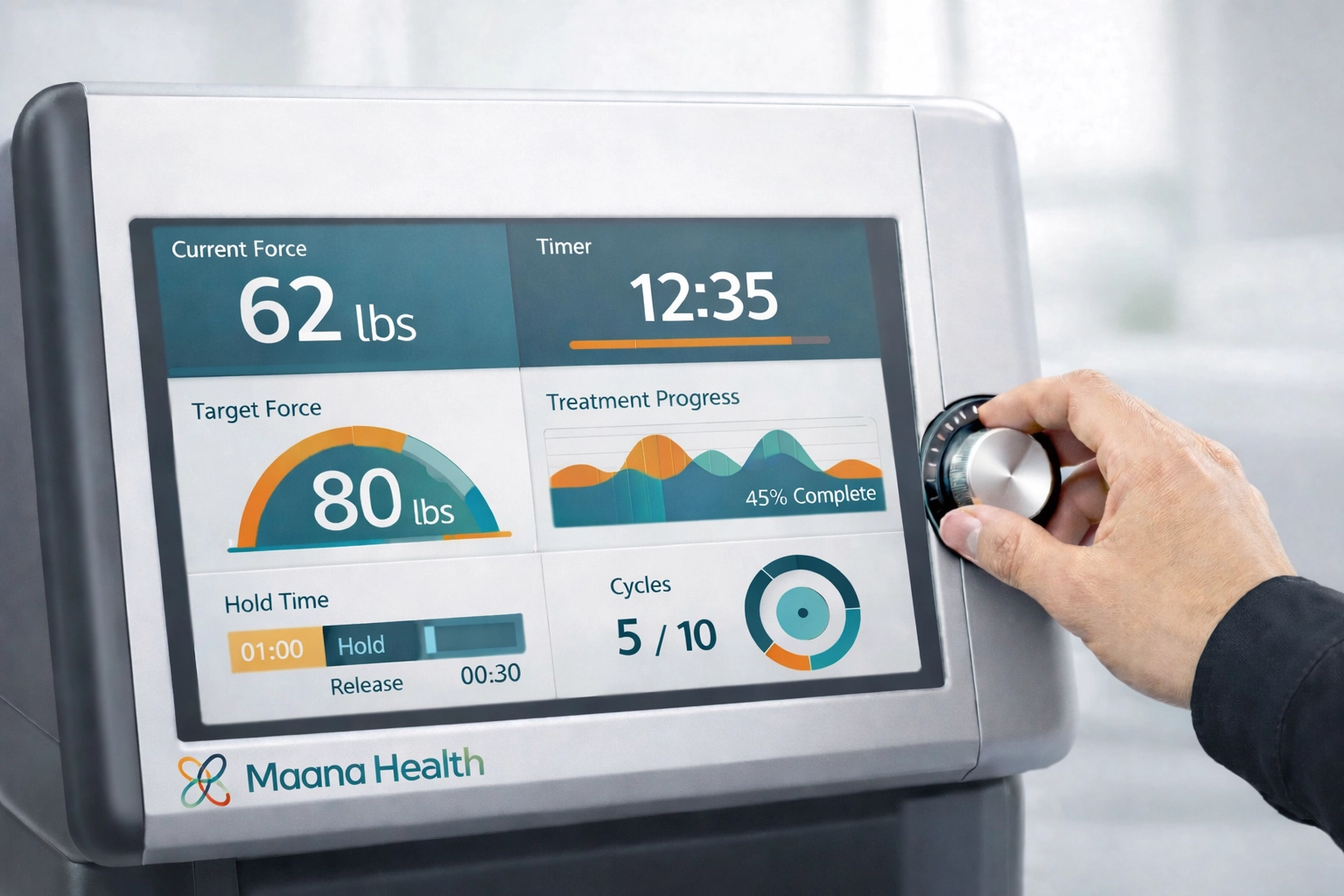
A close-up of a digital control panel for a spinal decompression bed, showing the precision settings used for patient-specific protocols.
Can you really treat sciatica without injections or surgery?
Sciatica: that radiating pain, numbness, or tingling that travels from your lower back down your leg: is one of the most common reasons people seek spine surgery. It’s often caused by a disc pressing on the sciatic nerve.
In many traditional settings, the first response to sciatica is a steroid injection. While injections can dampen the inflammation, they don’t fix the mechanical compression. At our clinic, we use advanced modalities to address the physical pressure on the nerve. By combining spinal decompression with targeted neuromuscular stimulation, we help “re-educate” the muscles surrounding the spine.
This dual approach ensures that once the pressure is off the nerve, your body has the stability to keep it off. It’s about more healthy years of life, not just a few weeks of suppressed symptoms. If you are looking for a physiotherapy clinic in Trivandrum that prioritizes this level of clinical depth, you’re in the right place.
Why is Maana Health the right choice for your spine?
We believe you deserve more than a quick fix or a generic exercise sheet. At Maana Health, we have treated over 10,000+ patients using a philosophy that balances human empathy with cutting-edge science. We don’t use lasers or unproven gadgets; we use clinically validated, FDA-approved technology that has a track record of success.
Our spinal wellness program is designed to be non-surgical and has no side effects. From the moment you walk in, our focus is on a thorough mechanical diagnosis. We want to understand exactly why your spine is struggling. Is it a mobility issue? A compression issue? A stability issue? Once we have the answer, we build your protocol around the advanced modalities that will get you back to your life the fastest.
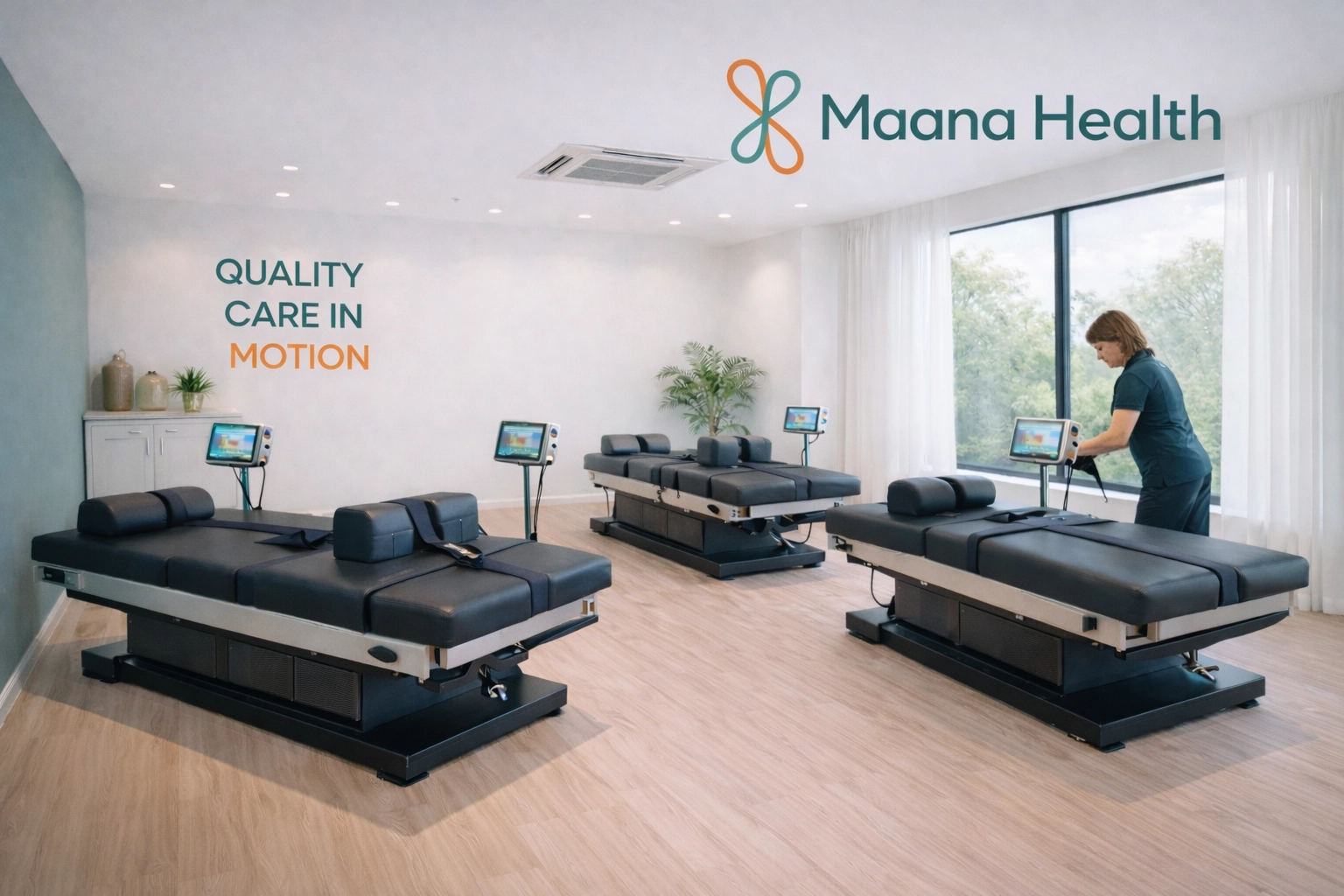
A modern, clean treatment room at Maana Health, emphasizing the clinical and professional environment of the center.
Your journey toward recovery shouldn’t feel like a gamble. When you choose a technology-led path, you are choosing a treatment that is measurable and repeatable. You are choosing to avoid the operating table and instead, invest in the long-term health of your musculoskeletal system.
If you’re tired of the “wait and see” approach or you’re feeling pressured to schedule a surgery you aren’t sure you need, it might be time for a second opinion based on modern physical medicine. You don’t have to live your life around your back pain.
Speak to one of our physiotherapists today to see if our non-surgical spinal protocols are the right fit for you.