
Authored by Ashitha Abdul Ashraf, Senior Consultant Physiotherapist – Incharge | Medically Reviewed by Dilshana Thasni T, Senior Consultant Physiotherapist | Last Reviewed: June 2026
Lower Back Pain: Causes, Diagnosis, and Non-Surgical Treatment Options
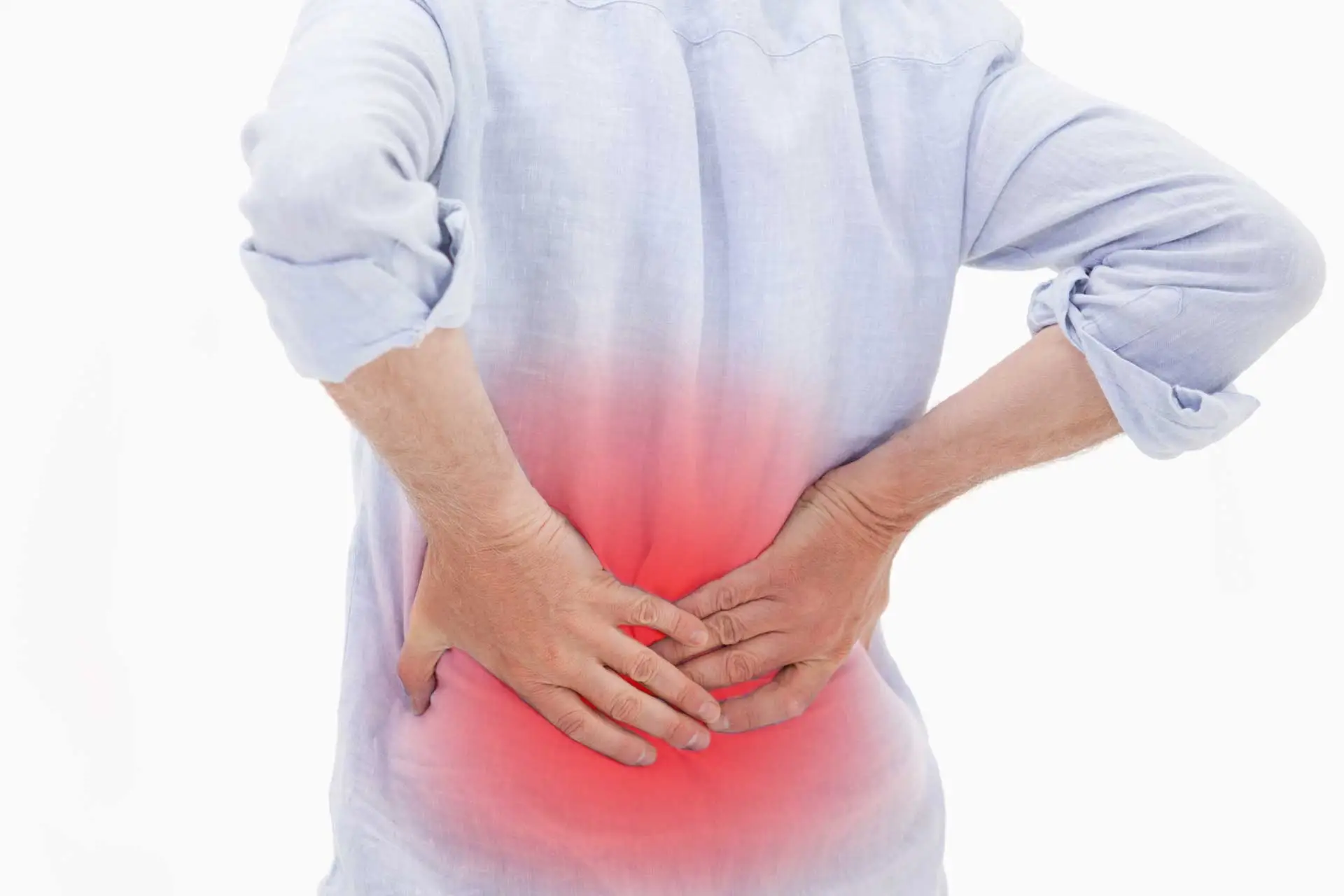
Lower back pain is the leading cause of disability worldwide. In Kerala, it is one of the top three reasons people visit a physiotherapy clinic. Most people who develop it will recover fully. A significant number will not — not because their condition is untreatable, but because they either wait too long, treat the symptom instead of the cause, or stop treatment the moment the pain eases.
This guide covers what actually causes lower back pain, how it is properly diagnosed, and what non-surgical treatment options are available in Kerala today.
What Is Actually Happening When Your Back Hurts
Your lumbar spine — the lower five vertebrae — carries the majority of your body weight and absorbs force with every step, sit, and lift. Between each vertebra sits a disc, a tough outer ring filled with a gel-like centre that acts as a shock absorber.
Surrounding the spine are layers of muscle, ligaments, and nerves. The spinal canal runs through the centre of the vertebrae, housing the spinal cord and the nerve roots that branch out to your legs, bladder, and bowel.
Lower back pain happens when any of these structures are damaged, compressed, inflamed, or placed under load they cannot handle. The pain you feel is rarely from one isolated structure. It is usually a combination of disc involvement, nerve irritation, and muscle guarding — each one feeding the other.
Common Causes of Lower Back Pain
Muscle Strain and Ligament Sprain
The most common cause, particularly for acute back pain that comes on suddenly after lifting, twisting, or a sudden movement. The muscles and ligaments are overstretched or torn at a microscopic level.
This type of back pain typically resolves within two to four weeks with appropriate treatment. The mistake most people make is resting completely, which allows muscles to weaken and stiffen further.
Disc Herniation
The outer ring of a spinal disc tears and the gel-like inner material pushes outward, pressing on a nearby nerve root. This causes pain that often radiates down the leg — sciatica — along with numbness, tingling, or weakness in the leg or foot.
Disc herniations sound alarming on an MRI report. In reality, over 90% resolve with conservative treatment within 12 weeks. Surgery is rarely necessary unless there is progressive neurological deficit.
Degenerative Disc Disease
As discs age, they lose water content and height. The space between vertebrae narrows. This is a normal part of ageing — MRI scans of people over 40 with no back pain routinely show disc degeneration. The problem is when degeneration reaches a point where it causes nerve compression or joint instability.
Lumbar Spondylosis
Wear and tear of the lumbar vertebrae and the facet joints between them. Bone spurs (osteophytes) can form, narrowing the space available for nerve roots. Common in people over 50 but increasingly seen in younger patients with sedentary lifestyles.
Spinal Stenosis
Narrowing of the spinal canal that compresses the spinal cord or nerve roots. Causes pain, heaviness, and weakness in the legs that worsens with walking and improves with sitting or bending forward. Conservative physiotherapy manages most cases effectively. Severe stenosis with significant neurological involvement may require surgical decompression.
Spondylolisthesis
One vertebra slips forward over the one below it. Can be congenital, degenerative, or caused by a stress fracture in the vertebra. Causes chronic lower back pain and sometimes leg symptoms. Most cases are managed conservatively with physiotherapy focused on core stabilisation.
Sacroiliac Joint Dysfunction
The sacroiliac joint connects the base of your spine to your pelvis. When it moves too much or too little, it causes lower back and buttock pain that is frequently misdiagnosed as disc-related. Physiotherapy targeting the SI joint specifically produces good results.
How Lower Back Pain Is Properly Diagnosed
A scan is not a diagnosis. This distinction matters.
An MRI showing a disc bulge tells you there is a disc bulge. It does not tell you whether that disc bulge is actually causing your pain, whether it is pressing on a nerve, or whether it is clinically significant. Many people over 40 have disc bulges on MRI with no pain whatsoever.
A proper diagnosis requires three components working together.
Clinical history. When did it start, how did it start, where exactly is the pain, does it radiate, what makes it better or worse, what have you already tried. This information narrows the differential diagnosis before any physical examination begins.
Physical examination. A trained physiotherapist or doctor will assess your posture, range of movement, muscle strength, neurological function — reflexes, sensation, straight leg raise — and perform specific clinical tests for disc involvement, nerve root compression, and sacroiliac dysfunction. This examination tells you whether the structural finding on the scan matches what your body is actually doing.
Imaging. X-rays show bone structure and disc space height. MRI shows soft tissue including discs, nerves, and the spinal cord. Imaging confirms what the clinical examination suspects. It rarely replaces it.
The combination of all three gives you an accurate diagnosis. Treatment decisions based on imaging alone — without clinical examination — frequently miss the actual cause of pain.
Non-Surgical Treatment Options for Lower Back Pain
Physiotherapy and Exercise Therapy
The foundation of conservative back pain treatment. A physiotherapy program for lower back pain addresses three things: pain relief, movement restoration, and strengthening the muscles that support the spine.
For acute back pain, early controlled movement produces better outcomes than bed rest. Specific exercises targeting the deep stabilising muscles — the multifidus and transverse abdominis — reduce recurrence rates significantly. Patients who complete a full physiotherapy program for lower back pain have lower rates of recurrence than those who rely on medication alone.
Spinal Decompression Therapy
For disc herniations, sciatica, and degenerative disc disease, computerised spinal decompression is one of the most effective non-surgical treatments available.
The KNX-7000 system applies precise, rhythmic traction to the lumbar spine at a specific angle calculated for your disc level. This creates negative intradiscal pressure — pulling herniated disc material away from the nerve and drawing water and nutrients back into the dehydrated disc.
A standard course is 15 to 20 sessions. Many patients with chronic sciatica who have failed medication, injections, and basic physiotherapy experience substantial relief within 8 to 10 sessions of spinal decompression.
It is not suitable for everyone. Patients with severe osteoporosis, spinal fractures, spinal implants, or certain other conditions are not candidates. A proper assessment determines suitability before treatment begins.
Manual Therapy
Hands-on joint mobilisation and manipulation of the lumbar spine and surrounding structures. Effective for facet joint pain, sacroiliac dysfunction, and restricted lumbar movement. Manual therapy works best as part of a broader treatment plan rather than as a standalone treatment.
TENS and Electrotherapy
Standard TENS provides temporary pain relief by interrupting nerve pain signals. It is useful for managing pain between sessions and allowing patients to exercise more comfortably. It does not treat the underlying cause.
Shockwave Therapy (ESWT)
For chronic muscle trigger points and tendon-related back pain, shockwave therapy stimulates tissue repair and reduces chronic pain signals. It is particularly useful for cases where deep muscle tightness is a primary driver of pain.
Lifestyle and Ergonomic Modification
For desk workers, the position you sit in for 8 hours a day matters as much as any treatment. Ergonomic assessment and modification — chair height, monitor position, sitting duration, movement breaks — is a required component of lower back pain treatment for office-based patients. Treatment without addressing the cause produces temporary results.
When to See a Doctor Urgently
Most lower back pain is not a medical emergency. Some presentations are. Go to a doctor or emergency department immediately if you experience:
- Numbness or tingling in the groin or inner thighs (saddle anaesthesia)
- Loss of bladder or bowel control
- Progressive leg weakness that is getting worse day by day
- Back pain following significant trauma such as a fall from height or a road accident
- Back pain with unexplained weight loss, fever, or night sweats
These symptoms suggest serious pathology — cauda equina syndrome, fracture, infection, or malignancy — that requires immediate medical assessment, not physiotherapy.
Frequently Asked Questions
Is bed rest good for lower back pain?
For the first 24 to 48 hours after an acute injury, relative rest is reasonable. Beyond that, bed rest consistently produces worse outcomes than controlled movement. Prolonged bed rest weakens the muscles that support the spine and increases pain sensitivity.
My MRI shows a disc bulge. Do I need surgery?
Almost certainly not as a first step. Over 90% of disc herniations improve with conservative treatment. A disc bulge on MRI is not a surgical indication on its own. The clinical picture — your symptoms, neurological status, and response to conservative treatment — determines whether surgery is warranted.
How long will my back pain last?
Acute back pain from muscle strain typically resolves in two to four weeks. Disc-related pain with sciatica typically improves significantly within 6 to 12 weeks of structured treatment. Chronic back pain that has been present for over three months requires longer treatment but is still fully manageable in most cases.
Can lower back pain come back after physiotherapy?
It can, particularly if the underlying causes — weak core muscles, poor posture, sedentary lifestyle, ergonomic problems — are not addressed. Patients who complete the full rehabilitation program including strengthening and movement retraining have significantly lower recurrence rates than those who stop at pain relief.
Is walking good for lower back pain?
Yes, for most types of lower back pain. Walking is low-impact, maintains spinal movement, and prevents the muscle deconditioning that prolonged rest causes. The exception is spinal stenosis, where walking worsens symptoms. If walking increases your pain significantly, get assessed before continuing.

Lower back pain that has lasted more than two weeks needs more than rest and painkillers. Maana Health offers comprehensive non-surgical back pain treatment across five clinics in Kerala — Kochi, Calicut, Perinthalmanna, Aluva, and Trivandrum. Book a free assessment and find out exactly what is causing your pain and what it will take to fix it.