

Authored by Ashitha Abdul Ashraf, Senior Consultant Physiotherapist – Incharge | Medically Reviewed by Dilshana Thasni T, Senior Consultant Physiotherapist | Last Reviewed: June 2026
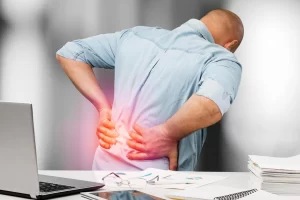
Kerala has one of the fastest-growing IT and service sector workforces in India. Technopark in Trivandrum, Infopark and SmartCity in Kochi, Cyberpark in Calicut — tens of thousands of people sitting at desks for 8 to 10 hours a day, five or six days a week.
The physical cost of this is significant and largely invisible until something goes wrong.
Neck pain, lower back pain, shoulder tension, wrist pain, headaches, and hip tightness are not inevitable consequences of desk work. They are predictable, preventable, and treatable. This guide covers the most common occupational pain conditions affecting desk workers in Kerala, why they develop, and what to do about them.
Why Desk Work Is Physically Demanding
This surprises people. Sitting at a computer feels effortless compared to physical labour. In terms of acute injury risk, it is. In terms of cumulative musculoskeletal load, it is not.
The human body is designed for varied movement. Sitting holds the spine, hips, shoulders, and neck in sustained static postures for hours at a time. Static posture is more metabolically demanding for muscle tissue than movement — muscles held in one position fatigue, accumulate metabolic waste products, and eventually develop pain.
Sustained sitting also compresses spinal discs, tightens hip flexors, weakens deep stabilising muscles, and loads the cervical spine with the weight of a forward-held head. None of this causes acute injury. All of it causes cumulative damage over months and years.
By the time a desk worker in their 30s presents with chronic neck pain or a disc herniation, the structural changes causing the problem have typically been building for three to five years.
The Most Common Conditions in Kerala Desk Workers
Cervical Spondylosis and Neck Pain
The most common condition we see in desk workers at Maana Health.
The cervical spine — the seven vertebrae of the neck — supports the head. A head in neutral position weighs approximately 5 to 6 kg. For every centimetre the head moves forward from neutral — which happens when you look at a screen that is too low or too close — the effective load on the cervical spine increases substantially. At 7 to 8 cm of forward head posture, the effective load approaches 27 kg.
Sustained forward head posture over years compresses cervical discs, stiffens cervical facet joints, and overloads the posterior neck muscles that are constantly working to prevent the head from falling further forward.
The result is a spectrum from muscle tension headaches and neck stiffness at the mild end, through cervical spondylosis and disc degeneration in the middle, to cervical disc herniation with arm pain and neurological symptoms at the severe end.
Prevention: Screen at eye level. Monitor approximately arm’s length away. Chin tuck exercise 10 repetitions every hour. Break sitting every 30 minutes.
Treatment: Manual therapy for stiff cervical joints, deep neck flexor strengthening, postural retraining, ergonomic correction. For disc involvement, cervical spinal decompression at Maana Health targets the specific disc level causing nerve compression.
Lower Back Pain
The second most common presentation. The causes and treatment are covered in detail in our lower back pain guide. The desk-specific factors are:
Sustained lumbar flexion from slouched sitting compresses the posterior disc and stretches the posterior ligaments beyond their comfortable range over time.
Weak hip flexors from prolonged hip flexion tighten over time, tilting the pelvis anteriorly and increasing lumbar lordosis and compressive load on lumbar facet joints.
Inhibited deep stabilisers — the multifidus and transverse abdominis switch off during prolonged sitting, leaving the lumbar spine without its primary dynamic support.
Prevention: Lumbar support at belt height. Hip flexor stretching twice daily. Core activation exercises. Stand every 30 minutes.
Treatment: Physiotherapy addressing root cause — disc, joint, or muscle — not just pain management. Spinal decompression for disc involvement.
Shoulder and Upper Trapezius Pain
The upper trapezius muscle runs from the base of the skull to the tip of the shoulder. It is chronically overactive in desk workers — particularly those who hold their shoulders elevated (a tension response to stress or cold) or who reach forward to a keyboard that is too far away.
Chronic upper trapezius overload produces the classic desk worker presentation: tight, tender shoulders, referral of pain and headaches up the neck and into the back of the head, and restricted neck rotation.
Thoracic spine stiffness from sustained forward rounding adds to this picture — a stiff thoracic spine transfers more load to the cervical spine and shoulder girdle.
Prevention: Keyboard close enough that elbows stay at 90 degrees. Shoulder blade retraction exercises — 10 repetitions every hour. Thoracic extension over a chair back.
Treatment: Manual therapy targeting upper trapezius trigger points and thoracic joint mobilisation. Deep neck flexor and lower trapezius strengthening. Postural retraining.
Wrist and Forearm Pain (Repetitive Strain Injury)
Repetitive keyboard and mouse use places the wrist in sustained extension and the forearm muscles under continuous low-level load. Over time this causes extensor tendinopathy, carpal tunnel syndrome, or De Quervain’s tenosynovitis depending on which structures are most loaded.
Carpal tunnel syndrome — compression of the median nerve at the wrist — produces numbness and tingling in the thumb, index, middle, and half of the ring finger. It is more common in women and in workers who use a mouse extensively with the wrist in extension.
Prevention: Wrist in neutral position during typing — not extended. Mouse pad with wrist rest. Forearm and wrist stretching every hour.
Treatment: For early carpal tunnel and extensor tendinopathy, physiotherapy — nerve mobilisation, tendon loading exercises, ergonomic modification. For severe carpal tunnel with significant neurological deficit, surgical decompression may be required.
Hip Flexor Tightness and Anterior Hip Pain
Hip flexors — the iliopsoas and rectus femoris — are in a shortened position throughout the working day. Over months and years, they adaptively shorten. Tight hip flexors cause anterior hip pain, increase lumbar lordosis, and reduce hip extension during walking — which increases load on the lumbar spine.
This is one of the most consistently undertreated conditions in desk workers. People address their back pain and their neck pain. The hip flexors that are contributing significantly to both are ignored.
Prevention: Hip flexor stretch in a kneeling lunge position for 30 seconds each side, twice daily. Standing for 30 minutes in every 90 minutes of sitting.
Treatment: Hip flexor lengthening, glute strengthening, movement retraining.
Tension Headaches
The most common headache type in desk workers. Tension headaches arise from referred pain from tight suboccipital muscles at the base of the skull, stiff upper cervical joints, and upper trapezius trigger points.
They are often misattributed to dehydration, eye strain, or stress. While these contribute, the primary driver in most desk workers is cervicogenic — originating from the neck and upper shoulder musculature.
Treatment: Manual therapy targeting the upper cervical joints and suboccipital muscles produces significant and durable relief for cervicogenic headaches. This is an area where physiotherapy consistently outperforms medication for long-term management.
A Daily Routine for Desk Workers
The following routine takes less than 10 minutes spread through the day and addresses the primary musculoskeletal risks of desk work.
Every 30 Minutes (30 seconds)
Stand up. Take 5 to 10 steps. Sit back down. This is not exercise. It is interrupting sustained compression. The most important thing you can do.
Every Hour (2 minutes)
Chin tucks: Sit tall. Gently draw your chin straight back — not down. Hold 5 seconds. Repeat 10 times. Activates deep neck flexors. Reduces forward head load.
Shoulder blade squeezes: Sit tall. Gently draw your shoulder blades together and downward. Hold 5 seconds. Repeat 10 times. Activates lower trapezius. Reduces upper trapezius dominance.
Wrist extension stretch: Extend one arm in front. Use the other hand to gently pull the fingers back. Hold 20 seconds each side. Reduces forearm extensor tension.
Twice Daily (3 minutes)
Hip flexor stretch: Stand. Step one foot forward into a lunge. Drop the back knee toward the floor. Push hips gently forward until you feel a stretch in the front of the back hip. Hold 30 seconds each side.
Thoracic extension: Sit at the edge of your chair. Clasp your hands behind your head. Gently extend your upper back over the back of the chair. Hold 3 to 5 seconds. Repeat 10 times. Reverses thoracic rounding.
Doorway chest stretch: Stand in a doorway with forearms on the door frame. Step forward gently until you feel a stretch across the chest. Hold 20 to 30 seconds.
When Self-Management Is Not Enough
The routine above is preventive and appropriate for mild occupational discomfort. It is not sufficient for:
- Neck pain or back pain that has persisted for more than two weeks
- Pain that radiates into the arm or leg
- Numbness or tingling in the hand or fingers
- Headaches that are daily or near-daily
- Wrist symptoms that wake you at night
- Pain that is getting progressively worse despite self-management
These presentations need physiotherapy assessment. What they have in common is structural involvement — nerve compression, joint dysfunction, disc pathology, or tendon degeneration — that self-management exercises do not address.
Occupational Health: The Business Case for Physiotherapy
For employers in Kerala’s IT sector, musculoskeletal conditions are one of the leading causes of absenteeism and reduced productivity. Research consistently shows that early physiotherapy intervention for occupational musculoskeletal conditions:
- Reduces time off work compared to delayed treatment
- Reduces the proportion of acute conditions that become chronic
- Is significantly more cost-effective than managing chronic pain after it develops
Workplace physiotherapy programs — whether through on-site provision or subsidised clinic access — produce measurable return on investment for employers in service and technology sectors.
Frequently Asked Questions
I work from home. Does this reduce my risk of occupational pain?
Not necessarily — and often the opposite. Home office setups are frequently ergonomically worse than workplace setups. Kitchen tables, sofas, and laptop screens at the wrong height are common. Apply the same ergonomic principles at home as in the office.
My employer provides a standing desk. Is this enough?
Standing desks reduce prolonged sitting but create their own problems if used incorrectly. Standing all day causes lower limb fatigue, varicose vein risk, and lower back pain from sustained standing posture. The goal is variation — alternating between sitting and standing throughout the day, not replacing one static posture with another.
Should I see a physiotherapist or a doctor for occupational neck and back pain?
A physiotherapist is the appropriate first contact for most occupational musculoskeletal pain without red flag symptoms. Physiotherapy addresses the cause — muscle imbalance, joint dysfunction, postural mechanics — not just the symptom.
Can I claim physiotherapy for occupational injuries under ESIC in Kerala?
ESIC (Employees’ State Insurance Corporation) covers physiotherapy for work-related injuries and conditions for eligible employees. Check your employer’s ESIC registration and your eligibility. Maana Health staff can assist with queries about coverage.
How many physiotherapy sessions does occupational neck or back pain typically need?
For postural conditions without structural damage, 6 to 10 sessions combined with ergonomic correction and home exercise typically produces significant improvement. Structural involvement — disc, nerve — requires longer treatment.
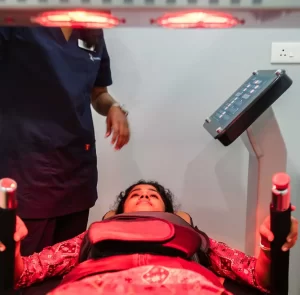
Maana Health treats occupational musculoskeletal conditions across five clinics in Kerala — Kochi, Calicut, Perinthalmanna, Aluva, and Trivandrum. If you are a desk worker with persistent neck, back, shoulder, or wrist pain, book a free assessment and find out what is causing it and what will fix it.