
Have you been told that your only options for that agonizing, shooting leg pain are either “learning to live with it” or undergoing a major surgical procedure? It is a common misconception that keeps thousands of people in Kozhikode trapped in a cycle of painkillers and restricted movement. In reality, clinical evidence suggests that nearly 80% to 90% of sciatica cases can be successfully resolved through non-surgical, technology-led protocols without ever needing an operating theater.
At Maana Health, we believe you deserve more than a quick fix or a temporary mask for your symptoms. If you are struggling with a “lightning bolt” sensation traveling from your lower back down to your toes, you are likely dealing with sciatica: a condition where the sciatic nerve is compressed or irritated. While traditional methods often focus on manual stretching or general massage, the pioneering approach we have brought to Kerala focuses on the root cause: the mechanical pressure on your nerves.
Why does your leg pain feel like an electric shock?
To understand how to fix the pain, you first need to understand what is happening inside your body. Sciatica is not a disease in itself; it is a symptom of an underlying issue in your lumbar spine: the lower part of your back. The sciatic nerve is the longest and thickest nerve in your body, and when it gets pinched, it sends out a distress signal that you feel as sharp, radiating pain.
In most cases, this happens because of a herniated disc: a situation where the soft, gel-like center of a spinal disc pushes through a tear in the tougher exterior. This “bulge” presses directly against the nerve roots. Another common culprit is spinal stenosis, which is a narrowing of the spinal canal that compresses the nerves as they exit the spine.
When you experience this, your body’s natural reaction is to tighten the surrounding muscles to protect the area. This is why you feel stiff and why simple tasks like putting on your shoes or sitting at a desk become monumental challenges. However, simply rubbing the muscles won’t move the disc back into place. That is where advanced technology enters the picture.
Is surgery the only way to fix a slipped disc?
For a long time, the narrative in healthcare was that once a disc “slipped,” it stayed that way unless a surgeon removed the protruding part. We now know that the body has an incredible capacity to heal if given the right environment. Our focus in Kozhikode is to create that environment using non-invasive, evidence-based protocols that prioritize spinal wellness.
Surgery often comes with significant risks, long recovery times, and no absolute guarantee that the pain won’t return. By opting for a technology-led rehabilitation program, you are choosing a path that has no side effects and targets the root cause of the compression. We use precise, clinical modalities designed to create space in your spine, allowing your body to naturally reabsorb the disc material and reduce inflammation around the nerve.
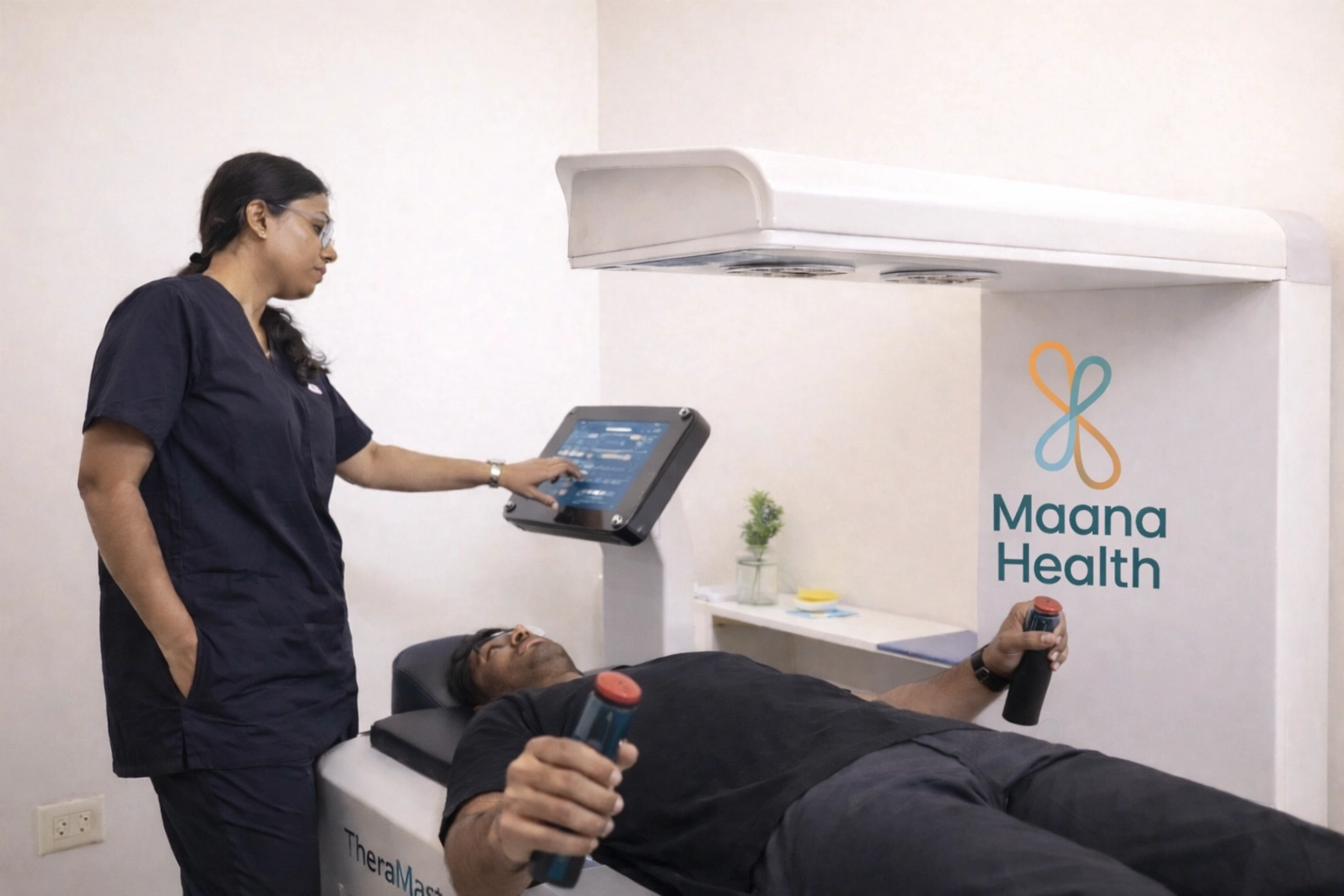
What actually happens during spinal decompression?
The cornerstone of our sciatica treatment in Kozhikode is Non-Surgical Spinal Decompression. Unlike traditional traction, which can sometimes cause the body to “guard” or tense up, our advanced decompression systems—TheraMaster by Shinhwa Medical and KNX-7000 by Hanmed—are manufactured in South Korea and use sophisticated computer algorithms to bypass your body’s muscle guarding response.
During a session, you are positioned comfortably on a specialized table. The system gently and precisely distracts (stretches) your spine in a very specific area. This stretching creates something called “negative intra-discal pressure.” Think of it like a tiny vacuum effect inside your spine. This vacuum does two vital things:
- Retraction: It helps draw the bulging or herniated disc material back toward the center of the disc, taking the pressure off the sciatic nerve.
- Nutrient Inflow: It encourages the flow of oxygen, water, and nutrient-rich fluids into the disc. Since spinal discs don’t have a direct blood supply, they rely on this “pump” mechanism to heal.
This is a painless, relaxing procedure. Many of our patients even find themselves falling asleep during their sessions. It is a far cry from the aggressive “cracking” or heavy manual manipulation people often associate with back clinics.
Why is technology-led physiotherapy different from traditional massage?
You might have tried “physiotherapy” before and found it was mostly heat packs and manual massage. While manual techniques have their place in general wellness, they often struggle to provide the sustained, measurable pressure needed to change the mechanics of a damaged spinal disc.
When we talk about advanced physiotherapy near you, we are talking about a move away from guesswork and toward clinical precision. Using FDA and CE-approved technology allows us to:
- Target specific spinal levels: If your issue is at the L4-L5 vertebrae, the technology ensures the force is applied exactly there, not distributed randomly across your whole back.
- Monitor progress objectively: We can track exactly how your spine is responding to the distraction forces over time.
- Ensure safety: The systems are equipped with safety switches and sensors that monitor your muscle tension in real-time, adjusting the pull to keep you comfortable.
This shift from “hands-on only” to “tech-integrated” is why Maana Health is considered a pioneer in Kerala. We aren’t just trying to make you feel better for an hour; we are trying to give you more healthy years of life by restoring your spinal function.
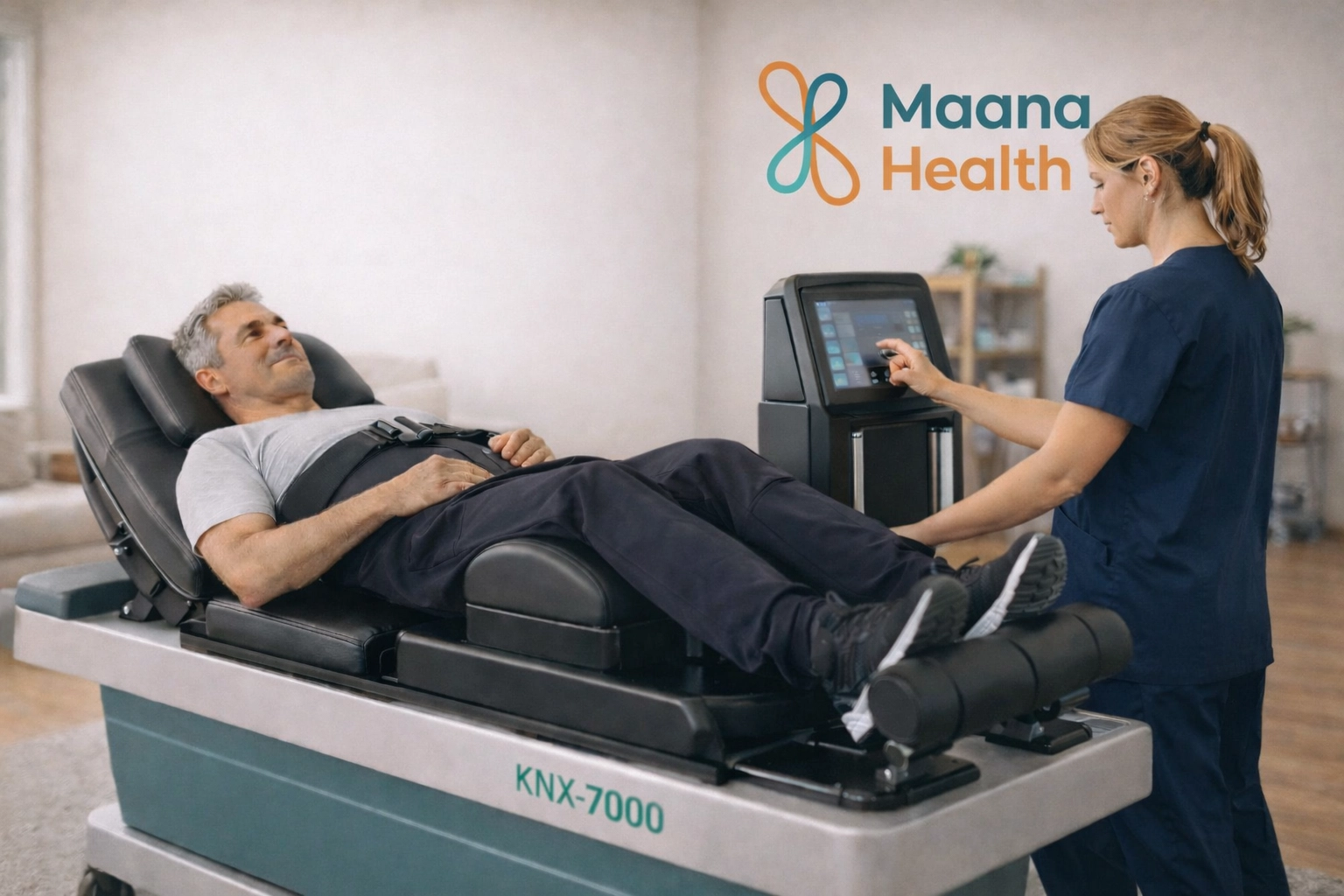
A clinical setting at Maana Health showing the integration of advanced medical equipment and professional oversight for sciatica recovery.
How do we build a personalized treatment protocol for you?
No two spines are the same, and neither are two cases of sciatica. When you visit our Kozhikode clinic, we don’t just look at your MRI report; we look at how you move, where your weaknesses are, and how your pain affects your daily life.
Your protocol will likely involve a combination of clinical modalities. While spinal decompression handles the mechanical pressure, we also integrate specialized rehabilitation exercises. These aren’t your typical gym movements. They are evidence-based exercises designed to stabilize your core and support your spine once the decompression has created space.
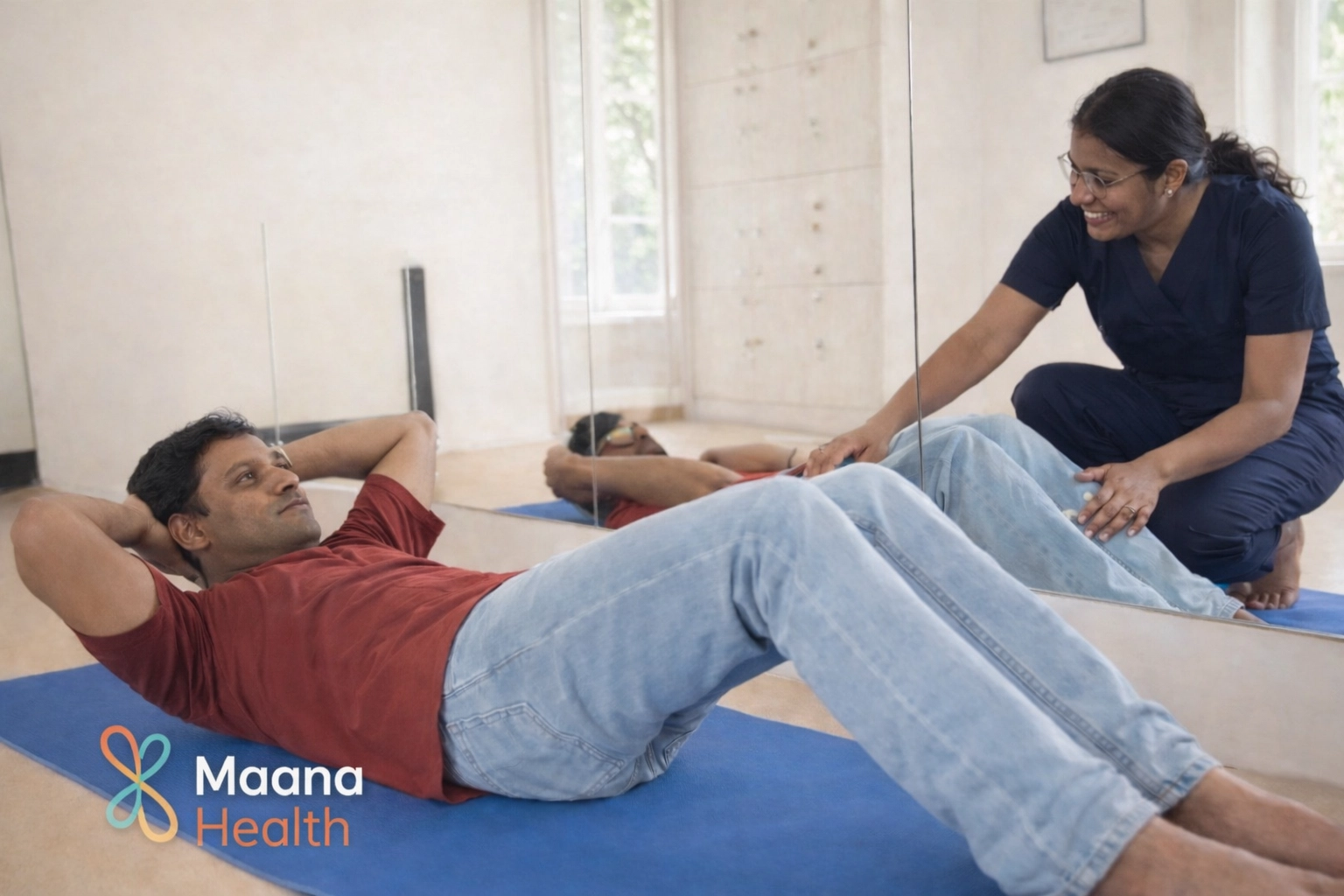
We focus on the “Musculoskeletal Wellness” aspect: ensuring that your muscles are strong enough to keep your spine in its newly corrected alignment. This dual approach: removing the pressure and then reinforcing the structure: is the key to long-term relief and preventing future relapses of lower back pain.
What should you expect at our Kozhikode clinic?
Walking into a clinic when you are in pain can be intimidating. We’ve designed our Kozhikode facility to be a space of healing, not a sterile hospital environment. Our team of experts takes the time to explain the “why” behind every part of your treatment.
You won’t find generic routines here. You will find a structured, multi-week program that has been clinically validated across more than 10,000 patients treated within our network. Our goal is to move you through the phases of recovery: from acute pain relief to functional restoration, and finally, to long-term maintenance.
If you have been struggling with numbness, tingling, or that sharp ache in your glutes and legs, it is time to look beyond temporary fixes. Advanced modalities like spinal decompression are changing the landscape of non-surgical back pain treatment.
You don’t have to accept a life of limited mobility. With the right technology and an evidence-based approach, a pain-free future is more than just a possibility: it is the goal we work toward every day.
Ready to find the root cause of your pain?
Speak to one of our physiotherapists today to see if our advanced sciatica protocols are the right fit for you.