

Have you ever been told that your only options for chronic back or knee pain are “living with it” or “going under the knife”? This binary choice often leaves you feeling stuck, but clinical evidence suggests that for most patients, surgery should be the last resort, not the first.
Many people in Kerala believe that once a disc bulges or a knee joint wears down, the damage is permanent and only a surgeon can fix it. But what if the science actually pointed in a different direction? What if your body had a remarkable capacity to heal, provided it was given the right mechanical and physiological environment? At Maana Health, we don’t just ask “where does it hurt?”: we ask “why did this happen?” and use clinically validated technology to reverse the process.
What actually happens during non-invasive treatment?
When we talk about non-invasive pain management, we aren’t talking about just resting or taking painkillers that mask the problem. We are talking about an integrated, evidence-based approach that addresses the root cause not just symptoms.
Traditional physiotherapy often relies heavily on manual exercises. While these are important, they often aren’t enough to correct deep structural issues like a herniated disc or advanced osteoarthritis. Non-invasive medical technology fills this gap. It uses physical forces: like decompression, acoustic waves, or electromagnetic fields: to trigger biological healing. This isn’t magic; it’s cellular science. By stimulating blood flow and reducing mechanical pressure, we allow your tissues to repair themselves, leading to more healthy years of life without the risks of surgery.
Does a herniated disc always need surgery?
One of the biggest misconceptions in spine care is that a bulging disc or a herniated disc requires an operation. In reality, most patients can achieve significant relief and functional recovery through targeted spine treatment without surgery.
The key lies in a process called spinal decompression. At Maana Health, we use specialized South Korean technology, including the Kinetra KNX-7000 and the TheraMaster. These machines don’t just “stretch” your back. They use computer-controlled sensors to create negative pressure within the disc. Think of it like a gentle vacuum; this negative pressure helps pull the protruding disc material back toward the center, taking the weight off your nerves.
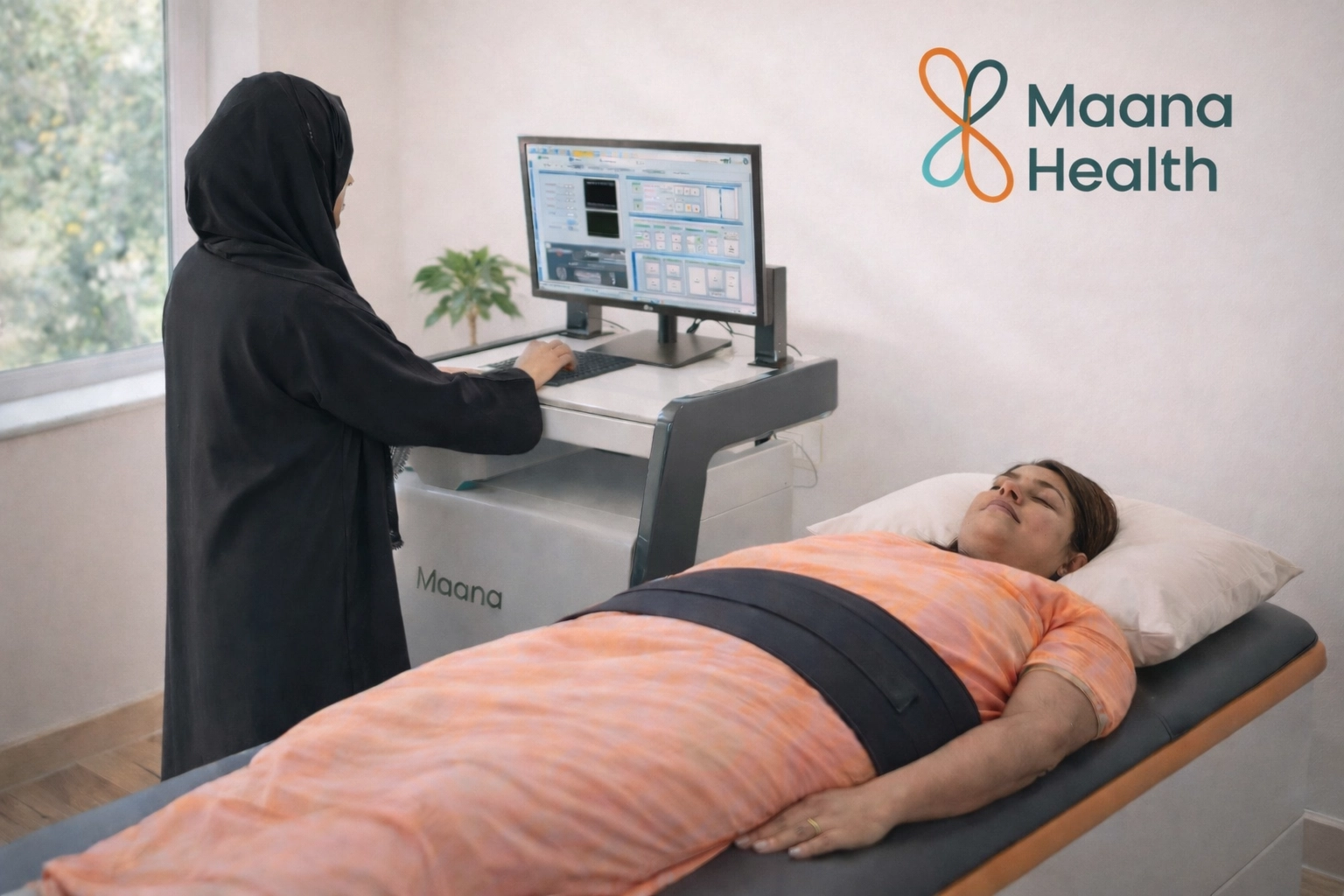
This process also encourages nutrient-rich fluids to flow back into the disc, which is vital for healing because discs don’t have their own blood supply. Whether you are dealing with sciatica or spondylosis, this method is non-surgical and has no side effects, making it a preferred choice for those looking for long-term spinal wellness.
Can you really fix knee pain without a replacement?
If you find yourself struggling to climb stairs or go for your morning walk in Kochi or Trivandrum, you might feel like a knee replacement is inevitable. However, knee pain treatment without surgery is becoming the gold standard for early to mid-stage arthritis.
The science of knee rehabilitation has moved far beyond simple leg lifts. We focus on “unloading” the joint and strengthening the surrounding muscles to take over the work the joint can no longer do alone. We often pair this with modalities like Extracorporeal Shockwave Therapy (ESWT). This technology sends high-energy acoustic waves into the injured area, which breaks down scar tissue and stimulates the growth of new blood vessels.
By improving the mechanical alignment of your leg and reducing inflammation at the cellular level, many of our patients find they can return to their favorite activities without ever stepping into an operating theater.
Why is evidence-based technology a game-changer in Kerala?
Maana Health is a pioneer in Kerala for bringing advanced, FDA and CE-approved technology that was previously only available in the US or Europe to our local communities. For too long, patients had to choose between basic exercise or high-risk surgery. We’ve introduced a middle ground that is both sophisticated and safe.
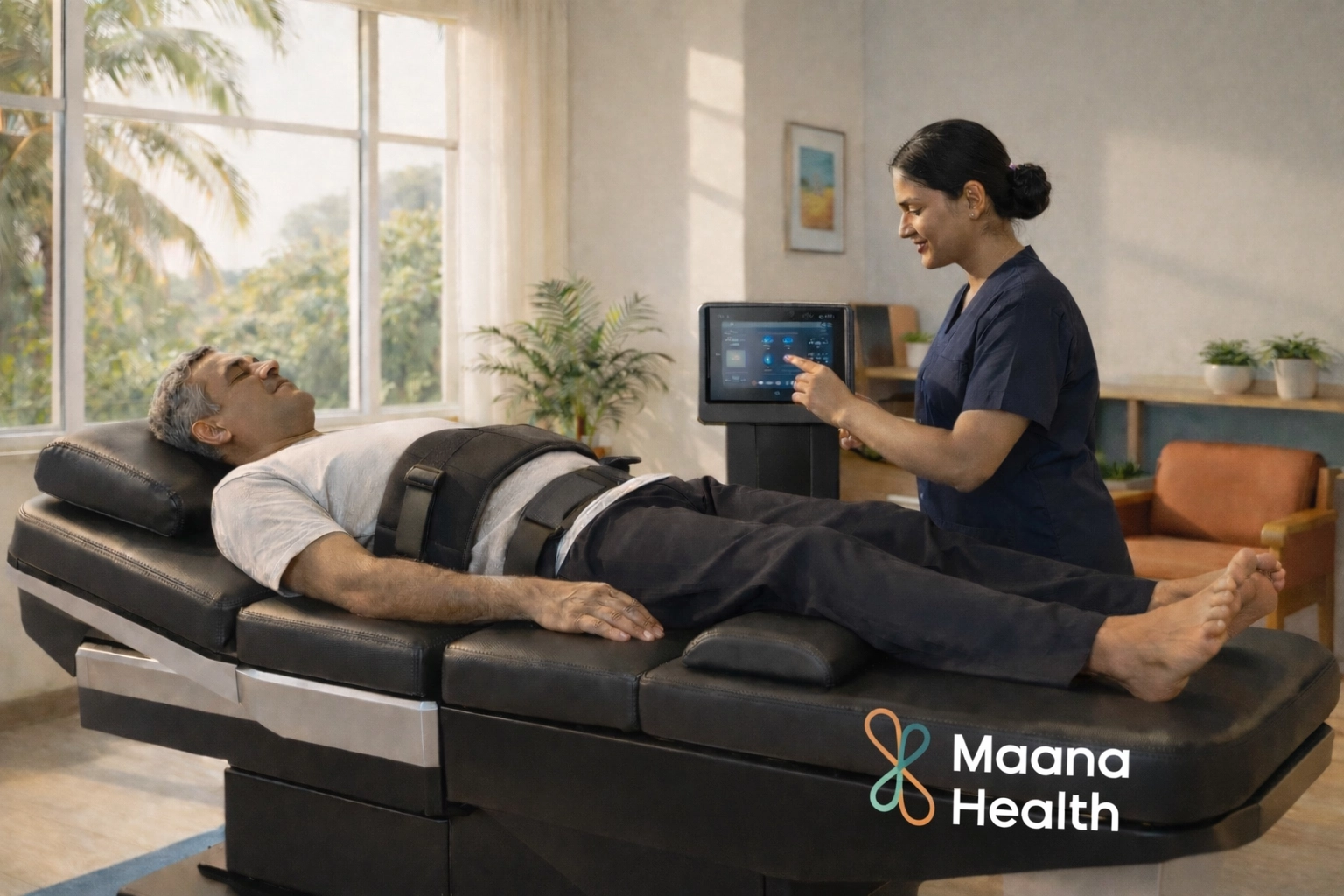
Our approach is built on protocols that are clinically validated. When you visit us, we don’t guess; we assess. Using advanced diagnostic tools, we map out exactly where the mechanical failure is occurring. This allows us to create a personalised treatment protocol tailored to your specific body type, age, and activity level. With over 10,000+ patients treated across our locations, the data shows that an evidence-based approach consistently outperforms general “rest and wait” strategies.
What makes the Maana approach different from traditional physiotherapy?
While we value manual therapy, we believe that modern problems require modern tools. Traditional physiotherapy is often limited by the physical strength or stamina of the therapist. In contrast, our South Korean-manufactured decompression suites, like the KNX-7000, provide consistent, repeatable, and measurable force that a human hand simply cannot replicate.
Moreover, we look at the whole picture. Pain is rarely just about one bone or one muscle. It is often linked to your lifestyle, which is why we incorporate elements like:
- Ergonomic Guidance: Teaching you how to sit and move to prevent the pain from returning.
- Nutritional Support: Helping you manage inflammation from the inside out.
- Medical Weight Loss: If excess weight is putting pressure on your joints, our belly fat reduction programs can be a vital part of your recovery.
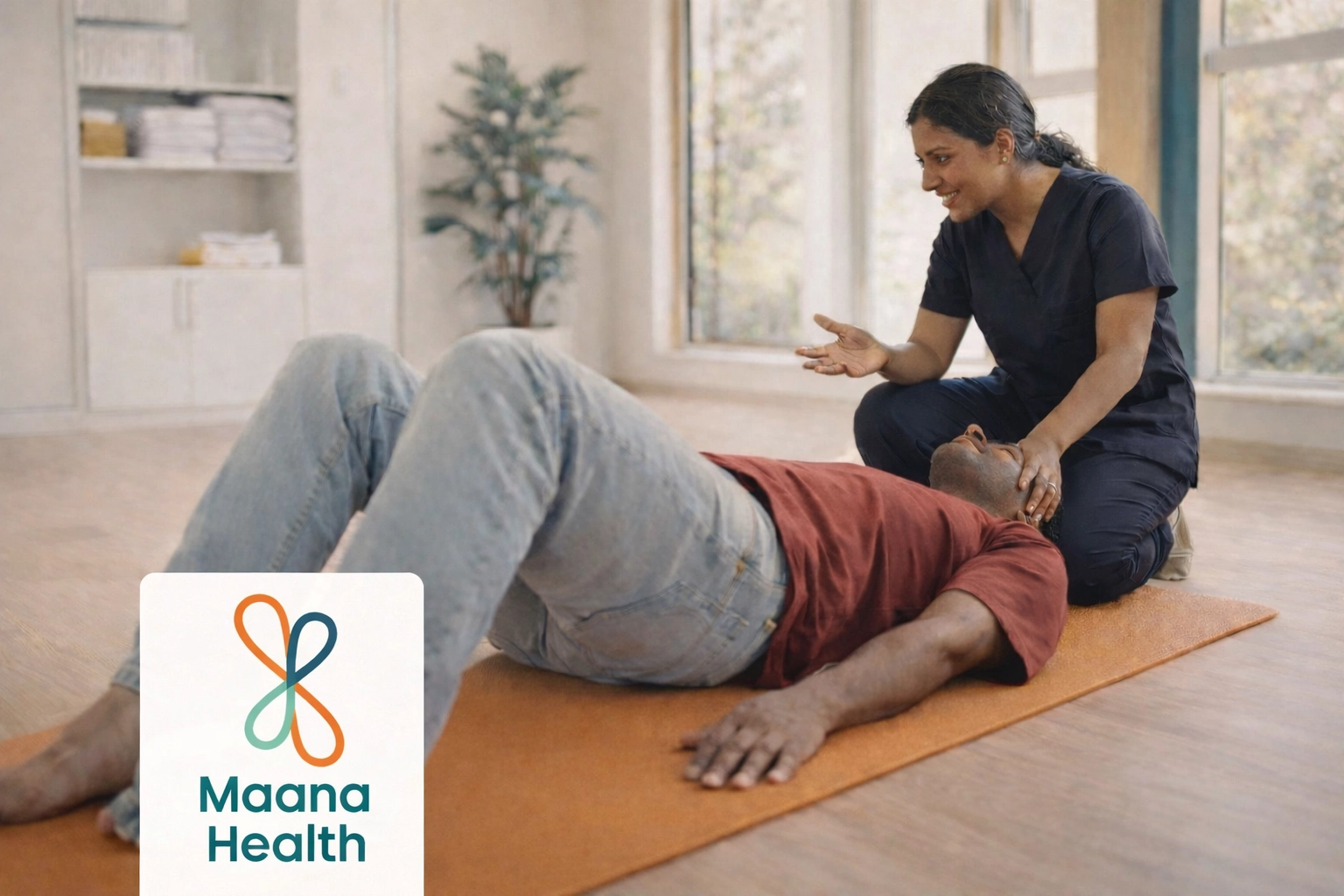
This multidisciplinary approach ensures we are treating the root cause not just symptoms, providing you with a path toward lasting relief rather than a temporary fix.
Is this treatment right for your specific condition?
You might be wondering if your specific “wear and tear” is too far gone for non-invasive methods. While every case is unique, clinical evidence suggests that even conditions like facet syndrome or severe neck pain often respond remarkably well to targeted decompression and rehabilitation.
The goal of our treatment is to increase your functional capacity. This means moving better, sleeping better, and getting back to your work or hobbies. By avoiding surgery, you also avoid the long recovery times, the risk of infection, and the potential for “failed back surgery syndrome,” which unfortunately affects many people who rush into operations.
Our doctors and physiotherapists are trained to read your MRIs and X-rays through the lens of functional movement. We look for the “why” behind the image. If there is a way to heal your body without an incision, we will find it and guide you through every step of the process.
How do you start your recovery journey?
If you are tired of the cycle of painkillers and want to explore a scientific, non-surgical path to recovery, the first step is a proper evaluation. You don’t have to navigate chronic pain alone, and you certainly don’t have to accept surgery as your only destiny.
Whether you are looking for more information on our FAQ page or want to see what other patients have experienced on our testimonial page, the evidence is clear: a technology-led, evidence-based approach works. We invite you to experience the future of healthcare right here in Kerala.
Speak to one of our physiotherapists today to see if our programs are the right fit for you.
Book a free assessment at Maana Health
Frequently Asked Questions
Is surgery the only option for chronic back or knee pain? No — clinical evidence suggests surgery should generally be a last resort rather than the first choice, since the body has a strong capacity to heal given the right conditions.
What does non-invasive pain management actually involve? An integrated approach using physical forces like decompression, acoustic waves, or electromagnetic fields to stimulate blood flow and reduce mechanical pressure, allowing tissue to repair itself.
Can a herniated disc be treated without surgery? In most cases, yes — through spinal decompression technology, such as the Kinetra KNX-7000 and TheraMaster devices used at Maana Health, which create negative pressure to relieve pressure on the disc.
Why isn’t manual physiotherapy always enough for deep structural issues? Manual exercises are important but often can’t correct deep structural issues like a herniated disc or advanced osteoarthritis on their own — non-invasive technology fills that gap.