
Authored by Ashitha Abdul Ashraf, Senior Consultant Physiotherapist – Incharge | Medically Reviewed by Dilshana Thasni T, Senior Consultant Physiotherapist | Last Reviewed: June 2026
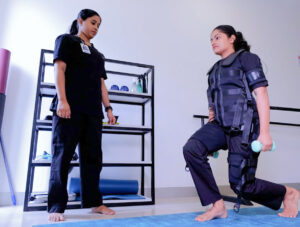
Pain medication manages pain. Exercise therapy changes the underlying biology that is generating it.
This distinction matters because it determines what kind of outcome is possible. Medication reduces the symptom while you take it. Exercise therapy — done correctly, consistently, and long enough — produces structural and neurological changes that reduce pain independently of medication. For many chronic pain conditions, exercise therapy is the most effective long-term treatment available. It is also the most underutilised.
This guide explains the science behind exercise therapy for chronic pain, what it does that medication cannot, and how it is applied across the most common chronic pain conditions seen at Maana Health in Kerala.
Acute Pain vs Chronic Pain: Why the Difference Matters
Acute pain is a signal. You damage tissue, pain alerts you to protect it while healing occurs. This is pain working correctly.
Chronic pain — pain persisting beyond 12 weeks — is a different biological phenomenon. In many cases of chronic pain, the original tissue injury has healed. The pain continues because the nervous system has become sensitised — the pain processing system itself has changed. Pain thresholds lower. The nervous system amplifies signals. Areas of the brain involved in pain processing change structurally.
This is why treating chronic pain the same way you treat acute pain does not work. You cannot rest your way out of central sensitisation. Anti-inflammatory medication does not reduce neurological sensitisation. The treatment needs to target the nervous system as well as the tissue — and exercise therapy does exactly this.
What Exercise Therapy Does to the Pain System
Endogenous Opioid Release
Sustained aerobic exercise triggers the release of endorphins — endogenous opioids — from the brain and spinal cord. These bind to the same receptors as morphine and produce dose-dependent pain relief. This is not a metaphor. It is a measurable neurochemical response.
For chronic pain patients who have been managed with opioid analgesics, exercise therapy activates the same receptor system without dependence, tolerance, or side effects. The pain relief from a single session of moderate aerobic exercise lasts several hours. Regular exercise produces cumulative changes in baseline endorphin levels.
Reduces Central Sensitisation
Regular exercise reduces central sensitisation — the lowered pain threshold that characterises chronic pain states. Research shows that exercise training increases pain thresholds and reduces pain hypersensitivity in chronic pain patients. The mechanism involves changes in descending pain modulation pathways from the brain.
Simply stated: people who exercise regularly hurt less for the same amount of tissue stimulation than people who do not. This effect is most pronounced for aerobic exercise at moderate intensity.
Structural Changes in the Brain
Chronic pain is associated with measurable reductions in grey matter volume in areas of the brain involved in pain processing and emotional regulation. Regular exercise reverses some of these changes — increasing grey matter volume in the prefrontal cortex and hippocampus. These structural brain changes correlate with improvements in pain experience and emotional wellbeing in chronic pain patients.
Anti-Inflammatory Effect
Chronic low-grade systemic inflammation is present in many chronic pain conditions — including fibromyalgia, inflammatory arthritis, and chronic lower back pain. Regular aerobic exercise produces anti-inflammatory effects through multiple pathways — reducing inflammatory cytokines, increasing anti-inflammatory cytokines, and reducing visceral adipose tissue which is itself a source of inflammatory signalling.
Tissue-Level Effects
Beyond the neurological effects, exercise produces direct tissue-level changes that reduce the structural sources of pain.
Tendon loading exercises stimulate collagen synthesis in degenerated tendons — repairing the tissue pathology that generates the pain signal. Spinal stabilisation exercises reduce the mechanical loading on painful disc and facet joint structures. Joint mobility exercises maintain the range of motion that prevents the secondary pain of stiffness and adaptive shortening.
Exercise Therapy vs General Exercise
This distinction is critical and frequently misunderstood.
General exercise — gym training, running, yoga — produces health benefits and contributes to pain management through the mechanisms above. It is not the same as prescribed exercise therapy.
Exercise therapy is a clinical intervention. It involves:
- Assessment of the specific movement deficits, muscle imbalances, and structural problems contributing to a patient’s pain
- Prescription of specific exercises targeting those deficits at the correct load, frequency, and progression
- Supervised practice to ensure correct execution
- Progressive overload based on objective measures of improvement
- Integration with other physiotherapy interventions
A patient with chronic lower back pain from lumbar disc degeneration doing general gym training may make their pain worse if the exercises selected load the spine inappropriately. The same patient on a prescribed exercise therapy program targeting deep spinal stabilisers, hip strengthening, and movement retraining improves consistently.
The prescription matters as much as the exercise.
Exercise Therapy for Specific Chronic Pain Conditions
Chronic Lower Back Pain
The evidence base for exercise therapy in chronic lower back pain is the strongest of any chronic pain condition. Multiple systematic reviews and guidelines across the world place exercise therapy as the primary treatment recommendation for chronic non-specific lower back pain.
The most effective exercise approaches for chronic lower back pain:
Motor control exercise. Targeting the deep stabilising muscles — multifidus and transverse abdominis — that are consistently inhibited in chronic back pain patients. These muscles provide segmental stability to the lumbar spine that reduces mechanical pain from disc and facet joint structures.
Graded aerobic exercise. Walking, swimming, and cycling at progressive intensities reduce central sensitisation, improve endorphin levels, and reduce the deconditioning that amplifies chronic back pain.
Strength training. Progressive loading of the lumbar extensors, hip muscles, and lower limb. Stronger supporting musculature reduces the load on painful spinal structures.
The combination of motor control exercise, aerobic conditioning, and strength training produces better outcomes than any single modality alone.
Chronic Knee Pain and Osteoarthritis
Exercise therapy for knee osteoarthritis has the strongest evidence of any non-surgical treatment. A meta-analysis in the Annals of Internal Medicine found exercise therapy produced pain and function improvements in knee OA comparable to NSAIDs — without the gastrointestinal and cardiovascular risks of long-term NSAID use.
Key components: quadriceps strengthening, hip strengthening, aerobic conditioning, and proprioception training. The specific exercise selection, load, and progression matter — a generic knee exercise sheet is not the same as a structured, supervised exercise therapy program.
Fibromyalgia
Fibromyalgia — widespread chronic pain with central sensitisation as a primary mechanism — responds to exercise therapy better than any other available treatment. Multiple systematic reviews confirm aerobic exercise is the most effective intervention for fibromyalgia.
The challenge is that starting exercise with fibromyalgia is painful and counterintuitive. The physiotherapist’s role is to guide a graded introduction to exercise — starting at very low intensity, progressing extremely slowly, and managing the temporary symptom flares that occur in early exercise training. The long-term benefit is substantial.
Chronic Neck Pain and Cervical Spondylosis
Deep neck flexor strengthening, scapular stabilisation, and aerobic exercise produce durable improvements in chronic neck pain. The cervical spine, like the lumbar spine, has a clear relationship between muscle function and pain — deep cervical flexor weakness is consistently present in chronic neck pain patients.
Rheumatoid Arthritis
Exercise therapy in RA reduces pain, improves function, and reduces cardiovascular risk without increasing disease activity. This was once controversial — the concern was that exercise would worsen inflammation. Multiple trials have now confirmed this is not the case for most exercise types at appropriate intensities.
Chronic Tendinopathy
Heavy slow resistance exercise for chronic tendons is one of the most evidence-based specific exercise therapies in musculoskeletal medicine. Eccentric and heavy slow resistance loading stimulates collagen synthesis, remodels degenerated tendon tissue, and produces durable long-term pain relief.
For plantar fasciitis, Achilles tendinopathy, patellar tendinopathy, and tennis elbow, specific tendon loading programs are the primary treatment. Combined with shockwave therapy for chronic cases, they produce the best available outcomes outside of surgery.
The Graded Exposure Principle
Chronic pain patients frequently avoid movement because movement hurts. This is understandable. It is also counterproductive.
Pain during movement in a chronic pain state is not reliably correlated with tissue damage. The sensitised nervous system generates pain at lower thresholds — meaning movements that are physiologically safe cause pain because the alarm system is set too sensitively, not because damage is occurring.
Graded exposure is the principle of systematically and progressively reintroducing feared movements at controlled intensities, demonstrating to the nervous system that the movement is safe, and gradually resetting the pain threshold through repeated non-threatening exposure.
This is not telling a patient to push through pain. It is a structured clinical process managed by the physiotherapist — starting with movements that produce minimal or no pain and progressing systematically.
Practical Considerations for Chronic Pain Patients in Kerala
Starting is the hardest part. Chronic pain patients are often deconditioned. Initial exercise sessions produce fatigue and sometimes temporary symptom flares. This is normal and does not indicate damage. It settles with consistent training.
Consistency matters more than intensity. Three sessions of moderate exercise per week produces significantly better long-term outcomes than occasional intense sessions. Regularity drives the neurochemical and structural changes that reduce chronic pain.
Pain does not mean stop. During exercise therapy for chronic pain, some pain during exercise is expected and acceptable. The guideline used in most chronic pain exercise programs is that pain during exercise up to 4 to 5 out of 10 is acceptable, provided it does not persist significantly beyond the session and does not trend worse over successive sessions.
Progress is non-linear. Chronic pain patients frequently have good days and bad days. A bad day during an exercise program does not mean the program is not working. Overall trend over weeks and months is the relevant measure, not day-to-day variation.
Exercise Therapy at Maana Health
At Maana Health, exercise therapy is not a handout. It is a structured clinical program delivered by qualified physiotherapists who assess your specific condition, prescribe exercises targeted to your deficits, supervise your execution, and progress your program based on objective outcome measures.
For chronic pain patients — whether the pain is from disc disease, arthritis, fibromyalgia, or tendinopathy — exercise therapy is integrated into a comprehensive treatment plan alongside manual therapy, advanced modalities like ESWT or spinal decompression where indicated, and patient education.
The goal is not just reducing pain. It is restoring function, reducing dependence on medication, and building the long-term exercise habits that keep pain under control independently.
Frequently Asked Questions
I have been in chronic pain for years. Is it too late for exercise therapy?
No. Chronic pain patients with long histories — even decades — respond to exercise therapy. The neurological changes that drive chronic pain are reversible with appropriate treatment. The longer the duration, the more gradual and structured the introduction to exercise needs to be, but the potential for improvement remains.
My pain gets worse when I exercise. Should I stop?
Temporary symptom increase in the first few weeks of exercise therapy for chronic pain is common and does not mean exercise is harmful. Discuss with your physiotherapist — they will assess whether the response is expected or whether the program needs modification. Do not make the decision to stop without a clinical assessment.
How long before exercise therapy reduces my chronic pain?
For most chronic pain conditions, meaningful improvement in pain and function becomes apparent within 6 to 12 weeks of consistent exercise therapy. Full benefit typically takes 3 to 6 months. This is comparable to the timescale on which the neurological changes that drive chronic pain developed — they do not reverse in days.
Can I do exercise therapy alongside my pain medication?
Yes. Exercise therapy and pain medication are not mutually exclusive. For many patients, consistent exercise therapy eventually reduces the medication required to manage their pain — but this is a gradual process managed in collaboration with the prescribing doctor.
What type of exercise is best for chronic pain?
A combination of aerobic exercise and specific strength training targeted to your condition produces the best outcomes for most chronic pain conditions. The specific prescription depends on your diagnosis, fitness level, and what structures are involved. This is what a physiotherapy assessment determines.
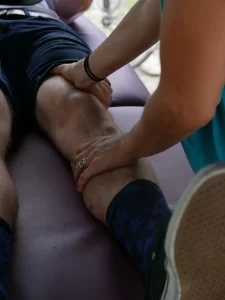
Maana Health provides structured exercise therapy programs for chronic pain conditions across five clinics in Kerala — Kochi, Calicut, Perinthalmanna, Aluva, and Trivandrum. If chronic pain is limiting your life and medication is not providing lasting relief, book a free assessment and find out what exercise therapy can do for you.