
Authored by Ashitha Abdul Ashraf, Senior Consultant Physiotherapist – Incharge | Medically Reviewed by Dilshana Thasni T, Senior Consultant Physiotherapist | Last Reviewed: June 2026
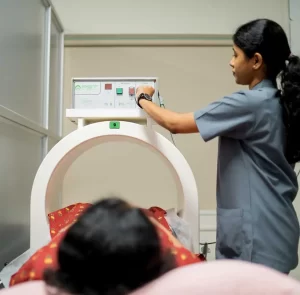
Most back pain is not an emergency. The vast majority resolves with time, physiotherapy, and appropriate self-management. But a small proportion of back pain presentations signal something serious — a medical emergency that requires immediate attention, not a physiotherapy appointment.
Knowing the difference could save your life or prevent permanent disability.
This guide covers the red flag symptoms that mean your back pain needs urgent medical assessment today — not next week, not after a few days of rest.
Why Most Back Pain Is Not Dangerous
Before covering the red flags, it is worth establishing the baseline.
Approximately 90% of back pain is non-specific — meaning there is no serious underlying pathology. Muscle strain, ligament sprain, disc irritation, facet joint pain, and postural loading are the causes. These are painful and disabling but not medically dangerous. They do not cause permanent nerve damage. They do not threaten life. They resolve with appropriate conservative treatment in the vast majority of cases.
The remaining 10% includes conditions where back pain is a symptom of something more serious — nerve compression requiring urgent treatment, spinal infection, fracture, cancer, or vascular emergency. These require a different response entirely.
The Red Flags: When Back Pain Is an Emergency
1. Loss of Bladder or Bowel Control
This is the most critical red flag in back pain assessment. If you develop inability to control urination or defecation — or conversely, inability to pass urine at all — alongside back pain, this is a medical emergency.
This combination of symptoms suggests cauda equina syndrome — compression of the bundle of nerve roots at the base of the spinal cord that controls the bladder, bowel, and lower limb function. Cauda equina syndrome is a surgical emergency. Every hour of delay increases the risk of permanent bladder, bowel, and sexual dysfunction.
Go to the emergency department immediately. Do not call a physiotherapist. Do not wait to see if it improves.
Other cauda equina symptoms to watch for alongside back pain:
- Numbness or tingling in the groin, inner thighs, or buttocks — the saddle area
- Progressive weakness in both legs
- Difficulty starting urination or feeling that the bladder is not emptying fully
Any combination of these symptoms with back pain is cauda equina syndrome until proven otherwise.
2. Saddle Anaesthesia
Numbness in the saddle area — the region of skin that would contact a horse saddle, covering the inner thighs, perineum, and buttocks — is a specific sign of cauda equina involvement. It may develop before bladder or bowel symptoms become obvious.
If you notice numbness or reduced sensation in this area alongside back pain, treat it as cauda equina syndrome and go to emergency immediately.
3. Progressive Leg Weakness
Back pain with leg weakness that is getting progressively worse — not just painful, but genuinely weaker — is a red flag.
The distinction is important. Leg pain and muscle guarding from sciatica can make the leg feel weak. True neurological weakness means the muscles cannot generate normal force — you cannot stand on your toes, your knee buckles when walking, or you cannot lift your foot off the floor (foot drop).
Progressive weakness — weakness that is worse today than yesterday, worse this week than last week — indicates ongoing nerve compression causing motor nerve damage. This requires urgent medical assessment. If left untreated, neurological weakness can become permanent.
4. Back Pain Following Significant Trauma
Back pain after a significant traumatic event — a fall from height, a road traffic accident, a direct blow to the spine — requires urgent assessment to exclude spinal fracture.
Spinal fractures after trauma are not always immediately obvious clinically. The pain may be manageable. The neurological status may be intact initially. But an unstable fracture that is not identified and immobilised risks secondary spinal cord injury — catastrophic damage that could have been prevented.
If you have back pain after any significant trauma, go to an emergency department for imaging before any other assessment or treatment.
This applies particularly to:
- Elderly patients with osteoporosis — falls from standing height can fracture an osteoporotic vertebra
- Any patient on long-term corticosteroid medication — steroids reduce bone density
- Patients with known metastatic cancer — pathological fracture risk is significantly elevated
5. Back Pain with Fever and Night Sweats
Back pain combined with fever — temperature above 38 degrees Celsius — and drenching night sweats that are not explained by the ambient temperature or menopause is a red flag combination suggesting spinal infection.
Spinal infection — vertebral osteomyelitis or discitis — is uncommon but serious. It is more common in patients who are immunocompromised, diabetic, intravenous drug users, or who have had recent spinal procedures or urinary tract infections.
The pain from spinal infection is typically constant, often worse at night, and does not behave like typical mechanical back pain. It does not vary significantly with position changes. It does not improve with rest in the usual way.
Spinal infection requires intravenous antibiotics and sometimes surgical drainage. Untreated, it can spread to the spinal canal causing epidural abscess — a condition with high rates of permanent neurological damage if not treated urgently.
If you have back pain with unexplained fever and night sweats, see a doctor today.
6. Back Pain with Unexplained Weight Loss
Unintentional weight loss — losing more than 5 to 10% of body weight over 3 to 6 months without trying — combined with persistent back pain raises concern for malignancy.
Cancer involving the spine is most commonly metastatic — secondary deposits from a primary cancer elsewhere in the body. The most common primary sites are breast, lung, prostate, kidney, and thyroid. Spinal metastases cause persistent, often severe back pain that is characteristically worse at night and at rest — the opposite of mechanical back pain which typically improves with lying down.
Primary spinal tumours are less common but also present with persistent, non-mechanical back pain.
Back pain with unexplained weight loss requires investigation for malignancy. See a doctor promptly.
7. Back Pain in a Patient with Known Cancer
Any new or changed back pain in a patient with a known history of cancer — particularly breast, lung, prostate, kidney, or thyroid cancer — must be investigated for spinal metastasis until proven otherwise.
Do not assume new back pain in a cancer patient is mechanical. Inform your oncologist or treating doctor promptly.
8. Back Pain with Pulsating Abdominal Mass
In older patients — particularly men over 65 with cardiovascular risk factors — severe sudden back pain combined with a pulsating sensation in the abdomen and cardiovascular collapse suggests aortic aneurysm rupture.
A ruptured abdominal aortic aneurysm is immediately life-threatening. The pain is often described as tearing or ripping and may radiate to the flank or groin. This is a vascular emergency.
Call emergency services immediately if this presentation occurs.
9. Back Pain with Bilateral Leg Symptoms
Sciatica from a disc herniation typically affects one leg. Back pain with neurological symptoms in both legs simultaneously suggests central pathology — either a large central disc herniation affecting multiple nerve roots, or spinal cord compression.
Bilateral leg symptoms — pain, numbness, tingling, or weakness in both legs — combined with back pain warrant urgent medical assessment.
10. Back Pain in a Patient Under 20 or Over 55 with No Previous History
While not absolute indications for emergency assessment, new onset back pain in patients outside the typical mechanical back pain age group warrants more careful investigation than a straightforward clinical approach.
In patients under 20, consider infection, inflammatory spondyloarthropathy (ankylosing spondylitis), or tumour. In patients over 55 with no previous back pain history, the index of suspicion for malignancy, fracture, and vascular pathology is higher.
Red Flags Summary Table
| Red Flag | Likely Cause | Action |
|---|---|---|
| Bladder or bowel loss of control | Cauda equina syndrome | Emergency department immediately |
| Saddle area numbness | Cauda equina syndrome | Emergency department immediately |
| Progressive leg weakness | Nerve compression / myelopathy | Emergency or urgent medical review |
| Back pain after trauma | Spinal fracture | Emergency department for imaging |
| Fever and night sweats | Spinal infection | Doctor today |
| Unexplained weight loss | Malignancy | Doctor promptly |
| Known cancer with new back pain | Spinal metastasis | Oncologist promptly |
| Pulsating abdominal mass | Aortic aneurysm | Emergency services immediately |
| Bilateral leg symptoms | Central disc / myelopathy | Urgent medical assessment |
What Is Not a Red Flag
Many features of back pain alarm patients unnecessarily.
Severe pain is not a red flag on its own. Mechanical back pain and sciatica can be extremely painful without indicating serious pathology. Pain intensity does not determine urgency in the absence of other red flag features.
Abnormal MRI findings are not a red flag on their own. Disc bulges, disc herniations, and spondylotic changes are common incidental findings. An MRI showing a disc herniation in the absence of red flag symptoms is a physiotherapy problem, not a surgical emergency.
Long duration of back pain is not a red flag. Chronic back pain lasting months or years is common and almost always non-specific.
Radiating leg pain from sciatica is not itself a red flag. It is uncomfortable and warrants physiotherapy assessment, but unilateral sciatica without neurological deficit or cauda equina features is not an emergency.
After Ruling Out Red Flags
If none of the red flags above apply to your back pain, you are in the majority — dealing with a painful but non-dangerous mechanical or structural back problem that physiotherapy is equipped to assess and treat.
The appropriate next step is a physiotherapy assessment, not emergency care and not prolonged rest. The assessment will identify what structure is causing your pain, whether imaging is needed, and what treatment plan will produce the best outcome.
Frequently Asked Questions
My back pain wakes me at night. Is this a red flag?
Night pain alone is not a red flag, but it warrants assessment. Mechanical back pain often disturbs sleep due to position changes. Constant, unrelenting night pain that is not related to movement and does not ease with position changes is more concerning — particularly if combined with fever, weight loss, or known cancer history.
I have sciatica with foot numbness. Is this cauda equina syndrome?
Unilateral foot numbness from single-nerve sciatica is different from cauda equina syndrome. Cauda equina involves bladder and bowel dysfunction and saddle area numbness — affecting the central sacral nerve roots, not a single lumbar nerve root. If you have unilateral sciatica with foot numbness but normal bladder and bowel function, this is a physiotherapy priority, not an emergency. If bladder or bowel function changes, go to emergency immediately.
How do I know if my leg weakness is neurological or just pain-related?
Try to isolate the movement without pain being the limiting factor. Can you lift your foot off the floor actively? Can you stand on your tiptoes? Can you straighten your knee against resistance? If these movements are genuinely impossible due to weakness rather than pain, that is neurological weakness. If the movement is painful but possible, pain is more likely the limiting factor. When uncertain, get assessed.
I have back pain and cancer history. Do I need to go to emergency now?
Not necessarily immediately, but do not wait for a routine physiotherapy appointment either. Contact your oncologist or treating doctor today and describe the back pain. They will determine urgency based on your cancer history, treatment status, and the nature of your symptoms.
Should I go to emergency or call my doctor first?
For cauda equina symptoms and aortic aneurysm, go directly to emergency — do not wait for a doctor’s appointment. For other red flags — fever, weight loss, trauma — calling your doctor or going to an urgent care facility is appropriate. When in doubt, emergency is always the safer choice.
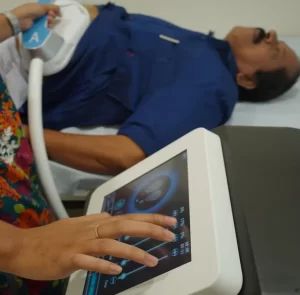
If your back pain does not involve any of the red flags above, it is appropriate for physiotherapy assessment and treatment. Maana Health provides back pain assessment and treatment across five clinics in Kerala — Kochi, Calicut, Perinthalmanna, Aluva, and Trivandrum. Book a free assessment today.