
Authored by Ashitha Abdul Ashraf, Senior Consultant Physiotherapist – Incharge | Medically Reviewed by Dilshana Thasni T, Senior Consultant Physiotherapist | Last Reviewed: June 2026
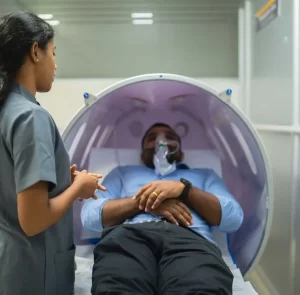
Most people in Kerala have never heard of hyperbaric oxygen therapy. Those who have often associate it with deep-sea diving accidents or burns units in major hospitals. In reality, HBOT is a clinically established treatment for a range of conditions — from diabetic wounds that will not heal to sports injuries requiring accelerated recovery — and it is now available in Kerala without travelling to Chennai or Mumbai.
This guide explains what HBOT is, how it works, which conditions it treats, and what a course of treatment involves.
What Is Hyperbaric Oxygen Therapy?
Hyperbaric oxygen therapy involves breathing pure oxygen inside a pressurised chamber. The pressure inside the chamber is increased to above normal atmospheric pressure — typically 1.5 to 3 times sea level pressure, depending on the condition being treated.
Under normal conditions, oxygen is carried almost entirely by haemoglobin in red blood cells. There is a ceiling to how much oxygen haemoglobin can carry. Under increased atmospheric pressure, oxygen also dissolves directly into blood plasma, tissue fluid, and cerebrospinal fluid — reaching levels 10 to 15 times higher than breathing normal air at sea level pressure.
This dramatically increases the oxygen available to tissues throughout the body — including tissues that have compromised blood supply and would otherwise be severely oxygen-deprived.
The Science Behind Why It Works
Most of HBOT’s therapeutic effects come down to one fundamental principle: tissues that are hypoxic — oxygen-deprived — cannot heal. Oxygen is not just a fuel for cellular metabolism. It is a direct requirement for collagen synthesis, immune cell function, and new blood vessel formation. Without adequate oxygen, wound healing stalls, infection persists, and tissue repair fails regardless of what other treatments are applied.
HBOT delivers oxygen to hypoxic tissue that normal circulation cannot adequately oxygenate. The effects include:
Enhanced wound healing. Oxygen at high concentrations directly stimulates fibroblast activity and collagen production — the biological processes that close wounds and repair tissue.
Angiogenesis. HBOT stimulates the formation of new blood vessels in oxygen-deprived tissue. This is particularly significant for diabetic wounds where the microvascular damage that caused the wound also prevents healing.
Antimicrobial effect. High oxygen concentrations are directly toxic to anaerobic bacteria — bacteria that thrive in low-oxygen environments. Many of the bacteria that infect chronic wounds are anaerobic. HBOT creates a tissue environment hostile to these organisms.
Reduced inflammation. HBOT modulates inflammatory cytokines, reducing chronic inflammation in tissues where the inflammatory response has become destructive rather than healing.
Neurological repair. In conditions affecting the brain — stroke, traumatic brain injury, post-concussion syndrome — HBOT may stimulate recovery in the penumbra zone, the area of brain tissue around an injury that is damaged but not dead, where recovery is possible with adequate oxygenation.
Conditions HBOT Treats at Maana Health
Diabetic Foot Wounds and Chronic Non-Healing Wounds
This is the most established and most evidence-based indication for HBOT. Diabetic foot wounds affect a significant proportion of the diabetic population in Kerala — diabetes prevalence in Kerala is among the highest in India, at approximately 20% of adults in some surveys.
Diabetic foot wounds fail to heal because diabetes causes microvascular damage — the small blood vessels that supply tissue with oxygen are diseased. The wound cannot heal because the tissue cannot get enough oxygen through the damaged circulation. HBOT bypasses the damaged microvascular supply by dissolving oxygen directly into plasma.
Multiple randomised controlled trials show HBOT significantly reduces amputation rates in diabetic foot wounds. A Cochrane review found HBOT reduced the risk of major amputation by over 50% in diabetic foot ulcer patients compared to standard wound care alone.
For patients in Kerala with diabetic wounds that have not responded to standard dressing and wound care, HBOT is a potentially limb-saving intervention.
Post-Surgical Tissue Healing
After major surgery, particularly flap reconstruction surgery, tissue healing requires adequate oxygenation. HBOT improves outcomes in post-surgical healing by increasing oxygen delivery to the healing wound margins and stimulating angiogenesis in the reconstructed tissue.
Sports Injury Recovery
Elite athletes use HBOT to accelerate recovery from significant injuries — muscle tears, ligament injuries, bone stress injuries, and post-surgical rehabilitation. HBOT accelerates the biological repair processes that determine recovery timelines.
The mechanism is straightforward: tissue repair is oxygen-dependent. More oxygen available to healing tissue means faster repair. This is not a performance-enhancing drug. It is optimising the physiological environment for healing.
For Kerala athletes who want to return to sport as quickly as possible after a significant injury, HBOT as part of a comprehensive rehabilitation program reduces recovery timelines.
Radiation Tissue Damage (Osteoradionecrosis and Soft Tissue Radionecrosis)
Radiation therapy for cancer damages blood vessels in the treatment field, causing progressive hypoxia in the irradiated tissue. This produces non-healing wounds, bone necrosis, and tissue breakdown that can develop months to years after radiation treatment.
HBOT is an established treatment for radiation tissue damage — stimulating angiogenesis in the hypoxic irradiated tissue and creating the conditions for healing that normal circulation can no longer provide.
Traumatic Brain Injury and Post-Concussion Syndrome
The evidence base for HBOT in neurological conditions is less mature than for wound healing but growing. The theoretical basis is sound — the penumbra zone around a brain injury contains neurons that are damaged but not dead, surviving in a low-oxygen state. HBOT increases oxygen delivery to this zone, potentially supporting neural recovery.
Clinical studies show improvements in cognitive function, memory, and symptom burden in post-concussion syndrome patients treated with HBOT. Research in traumatic brain injury is ongoing.
Carbon Monoxide Poisoning
HBOT is the definitive treatment for significant carbon monoxide poisoning — it accelerates the displacement of carbon monoxide from haemoglobin from hours to minutes and prevents delayed neurological complications.
What a Session Involves
You enter the HBOT chamber wearing comfortable cotton clothing — synthetic materials are not permitted due to fire risk in an oxygen-enriched environment. Personal electronic devices, jewellery, and flammable products are removed before entering.
The chamber is sealed and pressure is gradually increased over approximately 10 to 15 minutes. During this compression phase, you will feel a sensation of pressure in your ears — similar to descending in an aeroplane or diving underwater. You equalise the pressure by swallowing, yawning, or performing a gentle Valsalva manoeuvre. The physiotherapy team will brief you on this before your first session.
Once at treatment pressure, you breathe pure oxygen through a mask or hood for the treatment duration. Most sessions last 60 to 90 minutes at pressure, depending on the condition and protocol.
Decompression at the end of the session takes approximately 10 to 15 minutes. The ear sensation reverses during decompression.
Most patients find sessions comfortable and report no significant discomfort beyond the ear pressure adjustment. Some patients feel tired after early sessions — this is a normal response and typically settles after the first few sessions.
You can read, rest, or listen to audio during the session.
How Many Sessions Are Needed?
The number of sessions depends on the condition being treated.
| Condition | Typical Course |
|---|---|
| Diabetic foot wound | 20 to 40 sessions |
| Radiation tissue damage | 20 to 40 sessions |
| Sports injury recovery | 10 to 20 sessions |
| Post-surgical healing | 10 to 20 sessions |
| Traumatic brain injury | 20 to 40 sessions |
| Carbon monoxide poisoning | 1 to 3 sessions |
Sessions are typically delivered once daily, five days per week. For sports injury recovery, sessions are often delivered in intensive blocks around the training schedule.
Who Is Not Suitable for HBOT
HBOT is contraindicated in specific situations. Your physiotherapist and medical team will screen for these before treatment.
Absolute contraindications:
- Untreated pneumothorax (collapsed lung)
Relative contraindications requiring medical assessment:
- Severe chronic obstructive pulmonary disease (COPD)
- Uncontrolled seizure disorder
- Claustrophobia — discuss with the team; many patients manage well with appropriate preparation
- Certain chemotherapy drugs that interact with high oxygen concentrations
- Upper respiratory infection or ear infection — treatment is temporarily paused until resolved
- Pregnancy — the evidence is limited; discuss with the medical team
Side Effects and Risks
HBOT is a well-established medical procedure with a good safety profile when administered correctly by trained staff.
Middle ear barotrauma is the most common side effect — ear discomfort or pain from pressure changes. This is managed by correct equalisation technique and, if persistent, by a slower compression rate.
Temporary myopia — mild short-sightedness — can develop after extended HBOT courses (typically more than 20 sessions). This reverses within weeks of completing treatment.
Oxygen toxicity seizure is extremely rare at the pressure levels used in most clinical protocols and is further minimised by air breaks built into longer sessions.
Claustrophobia — the enclosed chamber can trigger anxiety in some patients. The team will brief you thoroughly before your first session and the chamber can be exited at any time.
HBOT and Diabetic Wound Care in Kerala: Why It Matters
Diabetes is one of Kerala’s most significant public health challenges. The combination of high diabetes prevalence, dietary patterns, and sedentary lifestyles has created a large population of patients with diabetic complications including foot wounds.
Diabetic foot amputation is largely preventable with appropriate care. The pathway to amputation — uncontrolled diabetes, peripheral neuropathy, foot wound, infection, failed healing, amputation — can be interrupted at multiple points. HBOT, combined with wound care, blood sugar management, and vascular assessment, is one of the most powerful interventions available to interrupt this pathway.
For any patient in Kerala with a diabetic foot wound that has not healed within four weeks of standard care, HBOT assessment is a clinically justified and potentially limb-saving next step.
Frequently Asked Questions
Is HBOT safe?
Yes, when administered by trained staff using properly maintained equipment. HBOT has been in clinical use for over 50 years. Serious adverse events are rare when contraindications are screened for and protocols are followed correctly.
How long before I notice improvement?
For wound healing, measurable wound size reduction is typically visible within 10 to 15 sessions. For sports injury recovery, athletes often notice improved energy and faster tissue recovery within the first week of daily sessions. For neurological conditions, improvement timelines are longer and more variable.
Can I drive after a session?
Yes. HBOT does not impair driving ability. Some patients feel mildly tired after early sessions — if this applies to you, rest briefly before driving.
Is HBOT covered by health insurance in India?
Coverage varies significantly. HBOT for diabetic foot wounds and radiation tissue damage is covered by some policies. Coverage for sports injury and neurological indications is less consistent. Check your specific policy before starting treatment. Maana Health staff can assist with insurance queries.
Can HBOT be combined with physiotherapy?
Yes — and for most indications, it should be. HBOT creates the biological conditions for healing. Physiotherapy directs that healing toward functional recovery. The two treatments are complementary, not alternatives. At Maana Health, HBOT is integrated into a comprehensive treatment plan that includes physiotherapy where relevant.
I am claustrophobic. Can I still have HBOT?
Many patients with claustrophobia complete HBOT courses successfully with appropriate preparation. The team will familiarise you with the chamber before your first session, explain the procedure in detail, and ensure you know how to signal if you need the session stopped. Discuss your concerns openly at assessment.
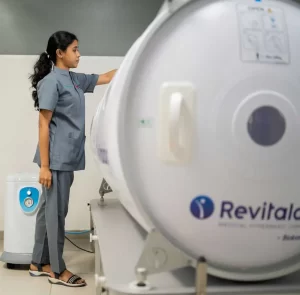
Hyperbaric Oxygen Therapy is available at Maana Health in Kerala. If you have a diabetic wound, radiation tissue damage, a significant sports injury, or another condition that may benefit from HBOT, book a free assessment at one of our clinics — Kochi, Calicut, Perinthalmanna, Aluva, and Trivandrum.