
Authored by Ashitha Abdul Ashraf, Senior Consultant Physiotherapist – Incharge | Medically Reviewed by Dilshana Thasni T, Senior Consultant Physiotherapist | Last Reviewed: June 2026
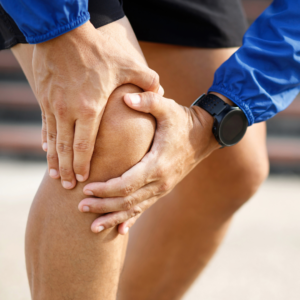
Knee pain in young adults is not the same as knee pain in older patients. A 25-year-old with knee pain is not dealing with arthritis in most cases. The causes are different, the treatment is different, and the stakes are different — particularly for active people who want to return to sport.
The problem is that knee pain in young adults gets mismanaged in both directions. Some people ignore it, train through it, and turn a manageable injury into a structural problem. Others get scans, see a disc bulge or a minor meniscus tear, and end up in surgery for a finding that could have been treated conservatively.
This guide helps you understand what is actually going on, what the common causes are, and how to make the right treatment decision.
Why Young Adult Knee Pain Is Different
In adults over 50, knee pain is most commonly osteoarthritis — cartilage wearing down over time. In adults under 35, the cartilage is generally intact. The pain is coming from somewhere else.
Common sources in young adults:
- Tendons under excessive or repetitive load
- Ligament injuries from acute trauma
- Meniscus tears from sport or awkward movement
- Patellofemoral pain — pain behind the kneecap from poor tracking
- Bursitis — inflammation of the fluid-filled sacs around the knee
- Referred pain from the hip or lower back
The distinction between a sports injury — an acute event that damaged a specific structure — and a structural problem that has developed gradually matters significantly for treatment.
Common Causes of Knee Pain in Young Adults
Patellofemoral Pain Syndrome (Runner’s Knee)
The most common cause of knee pain in young adults, particularly runners, cyclists, and desk workers who sit for long hours.
Pain is felt behind or around the kneecap. It worsens with stairs, squatting, sitting for long periods, and running downhill. There is no single traumatic event — it develops gradually.
The cause is abnormal tracking of the kneecap in its groove during movement. Weak hip muscles, tight quadriceps, poor foot mechanics, and training errors all contribute. The kneecap is being pulled off-centre by muscle imbalances.
Treatment is conservative in almost all cases. Hip strengthening, quadriceps flexibility work, patellofemoral taping, and gait retraining produce good outcomes. Surgery is rarely needed.
Patellar Tendinopathy (Jumper’s Knee)
Pain at the bottom of the kneecap where the patellar tendon attaches. Most common in jumping sports — basketball, volleyball, football. Also common in runners who increase their training load too quickly.
The tendon is under more load than it can handle, leading to a degenerative process in the tendon tissue rather than true inflammation. This distinction matters for treatment — anti-inflammatory medication does not fix a degenerative tendon.
Evidence-based treatment: heavy slow resistance exercise for the tendon combined with load management. Shockwave therapy is highly effective for chronic cases. Surgery is a last resort and outcomes are inconsistent.
ACL Injury
The anterior cruciate ligament stabilises the knee against forward movement and rotation. ACL tears are common in football, basketball, badminton, and any sport involving sudden direction changes or landing from a jump.
The classic mechanism is a non-contact deceleration or pivoting movement. There is usually an audible pop, immediate swelling within a few hours, and significant instability.
ACL tears in young active adults are a genuine structural problem that often — though not always — requires surgical reconstruction followed by 9 to 12 months of rehabilitation. Non-surgical management is an option for less active individuals or partial tears. The decision depends on your activity level, the degree of instability, and associated injuries like meniscus damage.
Meniscus Tear
The menisci are two C-shaped cartilage pads that act as shock absorbers and stabilisers in the knee. They can tear acutely from a twisting injury — common in contact sports — or degeneratively in older patients from minor movements.
In young adults, meniscus tears are almost always traumatic. Symptoms include pain along the joint line, swelling, clicking or locking of the knee, and difficulty fully straightening or bending the joint.
Not all meniscus tears need surgery. The outer third of the meniscus has a blood supply and can heal. The inner two-thirds do not, and tears in this zone do not heal conservatively. MRI determines the tear pattern and location. A physiotherapy trial of 6 to 12 weeks is appropriate for tears that do not involve locking or significant instability.
Iliotibial Band Syndrome (IT Band Syndrome)
Pain on the outer side of the knee in runners and cyclists. The iliotibial band — a thick band of connective tissue running from the hip to the outer knee — becomes tight and repeatedly rubs over the lateral femoral condyle during repetitive flexion and extension.
Common in runners who increase mileage too quickly, those with hip weakness, and those running on cambered roads. Treatment is conservative: hip strengthening, foam rolling, load management, and gait retraining.
Osgood-Schlatter Disease
Technically not a disease but an overuse injury affecting the tibial tuberosity — the bony bump below the kneecap — in adolescents during growth spurts. Common in teenage athletes in football, basketball, and running.
Pain and tenderness directly over the tibial tuberosity. Worsens with activity. The treatment is load management during the growth phase. It almost always resolves fully once the growth plate closes.
Sports Injury vs Structural Problem: How to Tell
This is the key question for a young adult with knee pain.
Signs pointing to an acute sports injury:
- Clear traumatic event — a tackle, a fall, a sudden twist
- Immediate swelling within 2 to 4 hours of injury
- Feeling of instability or giving way
- Inability to bear weight immediately after the event
- Audible pop at time of injury
Signs pointing to a gradual structural problem:
- No single traumatic event — pain came on gradually over weeks
- Pain worsens with specific activities like running, stairs, or sitting
- Swelling is mild and comes on after activity rather than immediately
- No instability — the knee feels stable but painful
- Pain is in a specific location — behind the kneecap, at the tendon, along the joint line
The significance of this distinction is that acute injuries need rapid assessment to determine whether structures are damaged. Gradual onset conditions need load management and rehabilitation rather than imaging-driven treatment decisions.
Do You Need an MRI?
Not always. This surprises many patients.
For acute injuries with swelling, instability, or inability to bear weight, MRI is appropriate to identify ligament and meniscus damage. For gradual onset knee pain in a young adult without instability, MRI frequently shows findings — minor meniscus changes, small bone marrow oedema — that are not clinically significant and can lead to unnecessary surgical intervention.
A clinical examination by a trained physiotherapist or sports medicine doctor is more useful than an MRI for most gradual onset knee pain in young adults. The examination determines what structure is actually causing the symptoms. The MRI confirms or refines the clinical diagnosis.
If a physiotherapist recommends imaging, get it. If you are pushing for an MRI because you want certainty about your knee, understand that the result may create more questions than it answers.
Treatment Principles for Young Adult Knee Pain
Load Management
The first step for any overuse knee condition is modifying the load that is aggravating it. This does not mean stopping all activity. It means reducing the specific load that is driving the problem — training volume, impact, frequency — while maintaining fitness through lower-load alternatives.
A runner with patellar tendinopathy can continue cycling. A footballer with IT band syndrome can continue gym work. Complete rest is rarely the right answer and often makes overuse conditions worse by removing the mechanical stimulus needed for tendon adaptation.
Strengthening
Hip and quadriceps weakness is a common underlying driver of multiple knee conditions in young adults. Patellofemoral pain, IT band syndrome, and patellar tendinopathy all have a hip weakness component. Strengthening the glutes, hip abductors, and quadriceps specifically reduces the mechanical forces driving these conditions.
Return to Sport Planning
For young adults who want to return to their sport, return to sport planning is a structured process — not just waiting until the pain goes. It involves progressive loading of the knee, sport-specific movement retraining, and objective strength testing before full return.
Athletes who return to sport based on pain resolution alone re-injure at significantly higher rates than those who complete a structured return to sport program.
Shockwave Therapy for Chronic Tendon Conditions
For patellar tendinopathy that has been present for more than three months and has not responded to load management and exercise, shockwave therapy is the most evidence-based next step. Multiple clinical trials show ESWT produces significant improvement in chronic patellar tendinopathy where exercise alone has not been sufficient.
When Surgery Is Genuinely Necessary
For young adults with knee pain, surgery is appropriate in specific situations.
Complete ACL tear in an active young person who wants to return to pivoting sport. Non-surgical management is possible for less active individuals but carries significant long-term instability risk for sport participants.
Locked knee from a displaced meniscus tear. If the knee is genuinely locked — cannot be straightened — this is a surgical indication.
Osteochondral defect — a piece of cartilage and bone detached from the joint surface. Usually requires surgical repair in young patients.
Failed conservative treatment for meniscus tear after a proper 12-week physiotherapy trial with no improvement in function.
Pain alone, a positive MRI finding without instability or locking, and patient preference for a quick fix are not surgical indications in young adults. Surgery on a young knee carries risks — scar tissue formation, altered joint mechanics, and in some cases acceleration of joint degeneration — that need to be weighed carefully.
Frequently Asked Questions
I am 22 and my MRI shows a meniscus tear. Do I need surgery?
Not necessarily. The relevant questions are: does your knee lock or give way, and has a proper physiotherapy trial been completed? Many meniscus tears in young adults respond to 8 to 12 weeks of physiotherapy. Surgery is appropriate if the knee is genuinely locking, if conservative treatment has genuinely failed, or if the tear is in a location that will not heal.
How long does a sports knee injury take to heal?
It depends entirely on the structure. Mild ligament sprains take 4 to 8 weeks. Patellar tendinopathy takes 3 to 6 months. ACL reconstruction takes 9 to 12 months. There are no shortcuts for structural healing regardless of pain levels.
Can I run with knee pain?
For patellofemoral pain and mild tendinopathy, running at a reduced volume and intensity is usually possible and is often better than complete rest. For acute ligament injuries, meniscus tears with locking, or significant swelling, running should stop until assessment determines the extent of the injury.
Is it safe to play sport with an ACL tear?
In the short term, some people can function relatively normally with an ACL tear depending on their muscle strength and the demands of their sport. Long-term, an unstable knee without an ACL is at significantly higher risk of meniscus damage, cartilage injury, and early onset arthritis. The decision on surgical versus conservative management should be made with a sports medicine doctor or orthopaedic surgeon.
My knee pain started during a growth spurt. Is this normal?
Knee pain during adolescent growth spurts — particularly pain at the tibial tuberosity — is common and usually Osgood-Schlatter. It is not dangerous but needs load management. See a physiotherapist for guidance on how to stay active without aggravating it.
Maana Health treats sports-related and structural knee conditions in young adults across five clinics in Kerala — Kochi, Calicut, Perinthalmanna, Aluva, and Trivandrum. If you have knee pain that is affecting your sport or daily life, book a free assessment and get a clear diagnosis and treatment plan.